 Base
Base Unichain
 Robinhood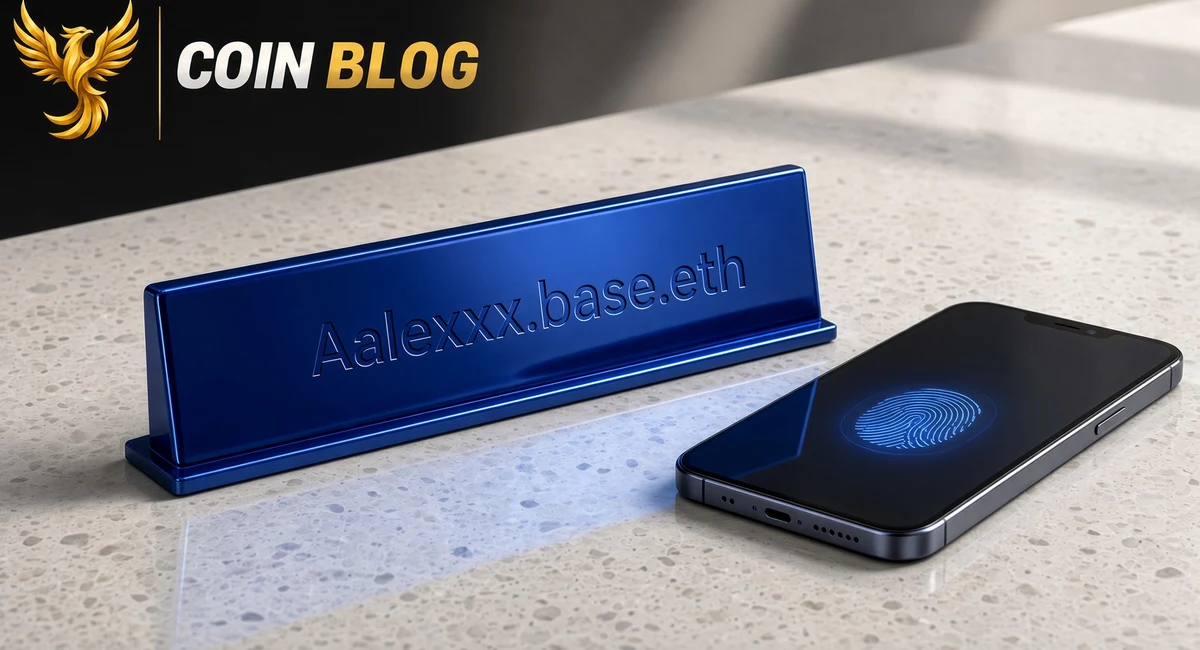
One of the most persistent usability failures of public blockchains is the hexadecimal address. A sequence of forty random hexadecimal characters, such as 0x71C...8976, was engineered for cryptographic collision resistance, not human readability. In traditional web banking, account numbers are masked behind simple user handles, phone numbers, or email addresses. Forcing everyday consumers to copy, paste, and anxiously verify forty random characters before sending money creates severe anxiety and frequently leads to irreversible financial loss.
While the Ethereum Name Service (ENS) established a decentralized naming standard on Ethereum Layer-1, registering a .eth name historically carried an ironic contradiction: gas fees on mainnet often cost five to ten times more than the annual registration price of the domain itself. For casual users and micro-transaction consumer applications, spending fifty dollars in gas to register a username is completely irrational. Base resolved this systemic friction through the launch of Basenames. Built directly on the open-source ENS infrastructure and powered by cross-chain resolution standards, Basenames make decentralized identity accessible, inexpensive, and deeply integrated into the Layer-2 consumer experience.
The Architectural Hurdle: Why L1 Identity Was Cost-Prohibitive
To appreciate the engineering breakthrough behind Basenames, one must examine how traditional domain registries operate on Ethereum mainnet. The core ENS protocol consists of three primary components:
- The Registry Contract: A mapping smart contract that records the owner of each domain, the configured resolver contract, and the Time-To-Live (TTL) caching parameter.
- The Registrar Contract: Governs the rules of name allocation, renewal fees, and expiration auctions for top-level domains like
.eth. - The Resolver Contract: Translates human-readable names into machine addresses (e.g., mapping
alice.ethto an Ethereum address, an IPFS website hash, or avatar metadata).
Under the traditional Ethereum Layer-1 naming architecture, every operational step incurs high execution costs. When a user registers a domain or updates an avatar, their wallet submits an on-chain transaction directly to the primary ENS contracts on mainnet. Because every state transition competes for constrained block space, even minor configuration updates frequently cost tens of dollars. Resolving domain names on L1 forces consumer applications to absorb high latency and gas overhead.
The financial barrier of Layer-1 gas fees created a severe digital divide across the Web3 ecosystem. While high-net-worth decentralized finance traders and enterprise institutions could effortlessly absorb fifty or one hundred dollars in gas to register prestigious primary names, ordinary retail participants entering the cryptocurrency space were systematically excluded from claiming intuitive digital identities. A user wishing to test decentralized social applications or transfer five dollars in stablecoins to a friend was forced to navigate intimidating hexadecimal strings, because establishing a human-friendly handle cost an order of magnitude more than their entire intended transaction volume.
Because every state change on Ethereum Layer-1 requires precious execution bandwidth, every single interaction with an ENS name-registering, updating an avatar, adding a social handle, or transferring ownership-incurred heavy gas costs. For a Layer-2 ecosystem like Base, which aims to onboard hundreds of millions of everyday internet users, forcing identity management onto Ethereum Layer-1 was an unacceptable bottleneck.
How Basenames Operate: Cross-Chain Resolution via CCIP-Read
Rather than building a proprietary, closed naming database that would fragment Web3 interoperability, the Base engineering team collaborated directly with the ENS community to implement a decentralized cross-chain architecture governed by ERC-3668 (CCIP-Read) and ENSIP-10.
Under this design, subdomains ending in .base.eth are formally anchored in the canonical ENS root registry on Ethereum Layer-1, but all registration logic, metadata storage, and ownership records reside entirely on the high-performance Base Layer-2 network.
The Basenames cross-chain resolution pipeline eliminates this friction through a decentralized four-stage workflow governed by ERC-3668. When an application encounters a domain like alice.base.eth, it queries the canonical ENS root registry on Ethereum Layer-1. The registry detects that the .base.eth namespace uses an off-chain resolver and returns a standardized redirect error pointing to an authenticated Base gateway. The client automatically queries this Base gateway, which retrieves Alice's active records directly from the low-cost Base Layer-2 registry and constructs a cryptographic Merkle proof of the state. Finally, the client submits this proof back to the verification contract, which validates the proof against Base's verified state root on Ethereum Layer-1, resolving the name instantly without Layer-1 gas fees.
The resolution process operates via an elegant four-step flow:
- Root Query: When a wallet or decentralized application encounters a name like
alice.base.eth, it queries the canonical ENS registry on Ethereum mainnet. - Off-Chain Gateway Redirection: The L1 registry identifies that
.base.ethutilizes an off-chain resolver. Following the ERC-3668 standard, the contract reverts with anOffchainLookuperror, directing the client to query an authenticated Base gateway. - L2 State Retrieval: The client queries the gateway, which reads Alice's records directly from the low-cost Base smart contract registry and constructs a cryptographic Merkle proof demonstrating the authenticity of the data.
- Trustless Cryptographic Verification: The client submits this proof back to the verification contract, which validates the Merkle proof against Base's verified state root on Ethereum L1. The human-readable name resolves correctly in milliseconds, costing the user zero Layer-1 transaction fees.
Technically, this multi-chain architecture is coordinated through a modular smart contract stack on Base that interfaces seamlessly with the off-chain CCIP-Read gateways. When a user creates or modifies their profile parameters on Base, an event log is emitted and included in the rollup's state tree. Decentralized gateways continually monitor these state commitments, ensuring that when an L1 resolution contract or an external consumer application requests verification, valid Merkle proofs can be assembled and returned on demand with zero latency and zero manual administrative intervention.
By shifting record storage to Base while maintaining cryptographic verification on Ethereum, users can register a Basename for fractions of a dollar while ensuring that the name resolves universally across any wallet in the entire Ethereum ecosystem.
Comparing Web3 Naming Architectures
To understand why Basenames represent a superior scaling model, compare them against alternative naming solutions:
| Parameter | Traditional L1 ENS (.eth) | Isolated L2 Naming Systems | Basenames (.base.eth) |
| :--- | :--- | :--- | :--- |
| Registration Gas Cost | $20 to $100+ (variable L1 gas) | Sub-cent (L2 gas) | Sub-cent (Base L2 gas) |
| Ecosystem Compatibility | Universal across Web3 | Fragmented (only works on one chain) | Universal via CCIP-Read / ENS standards |
| Metadata Updates | Expensive L1 transactions | Inexpensive L2 transactions | Inexpensive L2 transactions |
| Identity Composability | Basic text records | Proprietary metadata schemas | Integrated with Base Smart Wallet and Farcaster |
By building on open ENS standards rather than launching an incompatible proprietary namespace, Base preserved global composability while delivering consumer-grade accessibility.
From Simple Addresses to Dynamic On-Chain Profiles
A Basename is not merely an alias for receiving digital assets; it serves as the foundational anchor for an interactive on-chain profile. In conventional Web2 platforms, user identity is fragmented across corporate walled gardens: a user maintains separate profiles on Twitter, Instagram, GitHub, and PayPal, each owned and controlled by a centralized corporation that retains the power to delete the account at will.
On Base, a Basename functions as an open, user-sovereign digital passport. Because updating records costs fractions of a cent, users can enrich their profiles with rich dynamic metadata:
- Unified Social Aggregation: Users link their Farcaster handles, Lens profiles, decentralized blogs, and verified websites directly to their Basename contract.
- Biometric Smart Wallet Pairing: Combined with the Coinbase Smart Wallet, a Basename becomes the public identifier for a biometric passkey account. Users can log into consumer applications across the web without passwords, presenting their Basename as their verified credentials.
- On-Chain Reputation and Badges: Applications can issue non-transferable attestations (such as event attendance records, developer certifications, or community contribution badges) anchored directly to the user's Basename, building an immutable digital resume.
Practical Impact on Consumer Onboarding
The introduction of Basenames fundamentally transforms the psychology of transacting on-chain. When a newcomer downloads a decentralized application on Base, they are not greeted with a terrifying forty-character alphanumeric string. Instead, they choose a clean, human-readable handle.
When sending stablecoins to friends, settling split dinner bills, or paying for digital goods, users verify human names, recognizable avatar images, and verified social links. By removing the terror of the accidental typo and replacing cryptographic complexity with intuitive digital identity, Basenames provide the essential social substrate required to transform public blockchains from speculative financial playgrounds into friendly, everyday consumer software.