 Base
Base Unichain
 Robinhood
- Traditional crypto bridges lock billions of dollars in vulnerable smart contract pools, creating massive honeypots for hackers.
- The intent-based architecture flips this model: users specify the desired end result, and third-party fillers front their own capital instantly.
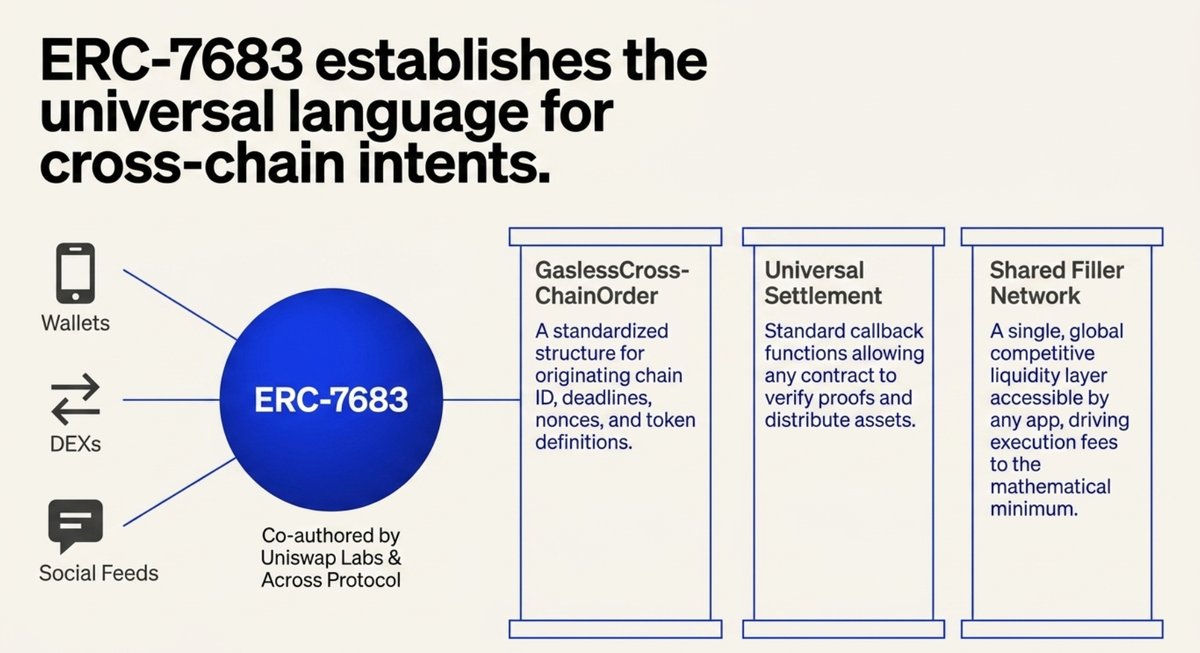
- The ERC-7683 standard, co-authored by Uniswap Labs and Across Protocol, establishes a universal framework for cross-chain intent orders.
- Users gain lightning-fast, gas-optimized cross-chain swaps without waiting for slow consensus confirmations or risking bridge exploits.
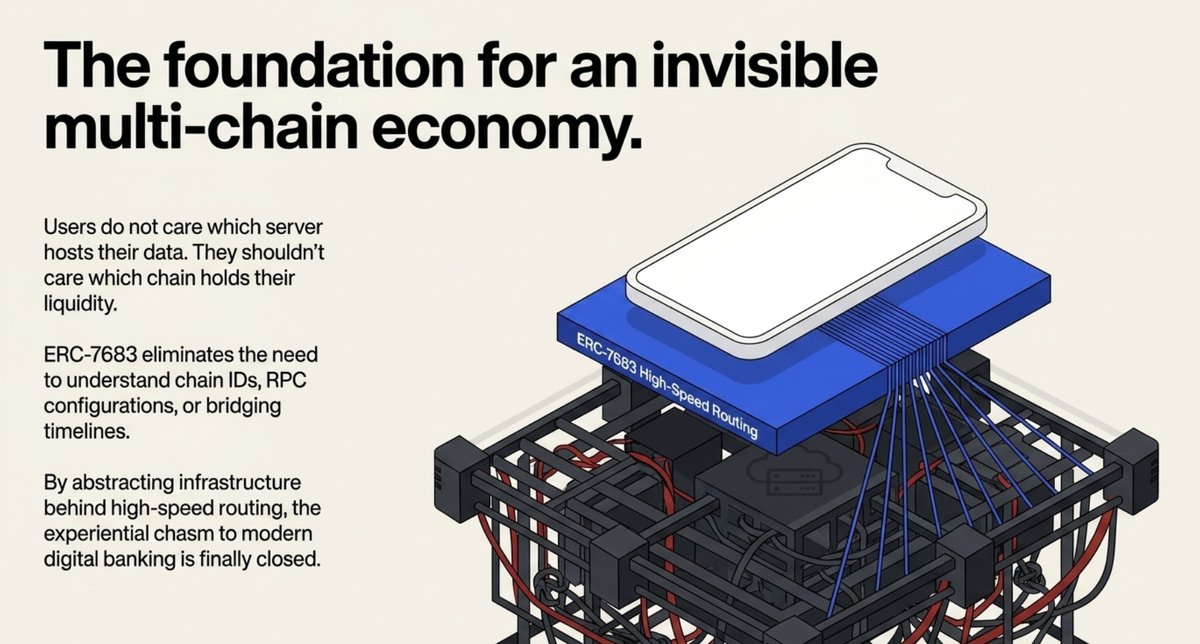
The expansion of the Ethereum Layer-2 ecosystem has created a paradox. On one hand, rollups have solved the scalability trilemma by reducing transaction fees and expanding execution bandwidth. On the other hand, this proliferation of independent chains has severely fragmented liquidity, developer ecosystems, and user experiences. A user holding funds on Arbitrum who wishes to interact with an application on Base often faces a clunky, multi-step pilgrimage through decentralized bridges, waiting minutes for block finality and praying that the bridge contracts remain uncompromised.
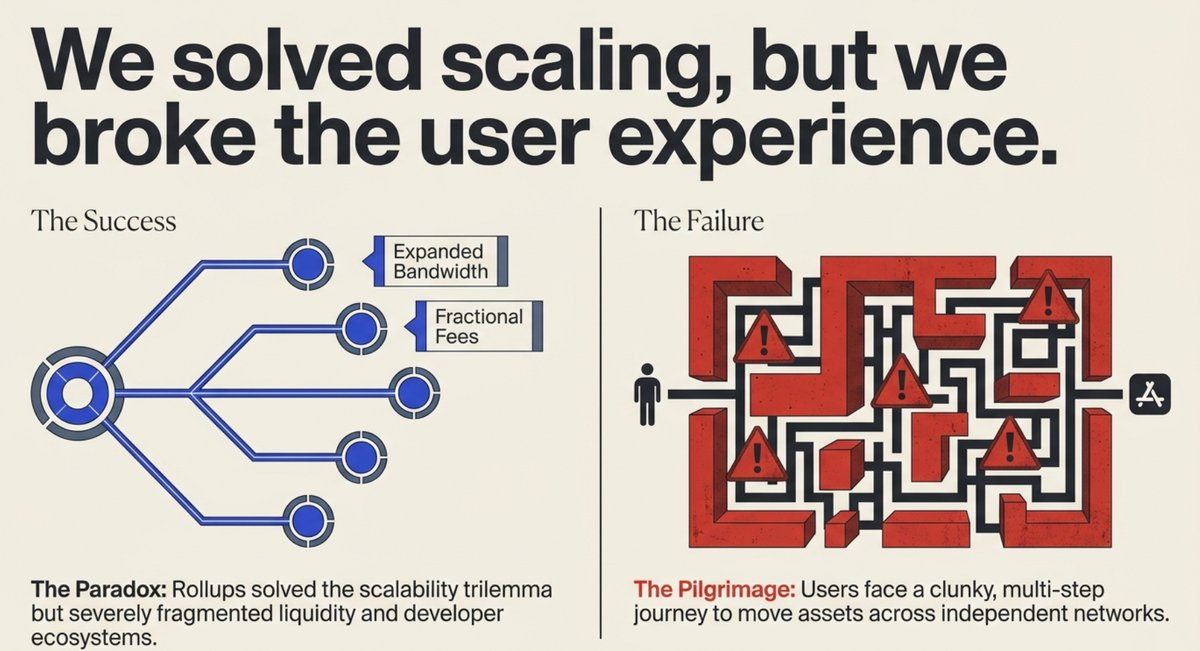
Historically, cross-chain bridging has been the single most dangerous vector in Web3 security. Bridge exploits, including catastrophic hacks on the Ronin, Wormhole, and Nomad protocols, have collectively drained over three billion dollars from the decentralized economy. The industry recognized that building larger, more complex smart contract vaults across chains is an architectural dead end. The solution is ERC-7683, an open standard that shifts cross-chain asset transfers from vulnerable liquidity lockups to a competitive, intent-driven routing model.
The Flaws of Classic Lock-and-Mint Bridges
To understand why intent architecture is revolutionary, we must examine why legacy bridges fail. Traditional cross-chain infrastructure generally falls into two categories:
- Lock-and-Mint Bridges: The user deposits tokens into a smart contract on Chain A. An off-chain validator set or multisig observes the event and issues an equivalent synthetic token on Chain B.
- Liquidity Pool Bridges: Smart contracts maintain pools of native assets on multiple networks. The user deposits into the pool on Chain A, and the contract releases funds from the pool on Chain B.
Traditional Bridge Vulnerability (Centralized Honeypot):
[User] ---> Deposits $10M into Bridge Pool on Chain A ===[Giant Target for Hackers]
                                                                  |
[User] <--- Receives $10M on Chain B <--- (Wait 20 Minutes) <----+
Both models create systemic vulnerabilities. They aggregate hundreds of millions of dollars in shared smart contract contracts, creating irresistible honeypots for sophisticated exploiters. If a single cryptographic bug exists in the bridge verification logic, the entire liquidity reserve can be drained in one block. Furthermore, these bridges force users to wait for source-chain transaction finality, turning what should be a seamless experience into a twenty-minute waiting game.
The Intent Paradigm: Defining Outcomes Instead of Paths
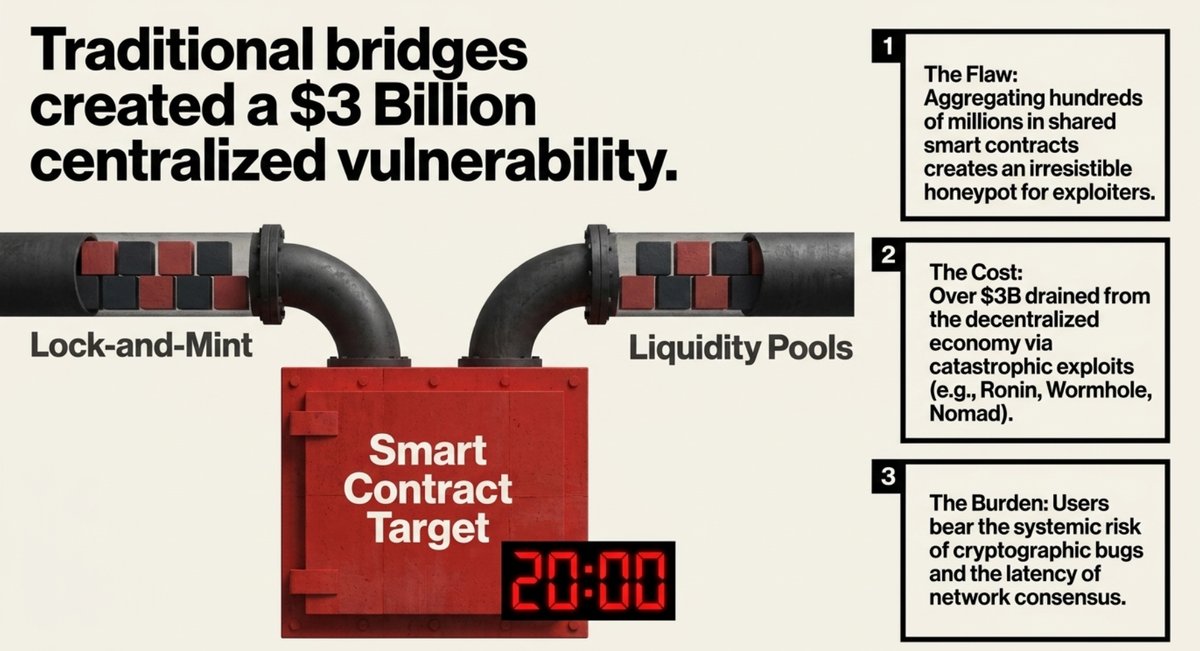
Intent-based architecture completely flips the operational flow. Instead of giving the blockchain an imperative list of instructions (e.g., "approve token, call bridge contract, wait for message relayer, claim on destination"), the user signs a declarative statement called an intent.
An intent simply states: "I have 1,000 USDC on Arbitrum. I want 1,000 USDC on Base. I am willing to pay a 50-cent fee to anyone who fulfills this condition."
Once signed, this intent order is broadcast into an off-chain network of competitive market makers known as Fillers or Solvers.
Intent-Based Flow (ERC-7683):
1. [User Signs Intent Order]: "Want 1000 USDC on Base, offering 1000 USDC on Arbitrum"
2. [Filler Competes & Fronts Capital]: Instantly transfers 1000 USDC to User on Base
3. [Settlement Contract Verifies]: Releases user's funds on Arbitrum to the Filler
A Filler who spots the order immediately fronts their own capital, transferring 1,000 USDC directly to the user's wallet on Base within two to three seconds. The user receives clean, native tokens instantaneously. The Filler then submits cryptographic proof of fulfillment to a settlement contract, which reimburses the Filler using the user's original deposit on Arbitrum.
In an intent system, the user takes zero bridge risk. The financial risk of waiting for finality shifts entirely to professional market makers who are equipped to manage it.
Inside the ERC-7683 Standard
While protocols like Across and UniswapX demonstrated the power of intent-based routing, each initially built proprietary order formats. A solver operating across the ecosystem had to write custom software integrations for every individual application, fragmenting solver liquidity.
To establish industry-wide interoperability, Uniswap Labs and Across Protocol collaborated to establish ERC-7683: Cross-Chain Intent Standard. The standard defines a unified smart contract interface and data structure for cross-chain orders:
GaslessCrossChainOrderStructure: Standardizes order parameters, including originating chain ID, settlement deadline, user nonce, and input/output token definitions.- Universal Settlement Interface: Establishes standard callback functions that permit any participating settlement contract to verify execution proofs and distribute escrowed assets.
- Shared Filler Network: By adopting a common schema, any application implementing ERC-7683 can tap into the same global network of competing solvers. A transfer initiated from a mobile wallet, a DEX interface, or a social feed uses the exact same competitive liquidity layer.
Because fillers compete against each other in real-time auctions to win the right to fulfill user orders, competition drives execution fees down to the absolute mathematical minimum required to cover capital costs and gas.
Filler Economics and Capital Rebalancing
A common question regarding intent architecture is how fillers manage their capital. If retail volume flows heavily from Arbitrum to Base, fillers will eventually run out of native USDC on Base while accumulating massive balances on Arbitrum.
Professional fillers manage this inventory through institutional rebalancing rails. Unlike retail users who need instant transfers for small amounts, fillers can afford to wait. They bundle millions of dollars of accumulated user deposits and rebalance their capital using slow, canonical Layer-1 rollup bridges (like the native Arbitrum bridge or Base bridge), or through zero-fee institutional transfer rails like Circle CCTP (Cross-Chain Transfer Protocol).
By amortizing the cost and latency of canonical bridging across thousands of user transfers, fillers operate with high capital efficiency, passing the savings down to consumers in the form of rock-bottom fees.
Comparing Cross-Chain Architecture Paradigms
Understanding how cross-chain technology has evolved highlights why intents have become the dominant standard:
| Feature | Classic Lock-and-Mint | Canonical Messaging | ERC-7683 Intents |
| :------------------ | :----------------------- | :-------------------------- | :------------------------- |
| Speed | 10 to 30 minutes | Up to 7 days (fraud proofs) | 2 to 5 seconds |
| Security Vector | Vulnerable shared pool | L1 consensus security | Zero user pool risk |
| Asset Type | Wrapped synthetic tokens | Canonical native tokens | Clean native tokens |
| Fee Structure | High fixed bridge fee | Variable L1 gas costs | Dynamic market auction fee |
By decoupling transaction execution from cross-chain settlement, ERC-7683 delivers the speed of an off-chain order book alongside the cryptographic security of decentralized settlement contracts.
The End State: An Invisible Multi-Chain Web3
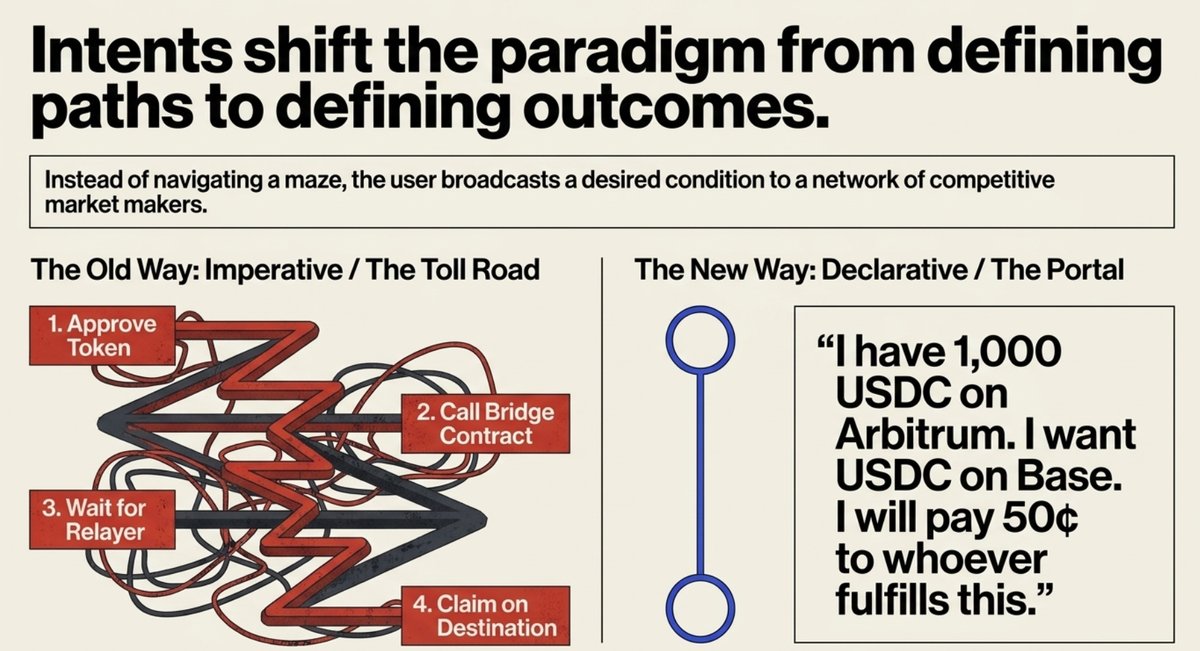
The transition to standardized cross-chain intents marks the beginning of the end for the fragmented multi-chain user experience. When users browse modern web services, they do not know or care which Amazon Web Services data center hosts the database they are querying. The infrastructure is entirely abstracted behind high-speed network routing.
ERC-7683 achieves this exact abstraction for blockchain technology. A user holding funds on an optimistic rollup like Base can interact with a decentralized exchange on Arbitrum or a game on Optimism without ever visiting a bridge website, calculating gas tokens, or waiting for confirmations. By replacing vulnerable liquidity pools with programmatic market competition, intent standards transform cross-chain Web3 from a perilous obstacle course into a unified, frictionless digital economy.
The Strategic Importance for Consumer Web3 Interfaces
For consumer-facing decentralized applications, the adoption of ERC-7683 provides an indispensable competitive advantage. Users no longer need to understand chain IDs, RPC configurations, or bridging timelines. By integrating a single intent SDK into their mobile interfaces, developers can allow users to deposit from any network with zero friction, dramatically expanding application user retention. In doing so, the intent model bridges the experiential chasm separating crypto from modern digital banking.