 Base
Base Unichain
 Robinhood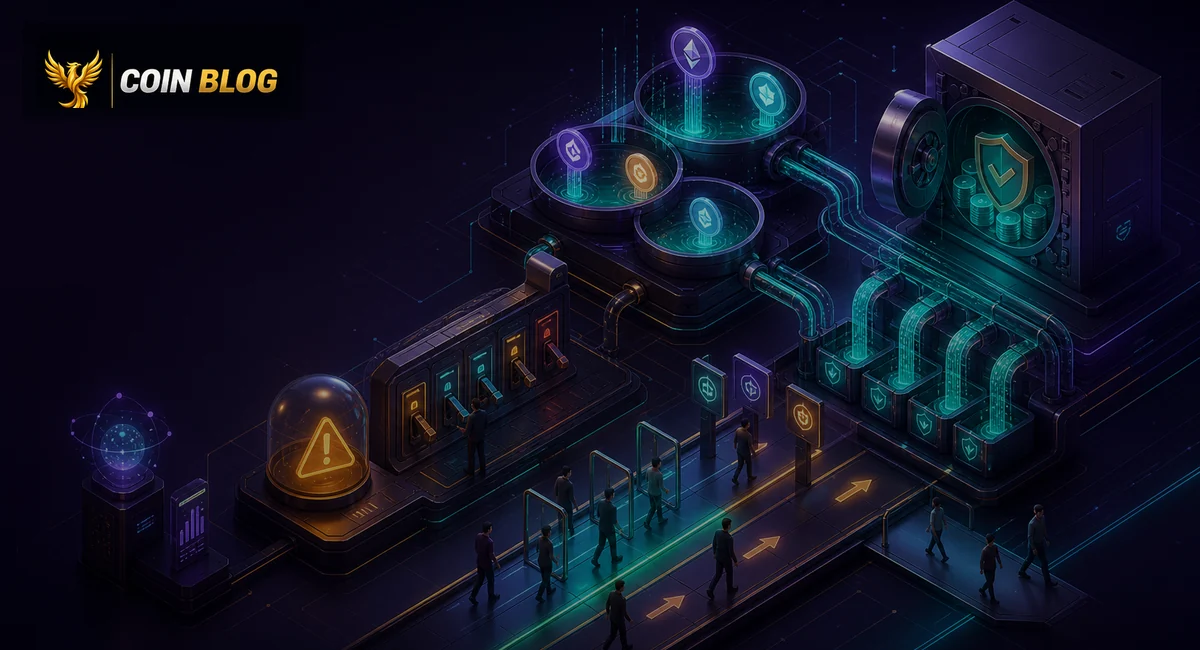
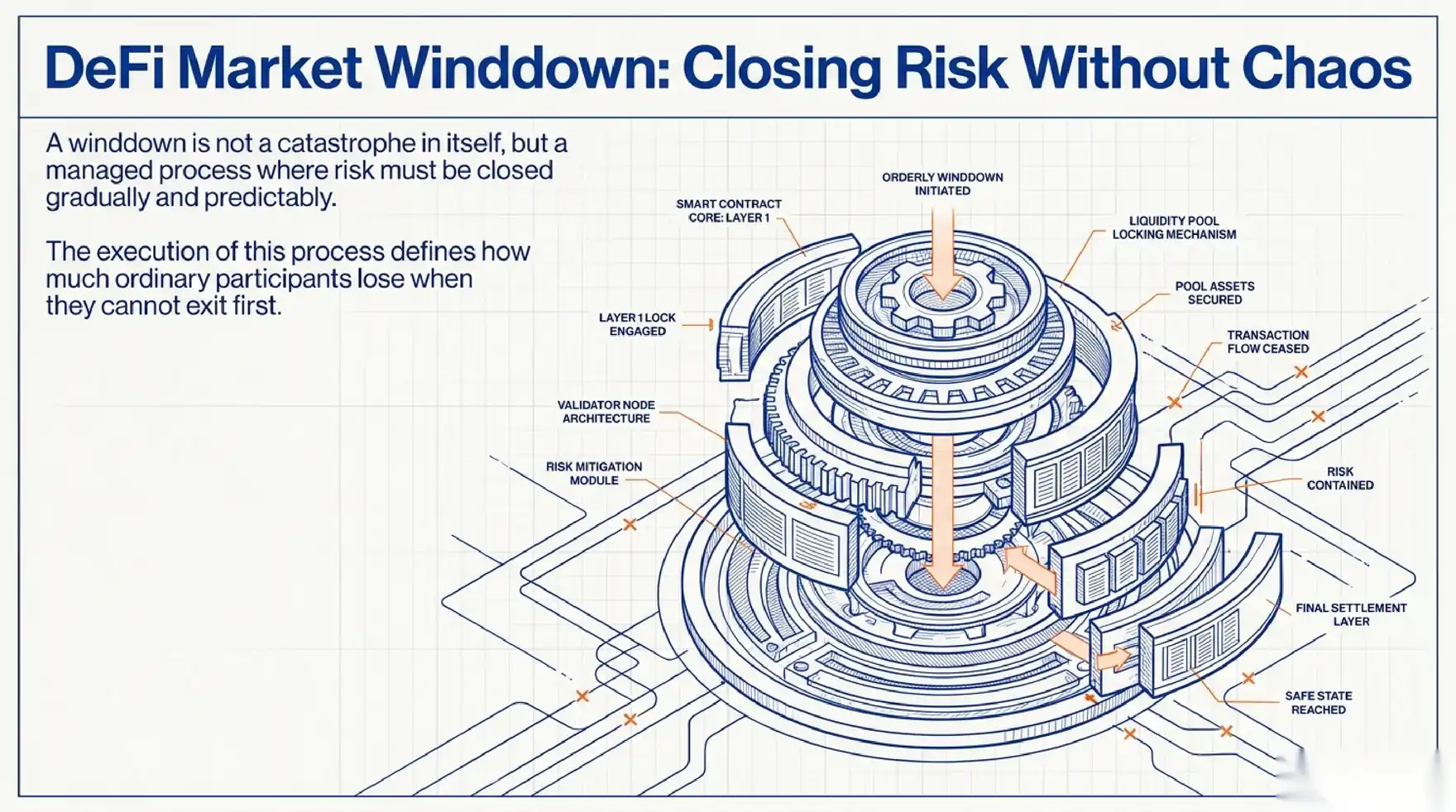
When a decentralized credit market or a single protocol decides to close, the main question is not the fact of closing but how carefully it happens. A winddown is not a catastrophe in itself but a managed process in which risk is closed gradually and predictably. The difference between an orderly and a chaotic winddown defines how much ordinary participants lose when they did not manage to exit first.
Why markets wind down at all
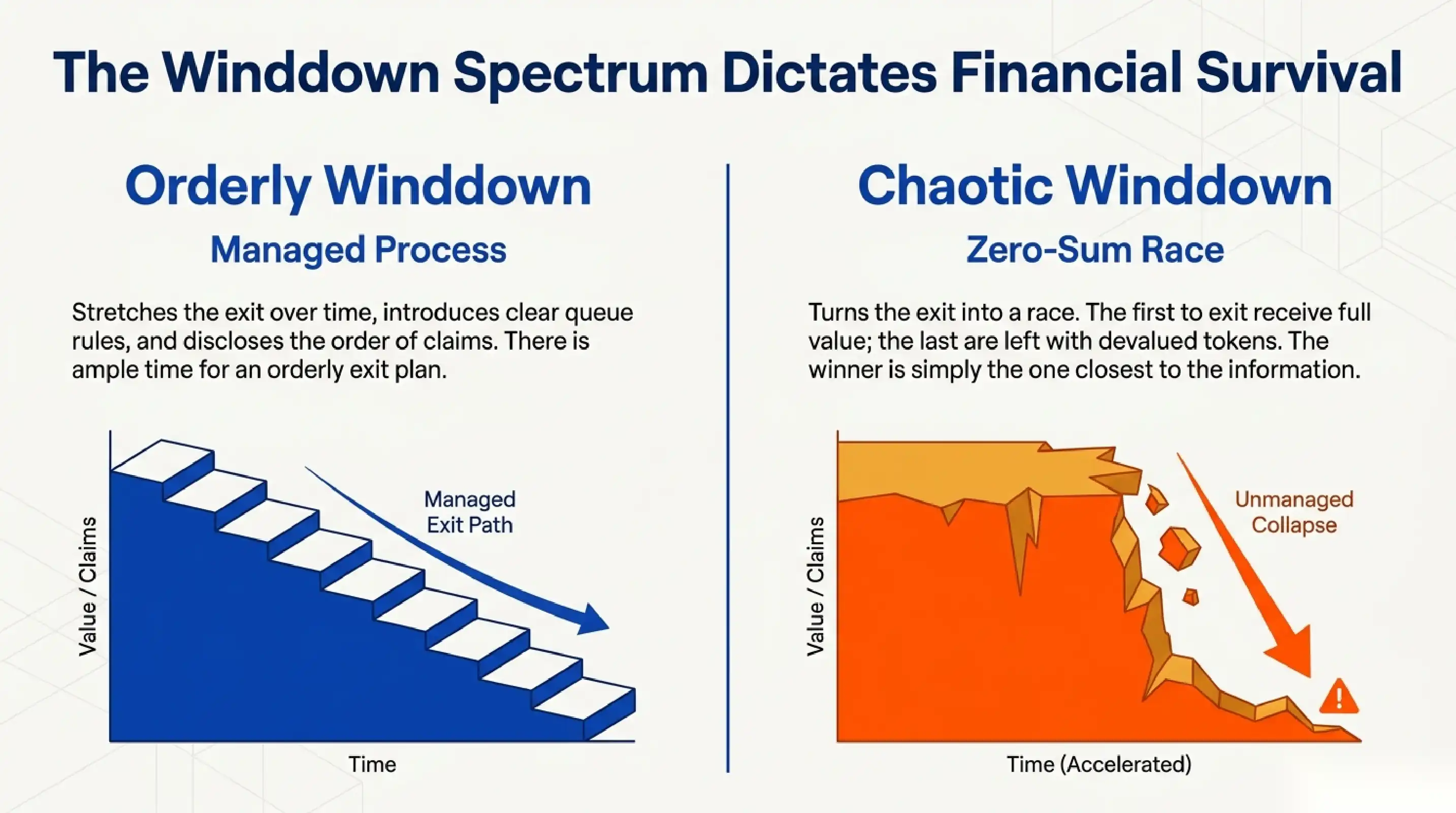
A protocol can close for various reasons: liquidity drying up, loss of interest, a discovered vulnerability or a governance decision. It is important to understand the reason, because it defines the speed and harshness of the process. A closure due to a planned decision looks very different from an emergency winddown after an attack.
For the client it helps to distinguish a voluntary winddown from a forced one. In the first case there is time for an orderly exit and a plan, in the second decisions are made in a hurry and often not in favor of small participants. Understanding the nature of the closure helps to estimate how much time the client has to react.
Who decides to close
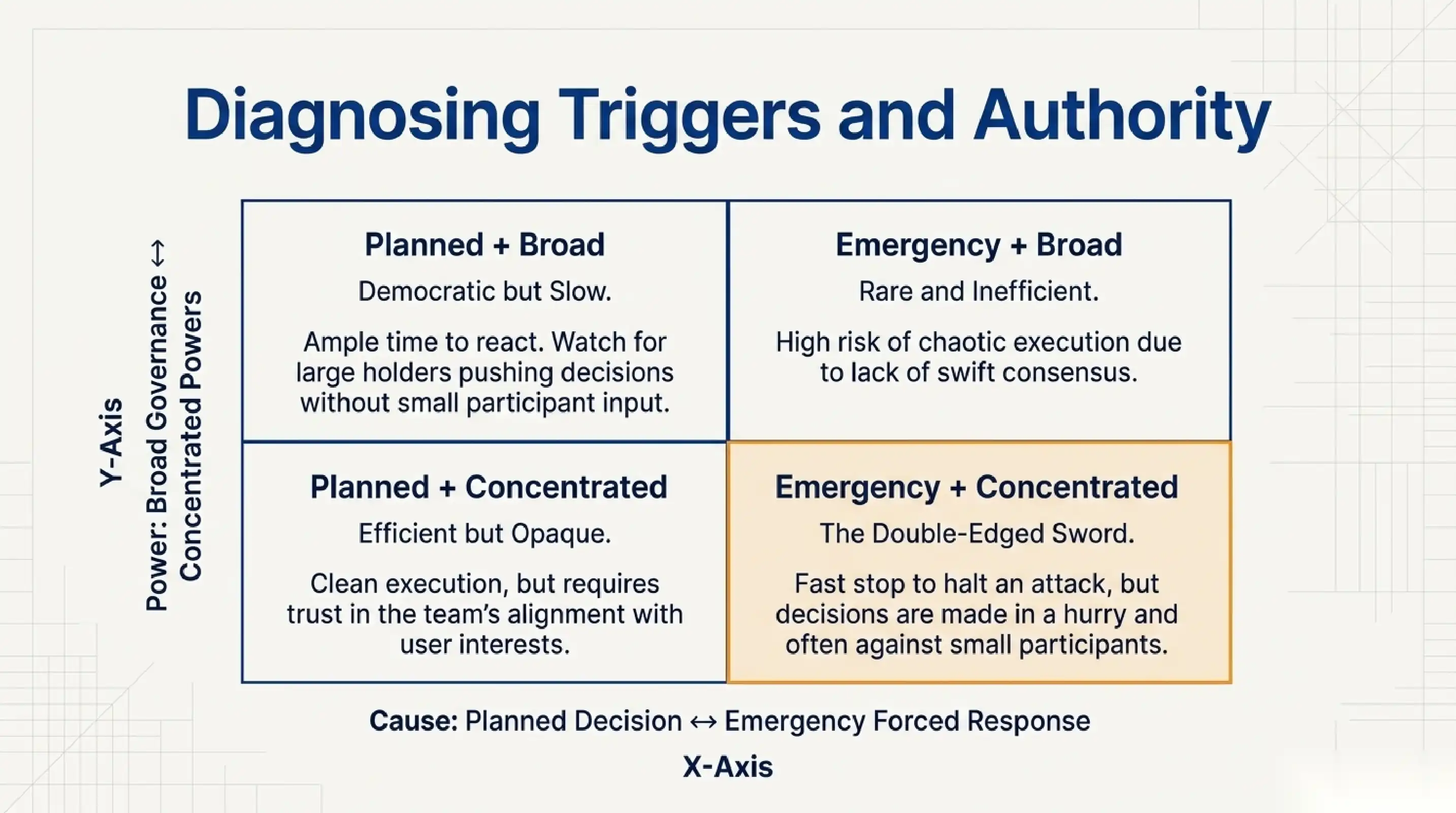
In decentralized systems the decision to wind down is often made through governance, that is by a vote of token holders. This sounds democratic, but in practice power may be concentrated in a small number of large holders. For the client this means the decision can be made without their participation and in the interest of large participants.
It helps to understand in advance how governance is arranged: who can submit proposals, what quorum is needed and whether the team has emergency powers. The presence of emergency powers is a double-edged thing: they help to stop an attack quickly, but the same button can be used against the interest of users. It matters to the client who holds that button.
Liquidity and the exit queue
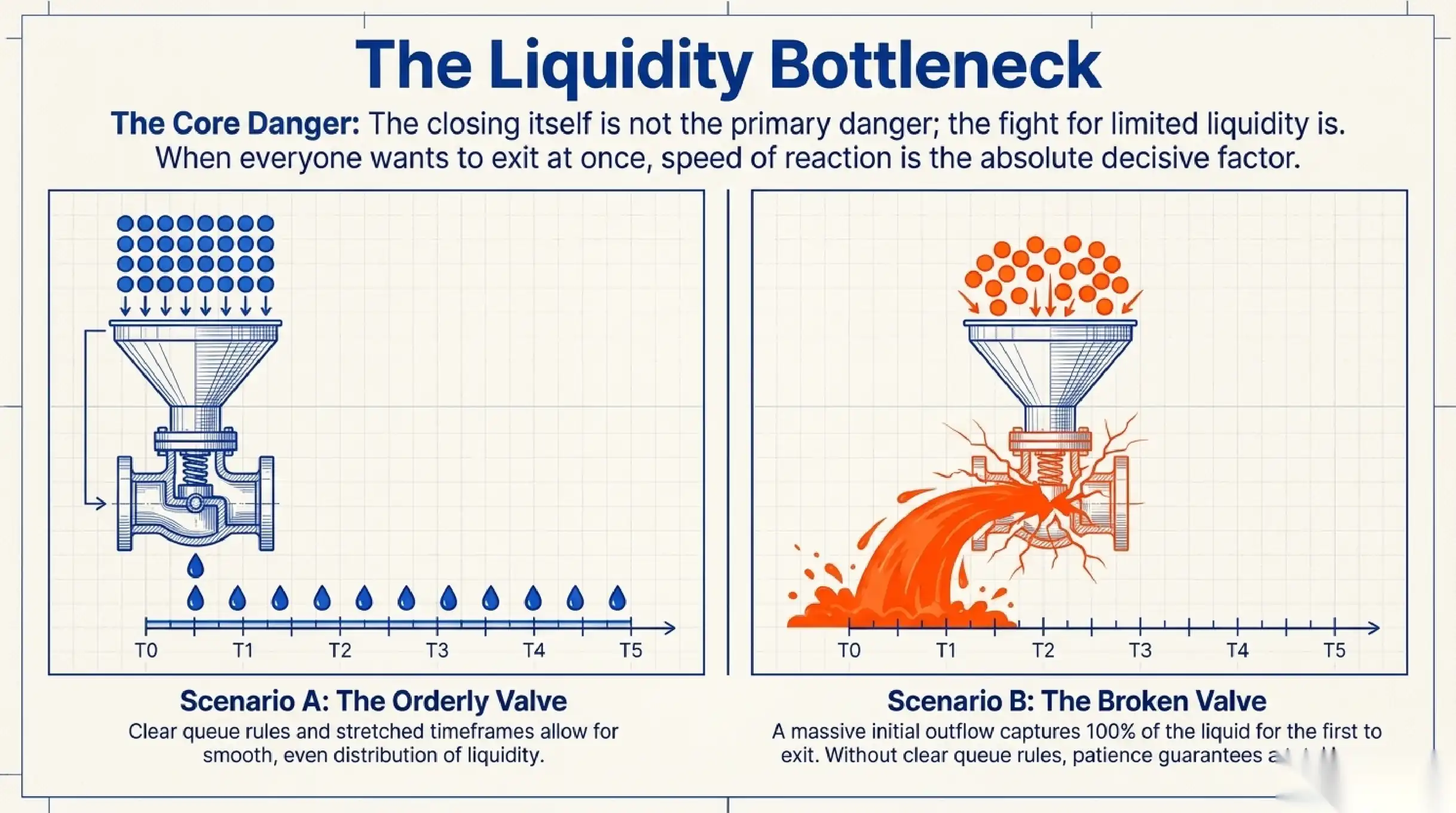
The main danger in a winddown is not the closing itself but the fight for limited liquidity. When everyone wants to exit at once, the first receive full value and the last are often left with devalued tokens. This makes the speed of reaction a decisive factor in such situations.
An orderly winddown tries to soften this effect: it introduces clear queue rules, stretches the exit over time and discloses the order of claims. A chaotic winddown, by contrast, turns the exit into a race in which the one closer to information wins. It helps the client to understand which scenario the process follows.
Oracles and prices at the moment of closing
During a winddown prices can behave abnormally, and the fate of collateral and liquidations depends on which price the protocol uses. If an oracle takes a price from an illiquid market, liquidations may fire unfairly. This is why the quality of the price source matters not only in calm times but also at the moment of closing.
It helps the client to understand how the protocol behaves when the price deviates sharply. Protective mechanisms like pauses or smoothing can help but can also delay a fair liquidation. What matters is not the presence of an elegant mechanism but how it behaves precisely under stress rather than on paper.
Collateral and repayment of debts
In credit protocols a winddown requires a careful unwinding of positions: who owes whom, what collateral secures it and in what order funds are returned. Borrowers must understand that their positions may be forcibly closed, and lenders that repayment may be partial and slow. A clear order here matters more than a promise to return everything.
The problem is that part of the collateral may be illiquid or tied to the same protocol that is closing. Then its real value turns out to be below par, and a client who considered their position secured takes losses. So it helps to look not only at the size of collateral but also at its liquidity and independence from the closing system.
The role of the governance token
A governance token is often presented as a share in the protocol, but during a winddown its role becomes ambiguous. If the token gives a right to vote but not a right to assets, its price can fall fastest, because control over a closing system is worth little. It matters to the client to distinguish the right to govern from the right to a share in assets.
There is also the opposite situation, when part of the treasury remainder is distributed among token holders. Then it matters to understand the rules of such distribution and whether ordinary holders end up behind large ones. Transparent distribution rules matter more than a promise of fairness.
Smart contract risk during a halt
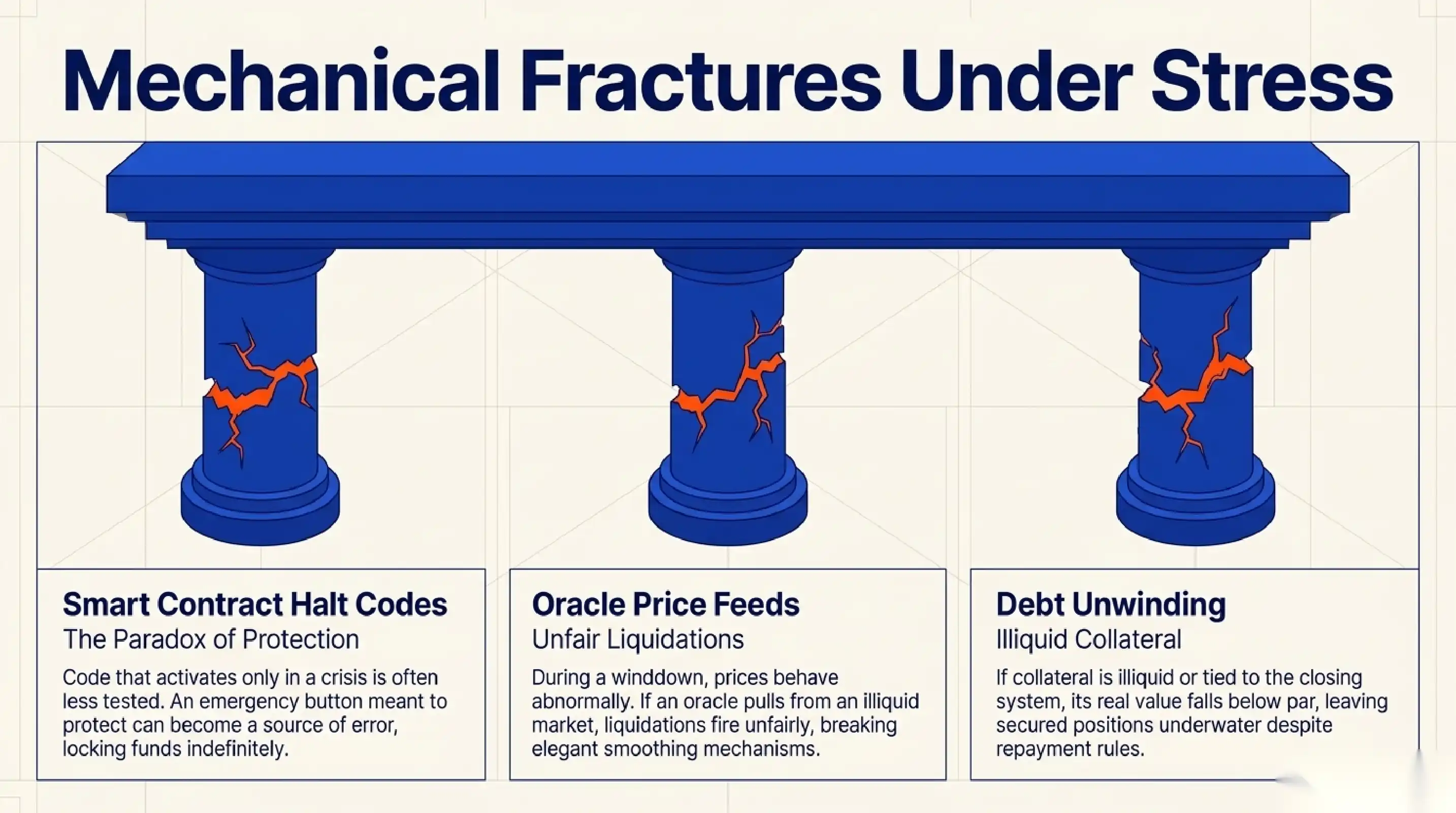
A winddown is often tied to a change of code or the activation of a halt mode, and this is exactly where a separate technical risk appears. Code that is rarely used and switches on only in a crisis is often less tested than ordinary operations. The result is a paradox: a mechanism meant to protect at the most dangerous moment can itself become a source of error.
For the client this means that stopping a protocol does not always go smoothly even with honest intentions from the team. An emergency halt function can lock funds for an indefinite period or leave part of the operations in a suspended state. So it helps to understand in advance how the halt is arranged and who can restart the system.
The sensible approach is to value protocols where emergency mechanisms are tested and described rather than added at the last moment. The presence of such a mechanism matters, but its quality matters more. A client who checks only the fact that a halt button exists easily mistakes a dangerous mechanism for protection.
Dependencies on external protocols
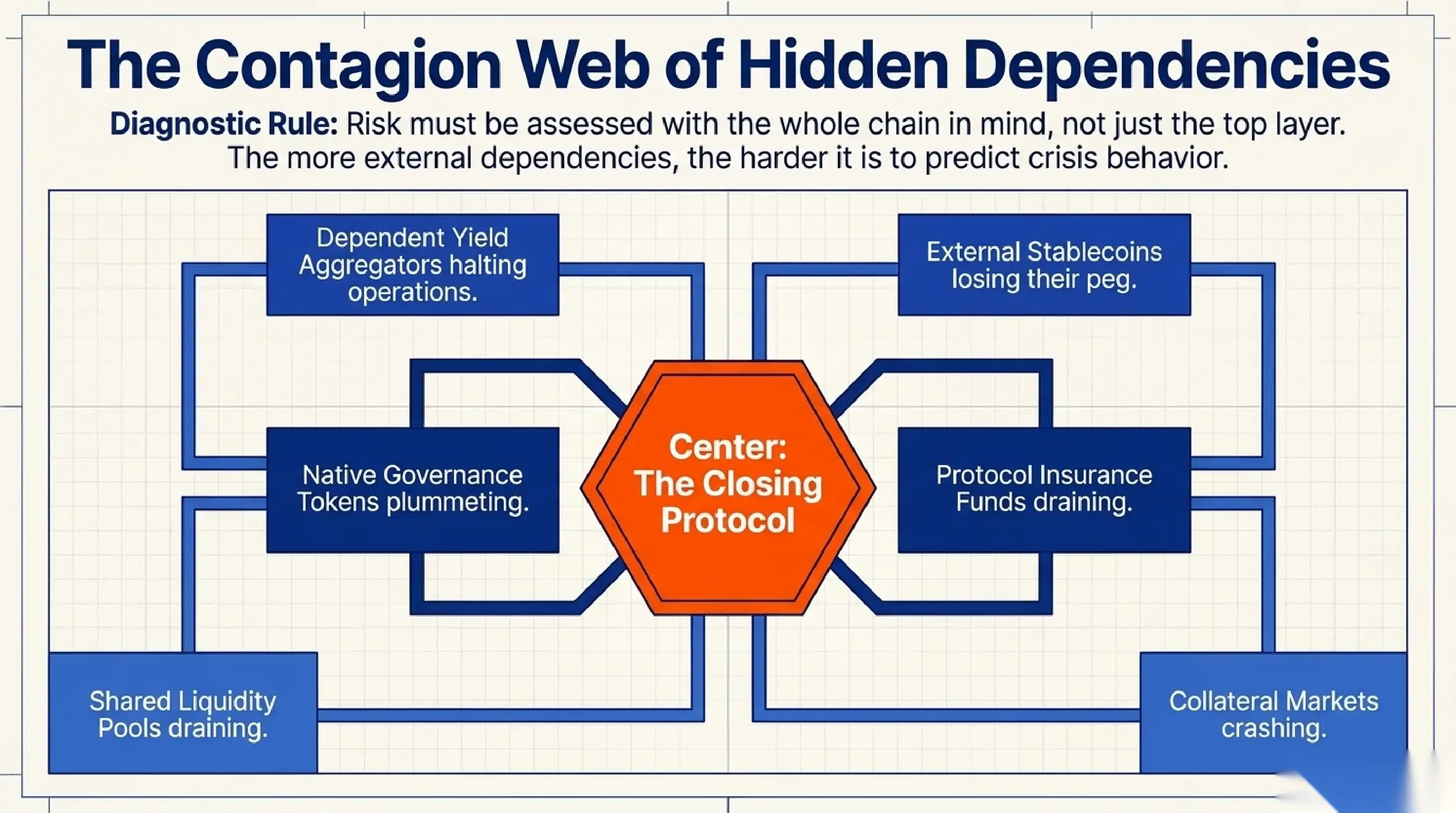
Many protocols rely on others: they take liquidity, prices or stablecoins from them. In a winddown these links become a weak spot, because a problem in one place quickly spreads further. A client who sees only one protocol may not notice a hidden chain of dependencies.
The danger is that the winddown of one protocol can trigger problems for those who depended on it. A stablecoin partly backed by assets of the closing market can lose its peg. So it helps to understand what the product a client uses actually rests on.
A sensible client treats deeply linked products more cautiously than standalone ones. The more external dependencies, the harder it is to predict behavior in a crisis. This does not mean linked protocols are bad, but their risk must be assessed with the whole chain in mind, not only the top layer.
What happens to insurance funds
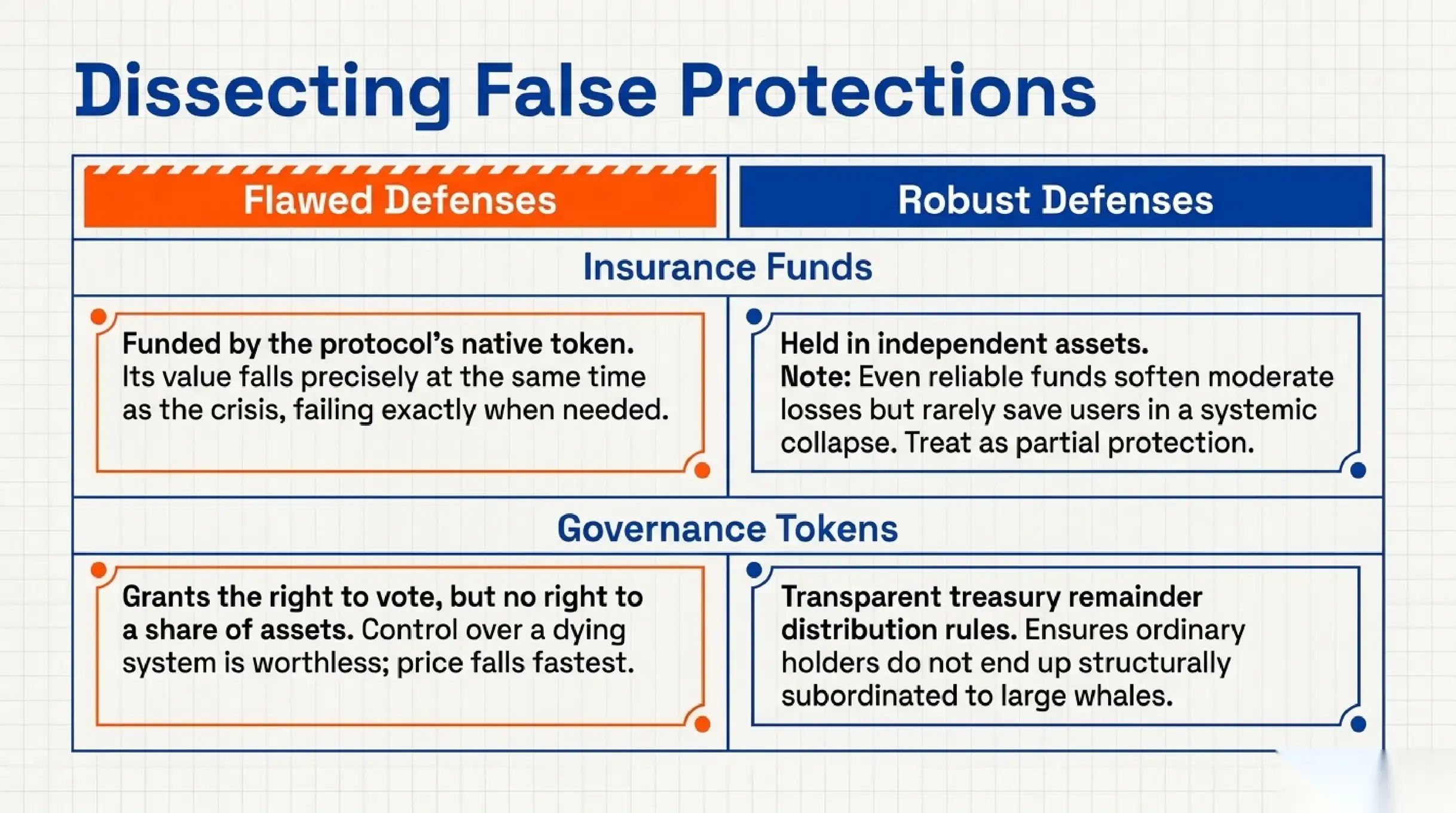
Some protocols keep an insurance fund for losses, and during a winddown its role becomes key. The question is whether the fund is enough to cover real losses and in what order it is distributed. A fund that looks large in calm times can turn out small against mass losses.
It is also important to understand what the insurance fund is held in. If it consists of the protocol’s own token, its value can fall at the same time as the crisis, and the fund cannot perform its function. A reliable fund is held in independent assets rather than in something that devalues at the first sign of trouble.
It helps the client to treat an insurance fund as partial protection rather than a full guarantee. It softens moderate losses but rarely saves in a systemic collapse. Understanding the limits of such protection matters more than the fact of its existence.
Typical mistakes participants make
The first mistake is to ignore early signs of a winddown, hoping everything will resolve itself. Falling liquidity, widening spreads and strange votes often precede a closure. A client who notices these signals gains time that those who wait for an official announcement will not have.
The second mistake is to act on emotion and change the decision every hour under the influence of rumors. This approach leads to chaotic actions and extra costs. It is better to define a plan in advance and follow it, adjusting only on genuinely new information.
The third mistake is to assume that one lucky exit in the past guarantees the same result in the future. Every winddown is unique, and liquidity conditions can be completely different. A sensible client evaluates each situation separately rather than relying on habit.
How the client should behave in a winddown
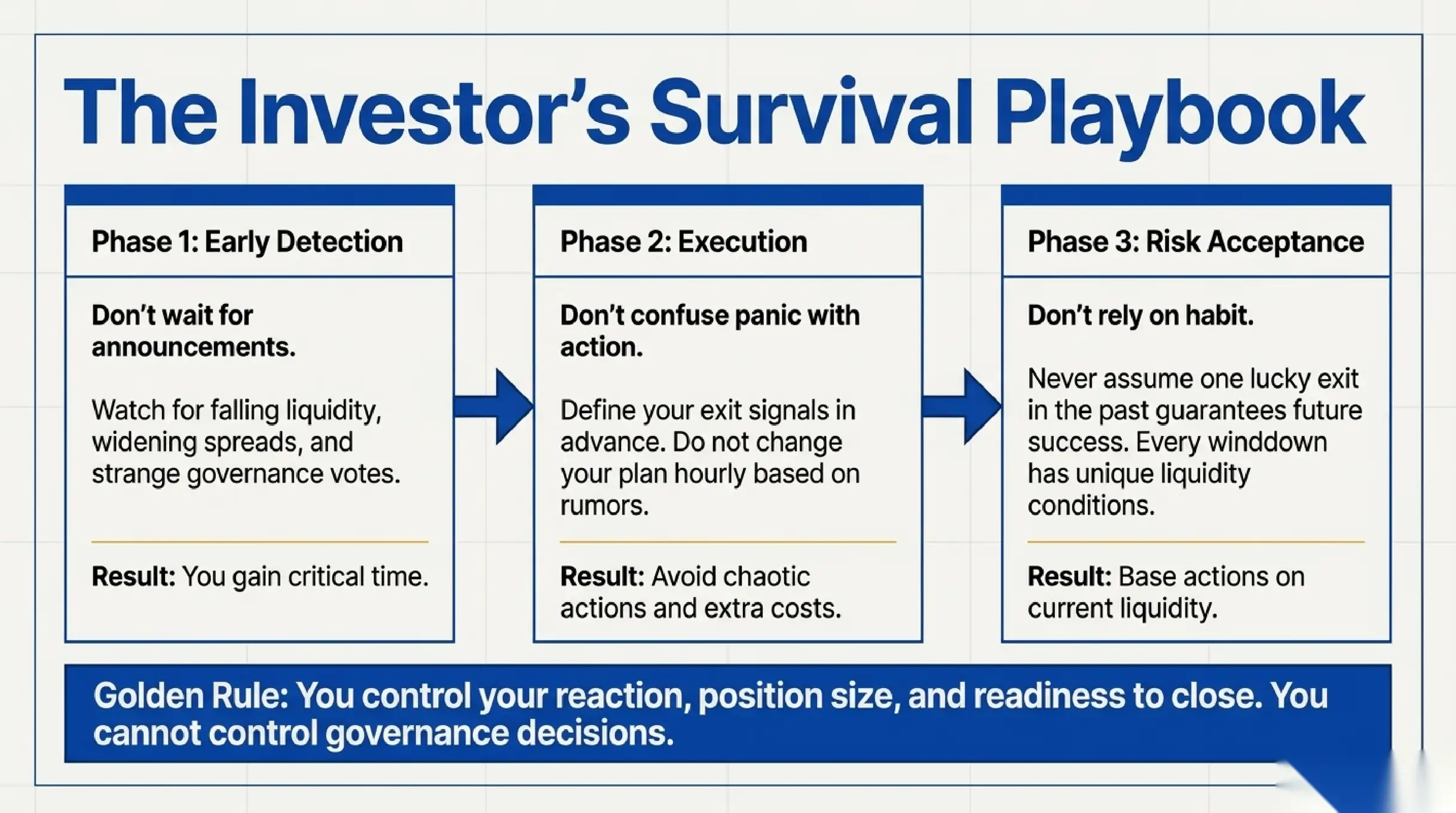
The main rule is not to confuse panic with action. A hurried exit at any price sometimes turns into larger losses than a calm exit by clear rules. But excessive slowness is also dangerous if liquidity leaves quickly. A sensible client decides in advance at which signals they exit rather than improvising in the moment of panic.
It also helps to separate what can be controlled from what cannot. The client controls their reaction, the size of their position and their readiness to close, but does not control governance decisions. So the main protection is not to guess the moment but to avoid taking on a risk that cannot be survived in a bad scenario.
Examples and sources
How a community decides to wind down or change a market is visible in the governance of Aave, Compound and Uniswap, where proposals and votes are public. Their forums and votes are a convenient way to trace how risk is closed and in what order participants exit.