
 Base
Base Unichain
 Robinhood
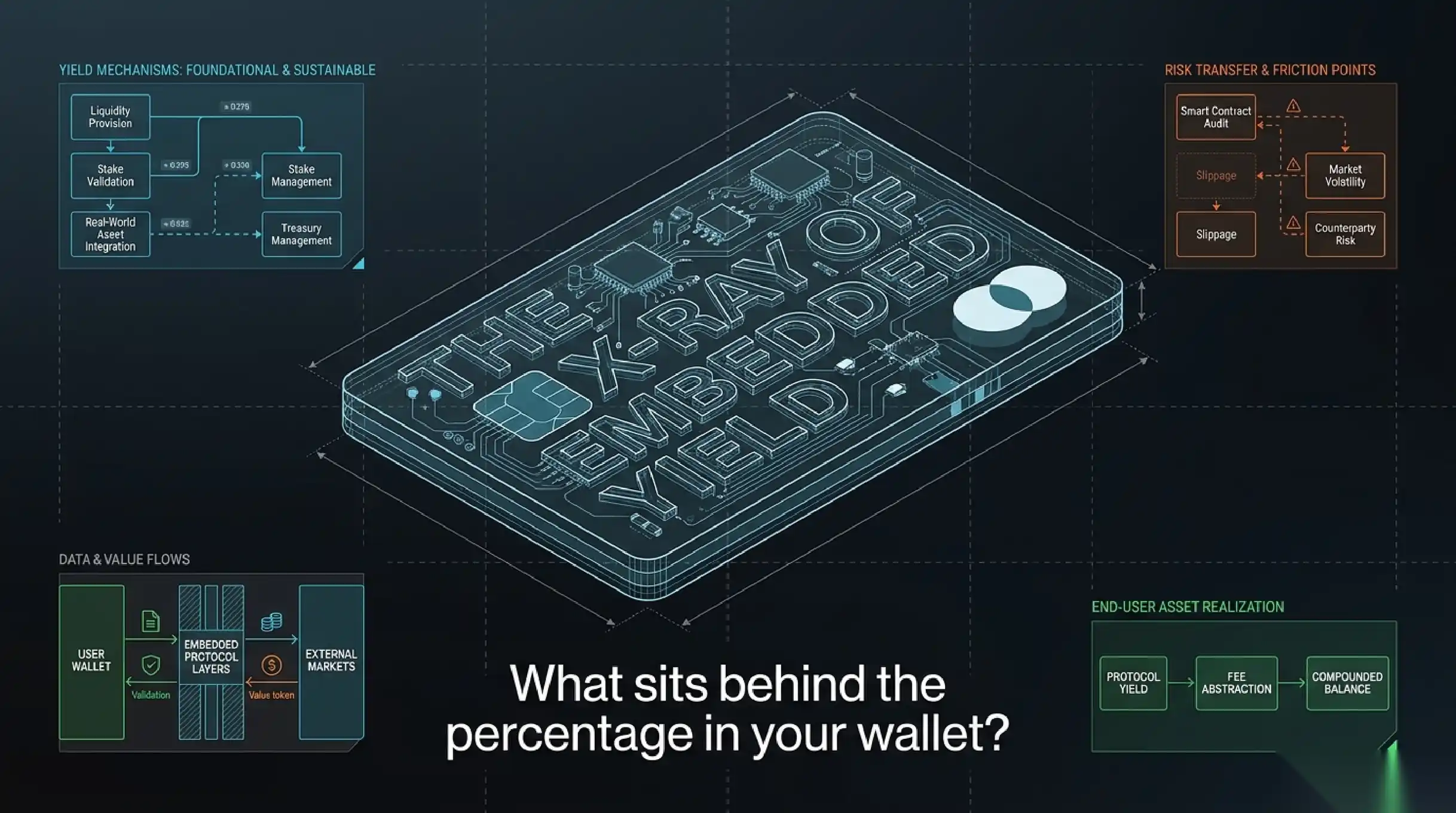
When a wallet app or a crypto card promises a percentage on the balance, it looks like a pleasant bonus, but behind that percentage there is always a concrete source and a concrete risk. Embedded yield is not magic but someone’s obligation to pay, and it matters to understand who exactly pays and out of what. The client’s task is not to refuse yield but to understand for what risk they receive that percentage.
What embedded yield is

Embedded yield is a percentage that a product accrues on a balance without requiring separate actions from the user. Funds sit in a wallet or on a card, and income seems to appear on its own. It is exactly this simplicity that makes the model attractive and at the same time dangerous, because the risk is hidden from view.
Unlike an explicit deposit, where a person consciously places money, embedded yield is often perceived as a property of the wallet itself. But under the hood it is still a placement of funds somewhere else. It matters to the client to see this placement, not only the final percentage.
Where the percentage comes from
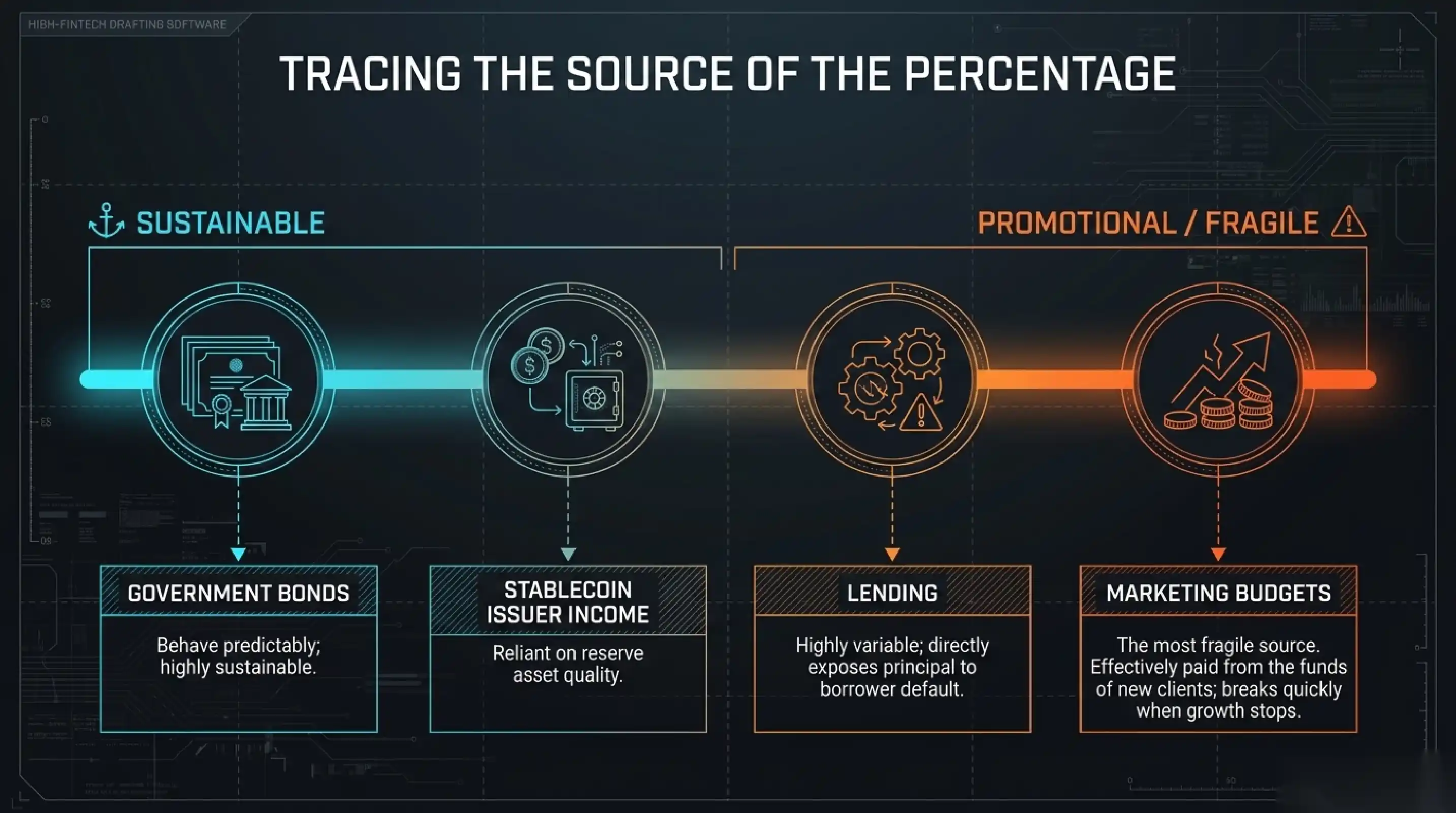
The percentage can come from various sources: lending, government bonds, the income of a stablecoin issuer or a marketing budget. The sustainability and real risk of the yield depend on the source. Income based on government bonds behaves very differently from income from risky lending.
It is especially important to be wary when the percentage is paid out of a marketing budget, that is in effect from the funds of new clients. Such a model is sustainable only while the inflow of new money grows and breaks quickly when growth stops. It helps the client to ask where the income comes from if it is not explained directly.
Who really bears the risk
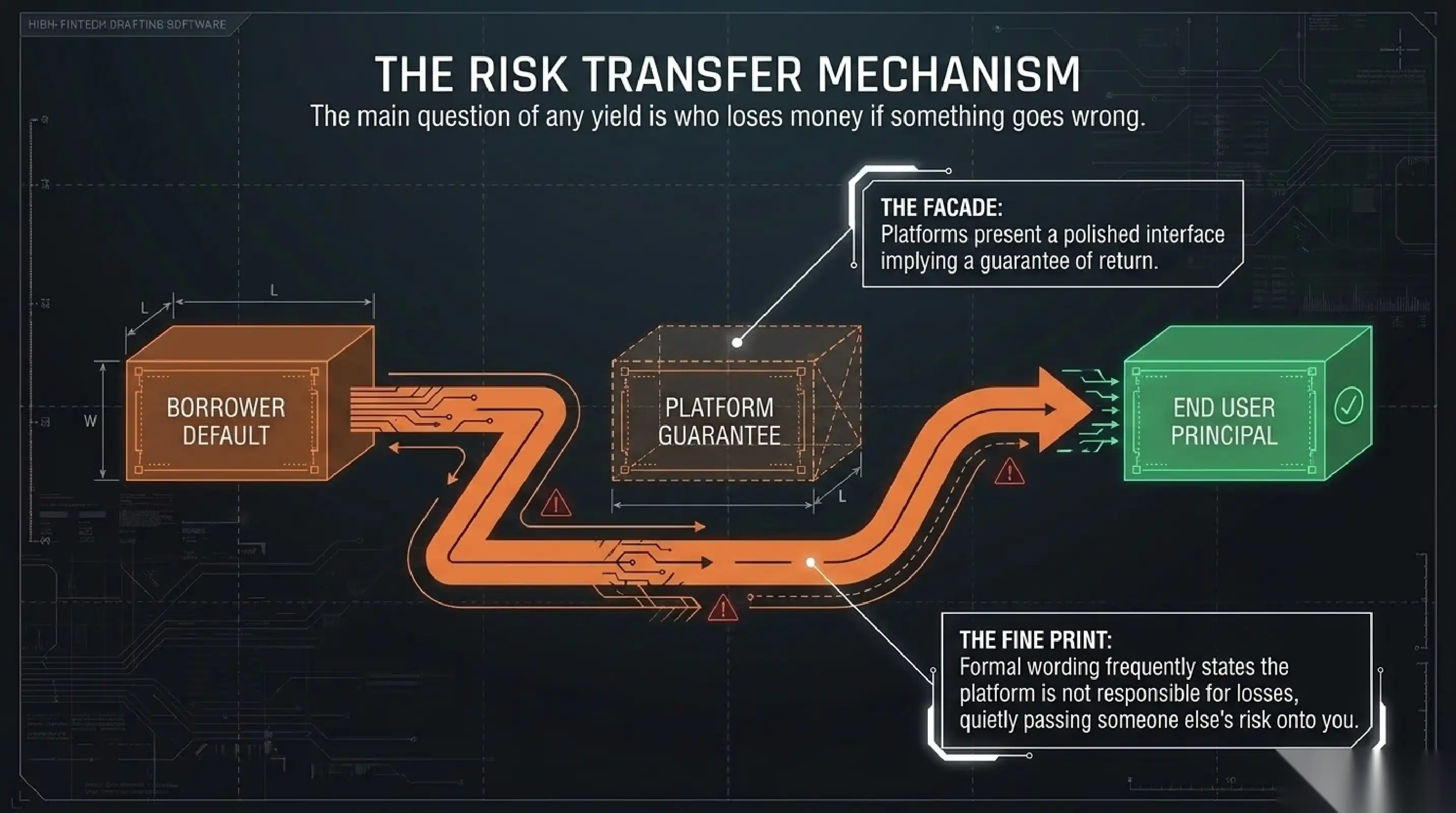
The main question of any yield: who loses money if something goes wrong. In many products with embedded yield the risk is quietly shifted onto the end user, although it looks like a platform guarantee. If borrowers do not return funds, the loss ultimately falls on those whose money was placed.
So it matters to understand whether the platform gives a guarantee of return or simply passes on someone else’s risk. Formal wording in the terms often states directly that the platform is not responsible for losses. A client who did not notice this easily confuses convenience with safety.
Stablecoins as the basis of yield
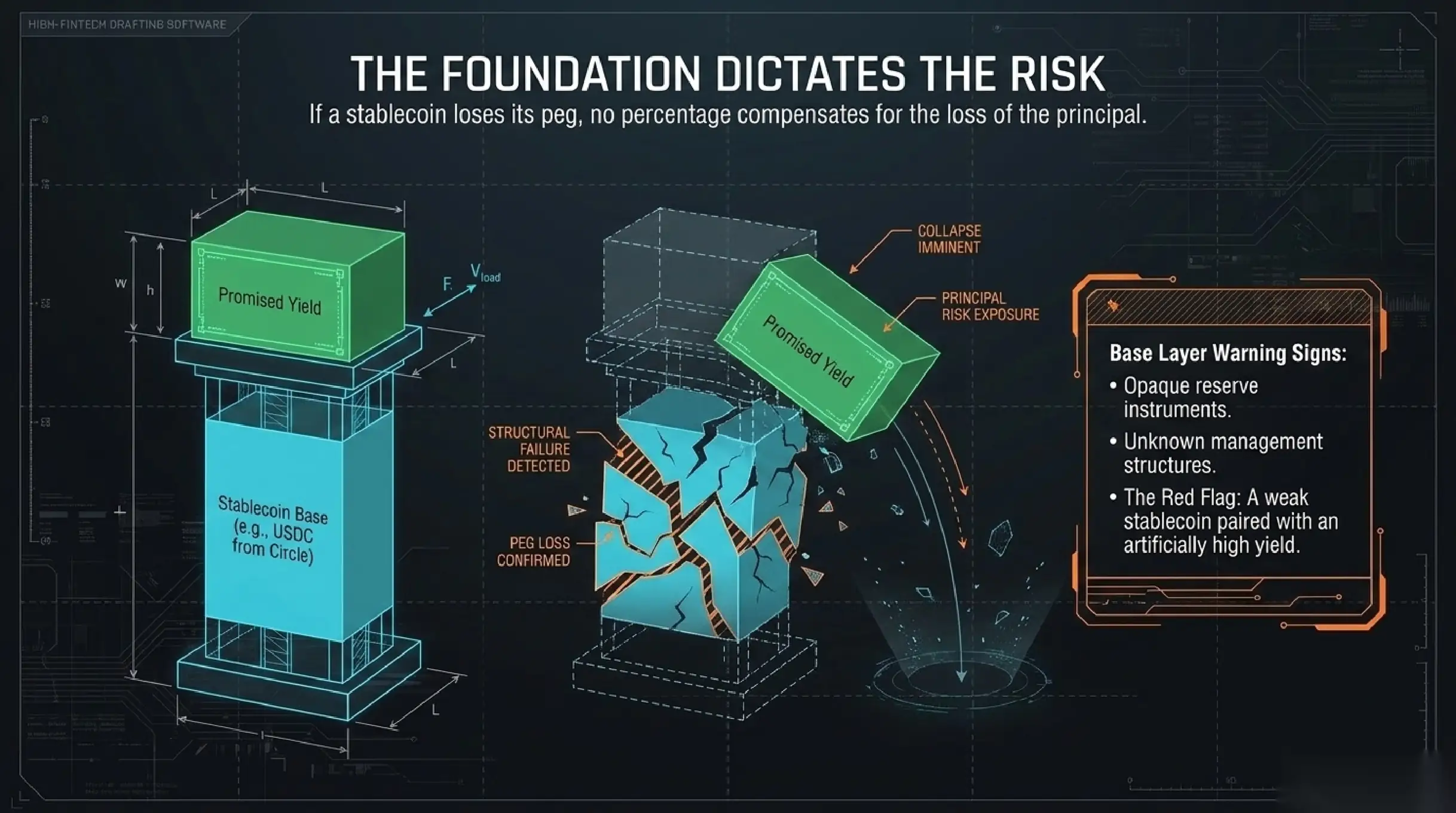
Most often embedded yield is accrued on stablecoins, and this adds a second layer of risk beyond the yield itself. If a stablecoin loses its peg, no percentage compensates for the loss of the principal. So the quality of the stablecoin matters more than the size of the promised income.
It helps to understand what backs the stablecoin and who manages it. A stablecoin backed by quality assets differs from one that holds reserves in opaque or risky instruments. The combination of a weak stablecoin and a high yield is a typical warning sign.
The difference between a wallet and a card
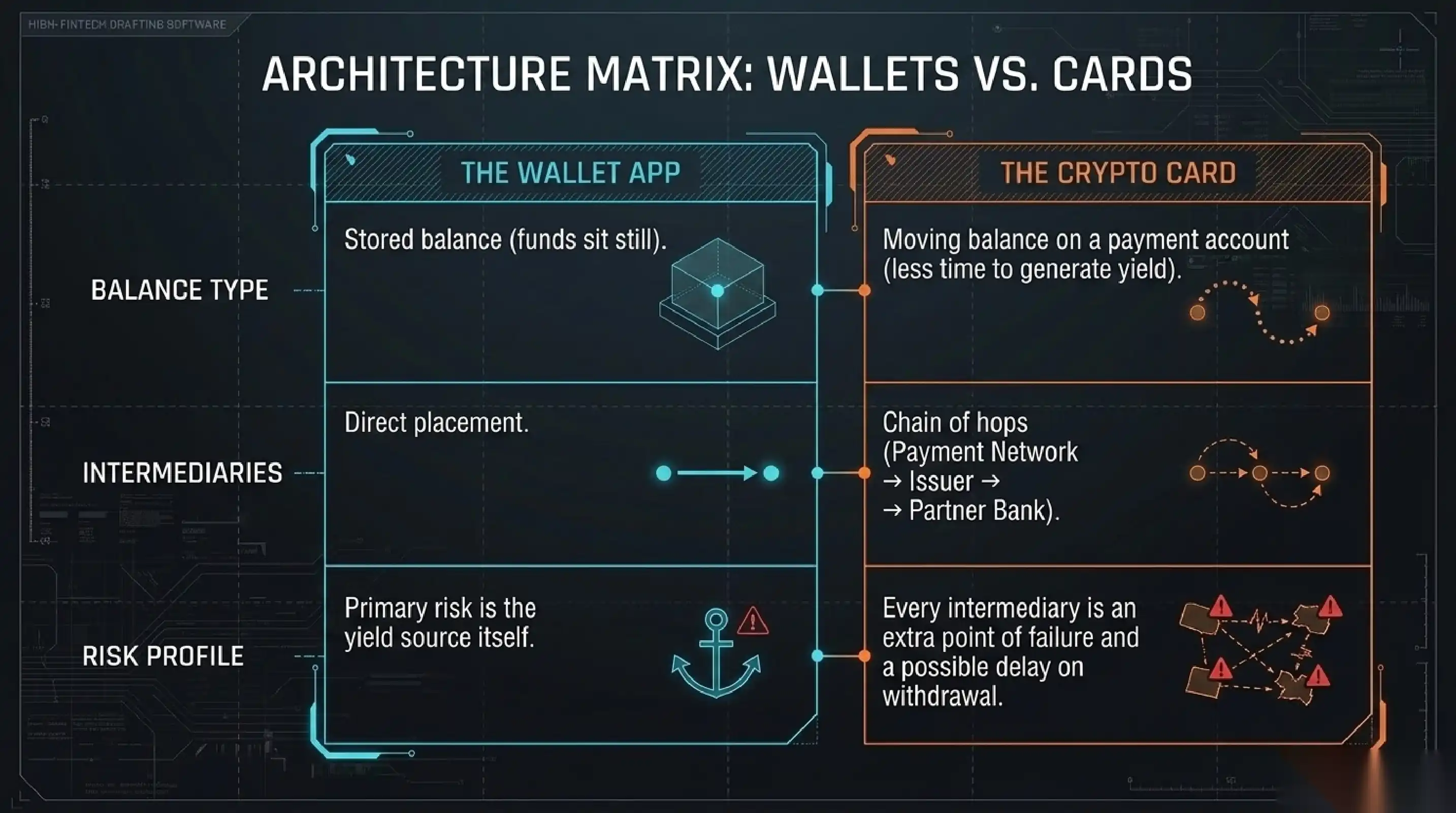
In a wallet the yield is usually accrued on the stored balance, while on a card it is often tied to the balance on a payment account. The difference matters, because in payment products funds constantly move and less often sit still. So the promised percentage on a card can turn out smaller in practice.
In addition, a card adds intermediaries: the payment network, the issuer and a partner bank. Each intermediary is an extra point of risk and a possible delay on withdrawal. It helps the client to understand the whole chain, not only the app interface.
Liquidity and the ability to withdraw
Yield loses meaning if funds cannot be withdrawn quickly at the needed moment. Some products promise a percentage but introduce withdrawal delays or limits that the client learns about only in a crisis. It is precisely in stress that the ability to withdraw is truly tested.
It helps to check in advance how quickly and on what terms money can be taken out without loss. If a withdrawal requires manual approval or takes days, this changes the risk assessment. Freedom of exit is often more important than the size of the percentage.
The regulatory status of promised yield
A promise of a percentage can fall under regulation if it is in essence a raising of funds or a security. In various jurisdictions regulators increasingly require disclosure of the source of income and warnings about risks. The absence of such disclosures is a warning sign.
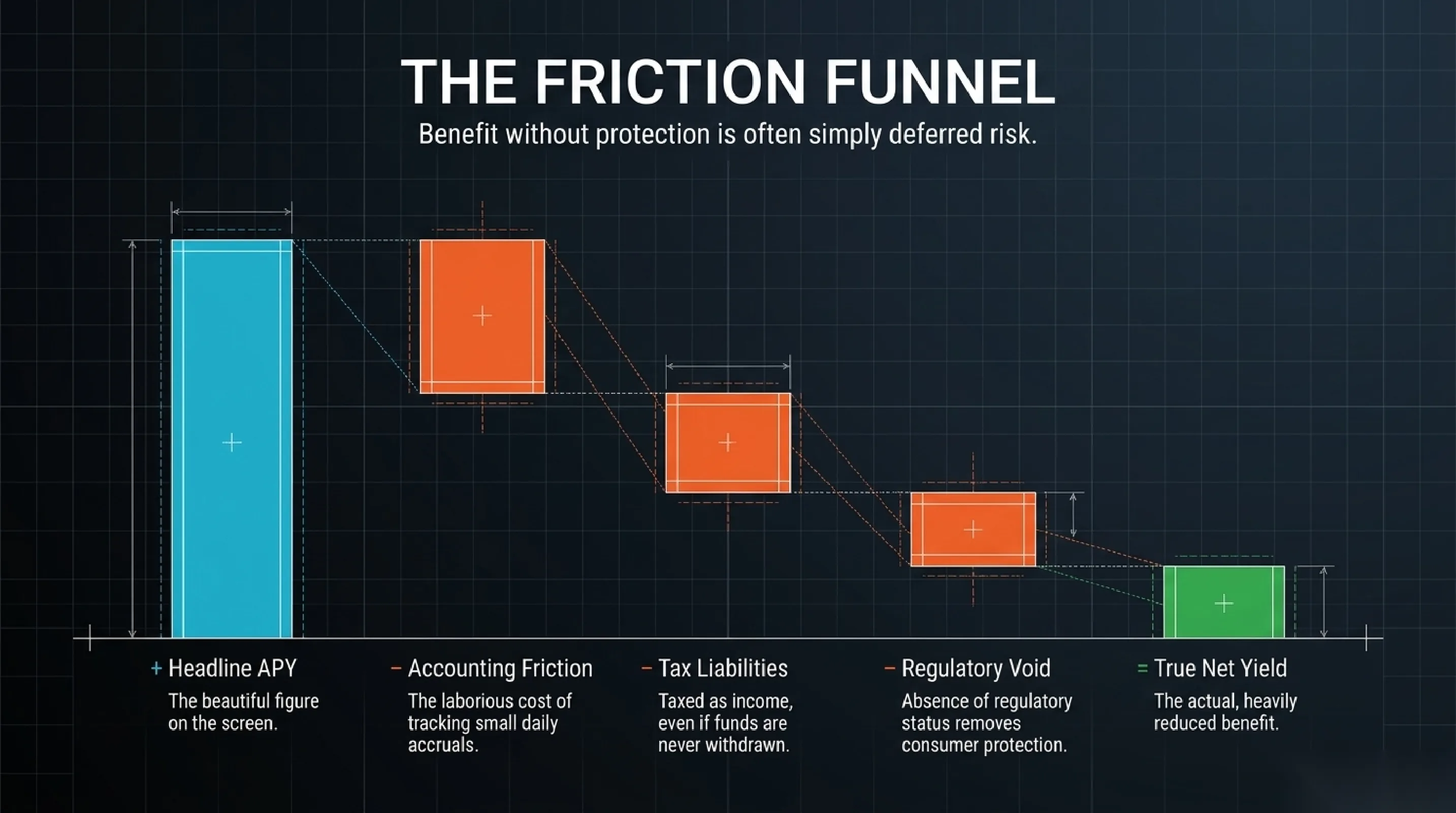
For the client it matters to understand that the regulatory status affects the protection of their funds. A product operating outside the rules may look more attractive but leaves the client without protection when problems arise. Benefit without protection is often simply deferred risk.
Transparency of the income source
An honest product usually explains directly where the income comes from and what risk is tied to it. If instead a platform talks only about the percentage figure and avoids explanations, this is a reason for caution. Transparency of the source is the first sign of a mature product.
The frequency of disclosure also matters: a one-off statement in an ad is worth less than a regular report on where the funds sit. A client who sees regular reports can at least partly control the risk. Silence about details usually says more than beautiful figures.
What happens under stress
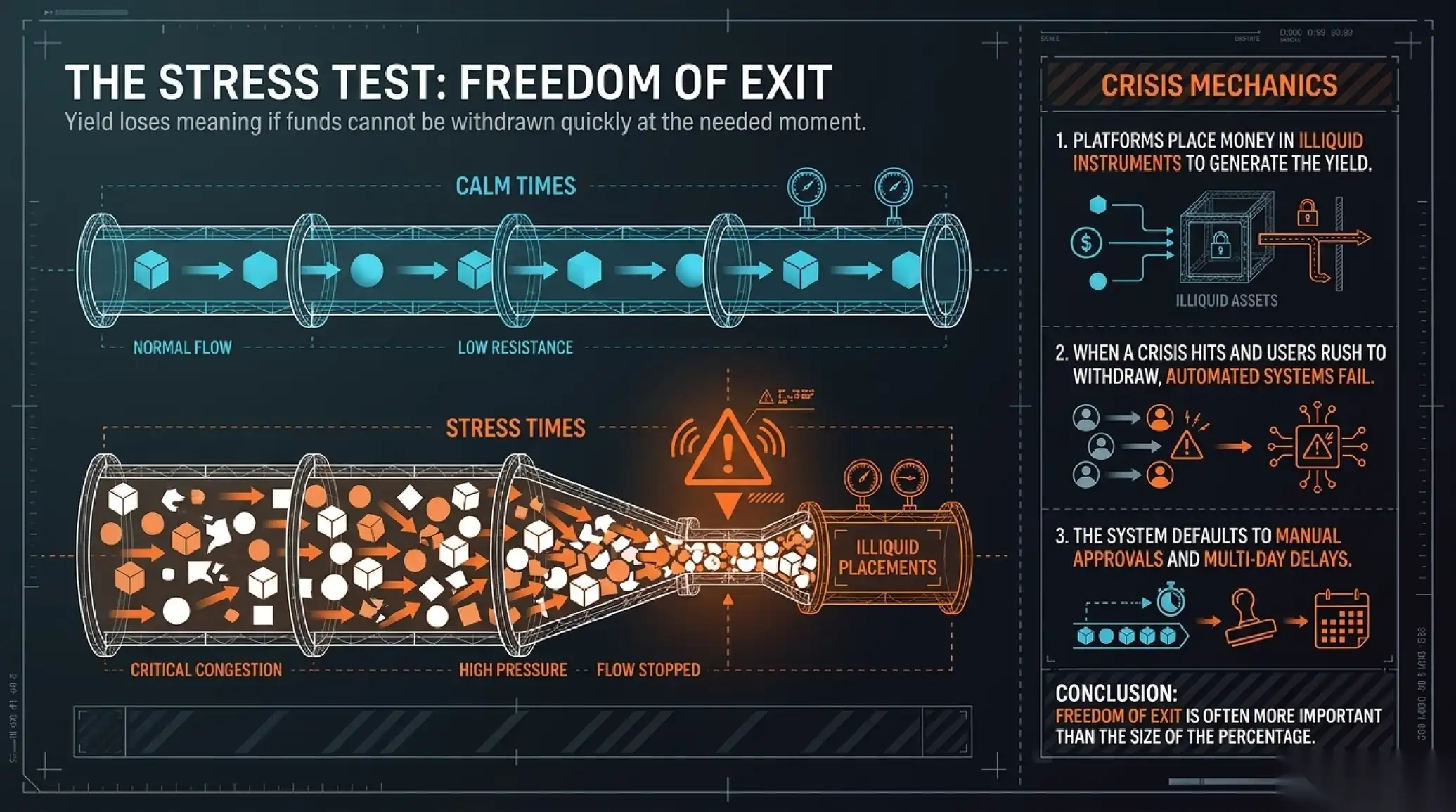
In calm times embedded yield looks reliable, but the real test comes in a crisis. When many clients want to withdraw funds at once, the platform may not cope if the money is placed in illiquid instruments. It is precisely then that the real structure of risk becomes clear.
It helps to imagine the worst case in advance: what happens to the principal if the income source stops working. If the answer to this question is unknown, the yield cannot be considered safe. A sensible client evaluates not only the income but also the safety of the principal.
Tax and accounting questions
Embedded yield often creates tax consequences that the client does not think about. The percentage can be considered income and taxed even if the client did not withdraw it. This is important to account for so that the real yield does not turn out lower than expected.
In addition, accounting for small daily accruals can be laborious and confusing. It helps the client to understand in advance how such income is treated in their jurisdiction. Hidden costs of accounting and taxes sometimes eat a noticeable part of the percentage.
How to tell a sustainable model from a promotional one
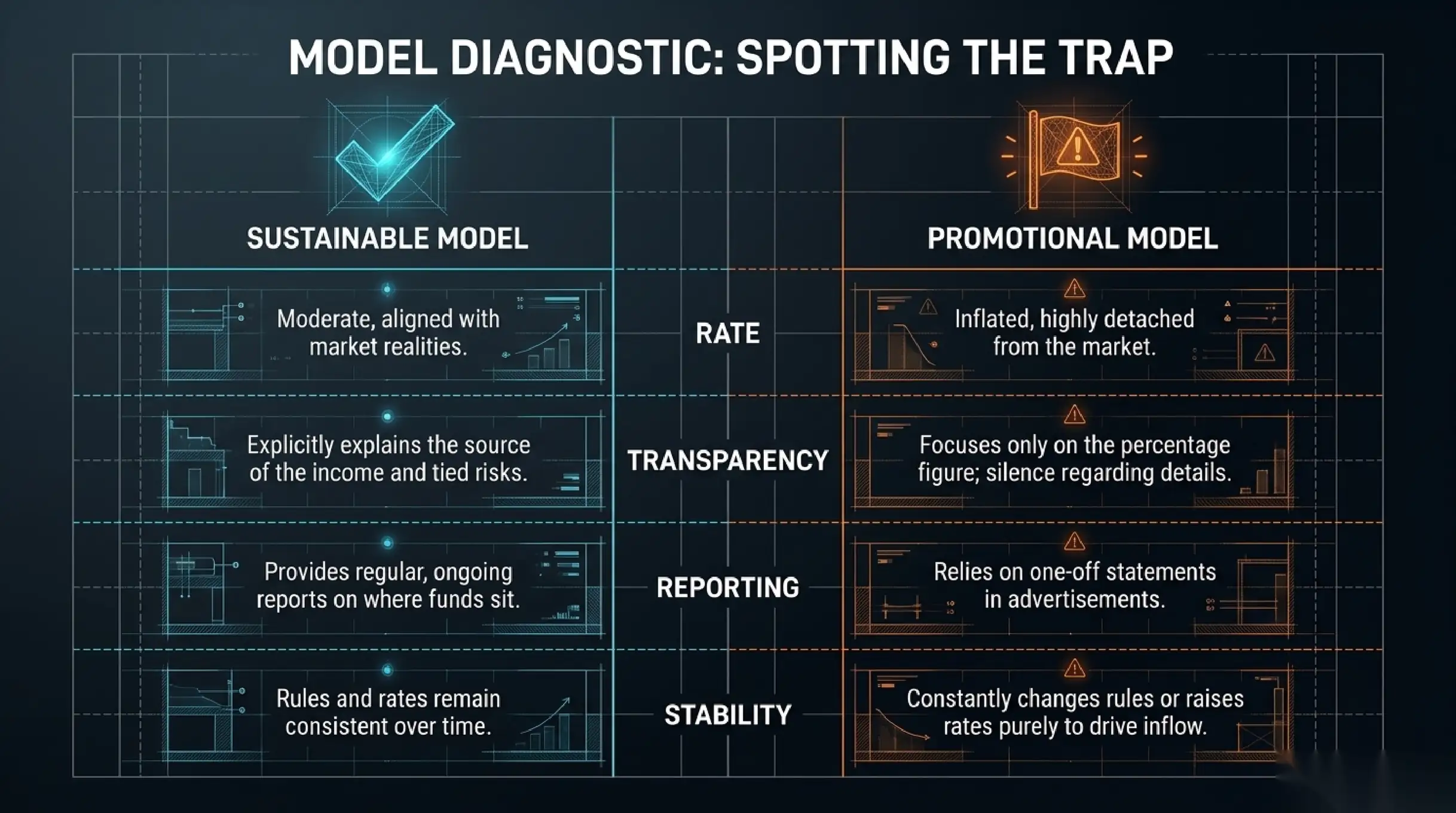
A sustainable model usually offers a moderate percentage and transparently explains its source. A promotional model, by contrast, focuses on a high figure and sidesteps the question of risks. The more the percentage differs from the market one, the more it matters to understand how the difference is paid for.
It helps to look at how the product behaves over time, not only at the current rate. A model that constantly changes the rules or raises the rate for the sake of inflow raises more questions. Sustainability over time matters more than a one-off benefit.
Typical mistakes of the user
The first mistake is to consider embedded yield a free bonus without risk. Any percentage is paid by someone, and if the source is not visible, the risk is simply hidden. A client who understands this asks questions in advance.
The second mistake is to hold more in such products than one is ready to lose. Embedded yield is convenient for small balances but not for storing all savings. A sensible client limits the share of such funds.
The third mistake is to ignore the withdrawal terms and the fine print. It is exactly there that limits, delays and cases where the platform is not responsible for losses are usually described. Reading these terms takes time but costs less than the loss of funds.
A practical checklist
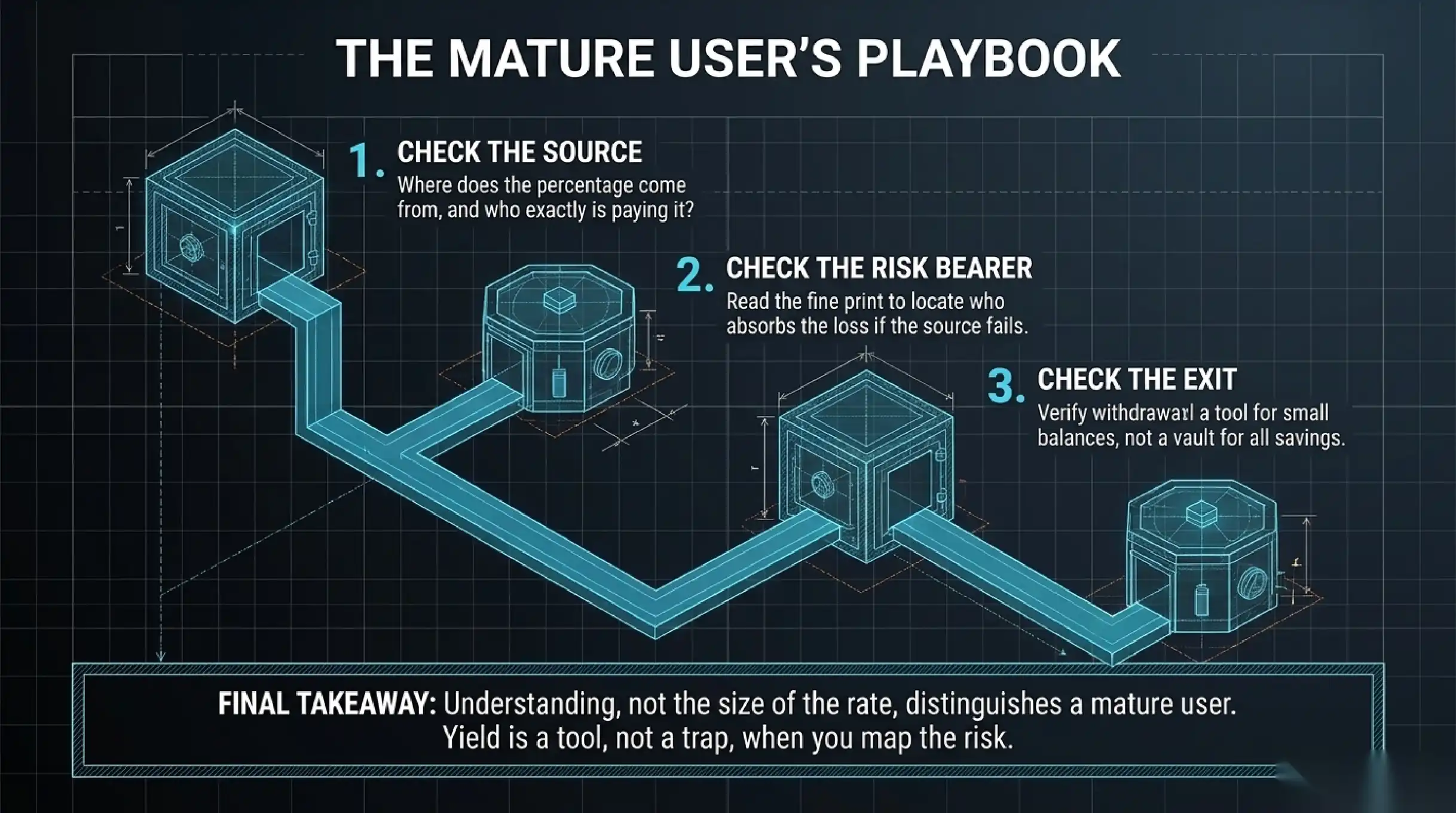
Before using embedded yield, it helps to answer a few questions. Where the percentage comes from and who pays it. Who bears the loss if the income source fails.
Next it is worth checking the quality of the stablecoin and the withdrawal terms: whether funds can be taken out quickly and without loss. It matters to understand the regulatory status and the level of information disclosure. Finally, it helps to decide what share of savings is acceptable to hold in such a product.
These questions do not cancel the benefit of yield but make it conscious. A client who understands the source and the risk uses the percentage as a tool rather than a trap. It is understanding, not the size of the rate, that distinguishes a mature user. And the habit of asking these questions before depositing, rather than after a loss, is what separates a mature user from someone chasing a number on a screen.
Examples and sources
Embedded yield often relies on stablecoins such as USDC from Circle, while the percentage itself is paid by a venue, for example a wallet or a card built on Coinbase. Their terms are worth reading closely, because the percentage in an app and the real source of the income are not the same thing.
Additional materials:
*