 Base
Base Unichain
 Robinhood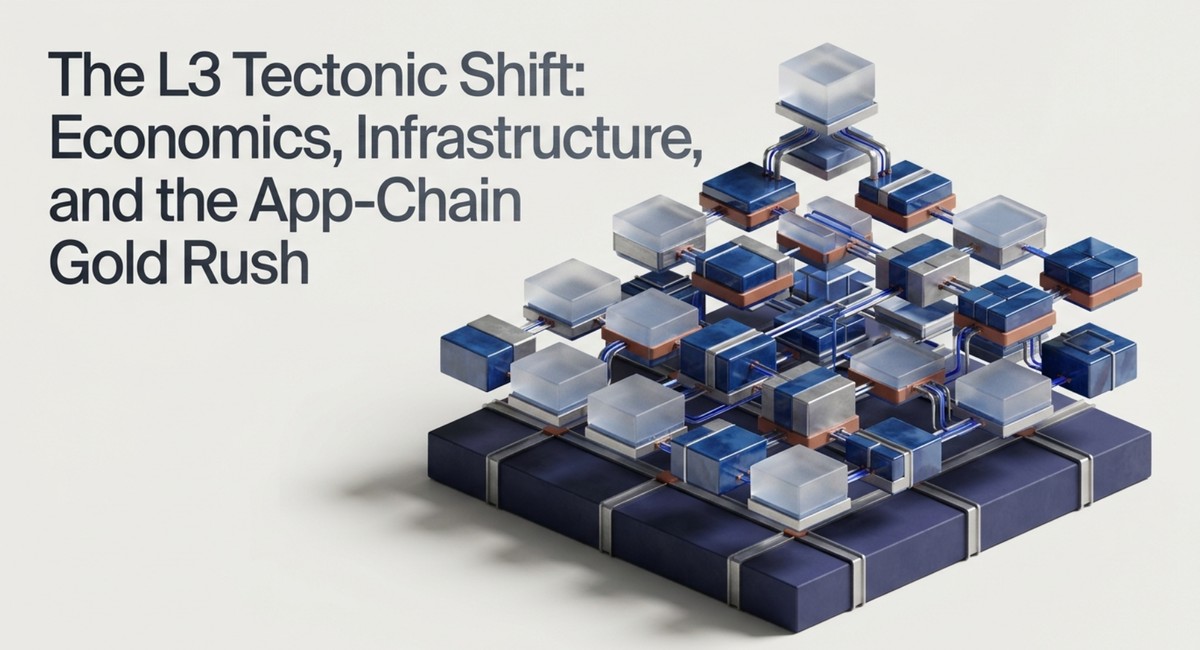
The blockchain infrastructure sector is undergoing a tectonic shift, with generic Layer 2 (L2) networks losing ground to custom Layer 3 (L3) networks and application-specific chains (app-chains). The primary drivers are the Arbitrum Orbit and OP Stack (within the Base ecosystem) frameworks.
This L3 gold rush is propelled by the need to reduce data availability (DA) costs, enable projects to capture transaction fees via custom gas tokens, and deliver high throughput. While traditional L2s face declining margins, L3 infrastructure attracts venture capital by offering isolated economic environments with predictable scalability.
This analysis explores the economic incentives, technical differences between Arbitrum Orbit and OP Stack-based solutions, and structural risks like liquidity fragmentation.
The L3 Paradigm: Overcoming the Limits of General-Purpose L2s
Traditional Layer 2 (L2) solutions like Arbitrum One, Optimism, and Base were envisioned as the ultimate scaling destination for Ethereum. However, as decentralized applications (dApps) grew complex, the limitations of shared L2 environments emerged. Intense competition for block space among diverse applications often leads to unpredictable gas fee spikes.
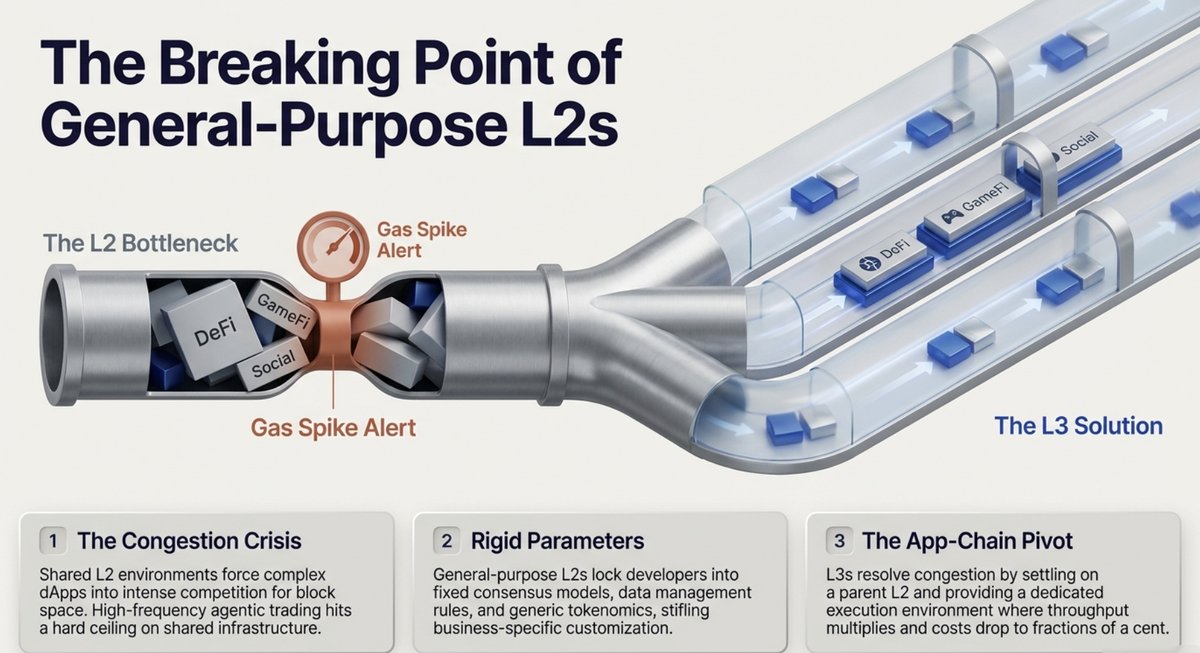
Furthermore, general-purpose L2s do not allow developers to customize consensus parameters, data management, or tokenomics to suit specific business needs. Layer 3 (L3) networks resolve this by settling on a parent L2 network rather than directly on Ethereum L1, creating an additional layer of data compression.
Instead of competing for resources, an application gets a dedicated environment. Consequently, throughput increases, and transaction costs drop to fractions of a cent. This enables commercial adoption in transaction-heavy sectors like high-frequency DeFi, SocialFi, and GameFi. Exponential growth in activity, including high-frequency trading and autonomous agents, places immense strain on infrastructure; for instance, the growing Arbitrum Orbit scaling shows the limits of throughput even in optimized environments.
The Economics of Sovereignty: Fee Capture and Custom Gas
One key incentive for migrating to custom L3 chains is economic sovereignty. In the traditional L2 model, transaction fees are paid in the network's base token (usually ETH) and flow to L2 validators. For application issuers, this means losing control over financial flows and missing the opportunity to monetize network activity.
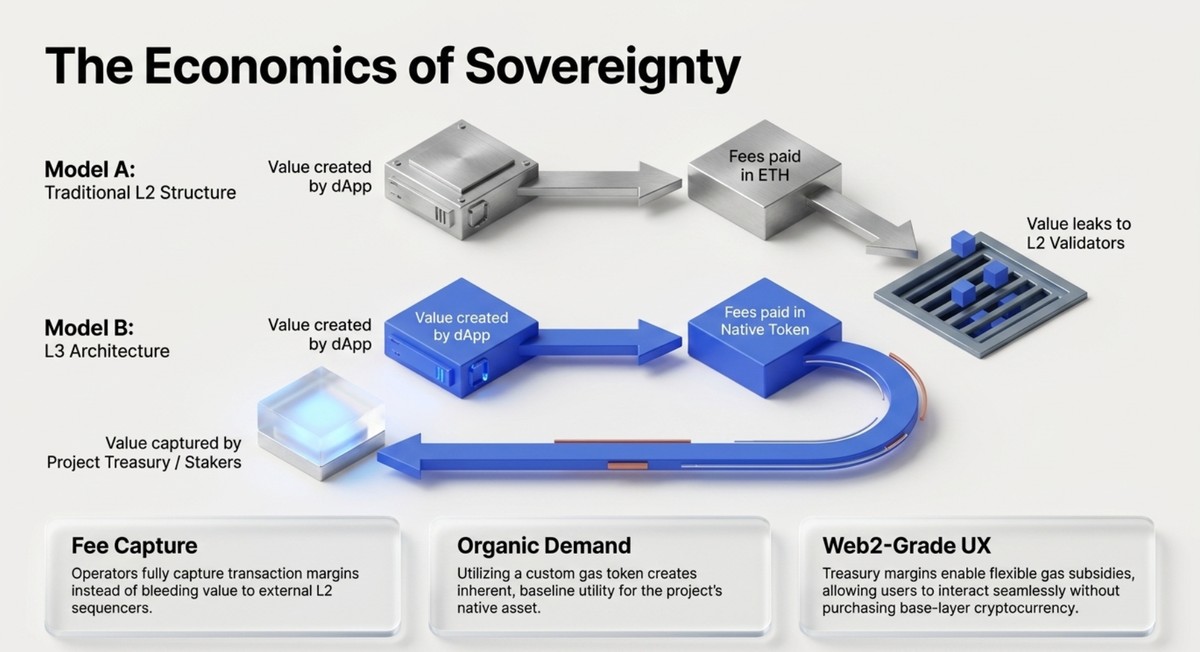
L3 architecture rewrites these rules, enabling projects to launch networks with custom gas tokens. Using a native token for gas solves several strategic challenges. First, it creates organic demand for the utility token, increasing its value proposition. Second, the L3 network operator can fully capture transaction margins, directing fees back to the project's treasury or distributing them to stakers.
Finally, it allows for flexible gas subsidies: projects can pay gas on behalf of users, making the user experience (UX) resemble traditional Web2 applications without requiring users to purchase cryptocurrency for basic interactions.
Arbitrum Orbit: Tech Stack and Modular Architecture
The Arbitrum Orbit framework is a technologically advanced tool for deploying custom networks. Orbit allows developers to build L2 or L3 chains leveraging Arbitrum Nitro and Stylus technologies. A key advantage of Orbit is its flexibility, allowing projects to choose between a classic Rollup mode and AnyTrust technology.
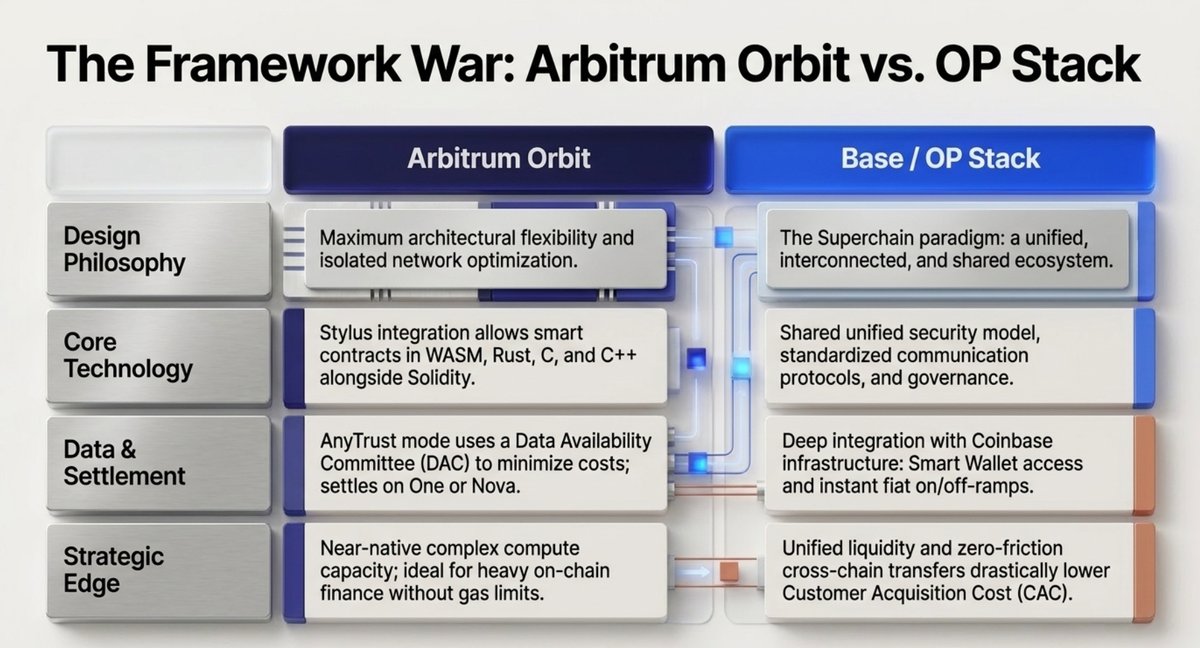
The AnyTrust mode utilizes a Data Availability Committee (DAC) to minimize transaction costs because data is not posted directly to the Ethereum L1 blockchain. A major innovation is support for Stylus technology. Stylus allows developers to write smart contracts in WebAssembly (WASM) languages like Rust, C, and C++, alongside Solidity.
This lowers the barrier for Web2 developers and enables near-native smart contract performance. For finance-oriented applications, this allows complex mathematical calculations directly on-chain without hitting gas limits. Orbit also provides flexibility in settlement: an L3 can settle on Arbitrum One for maximum security, or Arbitrum Nova for high transaction throughput at minimal cost.
Base Custom Chains and OP Stack: The Superchain Alternative
While Arbitrum Orbit maximizes flexibility for individual chains, the Base and Optimism ecosystem is built around the concept of a single, interconnected space: the Superchain. The OP Stack framework, which powers Base, allows developers to deploy custom L2 and L3 chains that share a unified security model, communication protocols, and governance.
Custom chains deployed on top of Base gain a unique advantage through integration with Coinbase infrastructure. This includes access to millions of verified users via Coinbase Smart Wallet, seamless fiat on-and-off-ramps, and unified liquidity across the OP Stack ecosystem. Instead of building an isolated blockchain, developers of custom Base chains become part of a global ecosystem where cross-chain transfers are fast, secure, and free from the vulnerabilities of traditional bridges.
The economic appeal lies in minimizing customer acquisition costs (CAC), which is critical for early-stage startups.
The Role of RaaS and Modular Data Availability (DA)
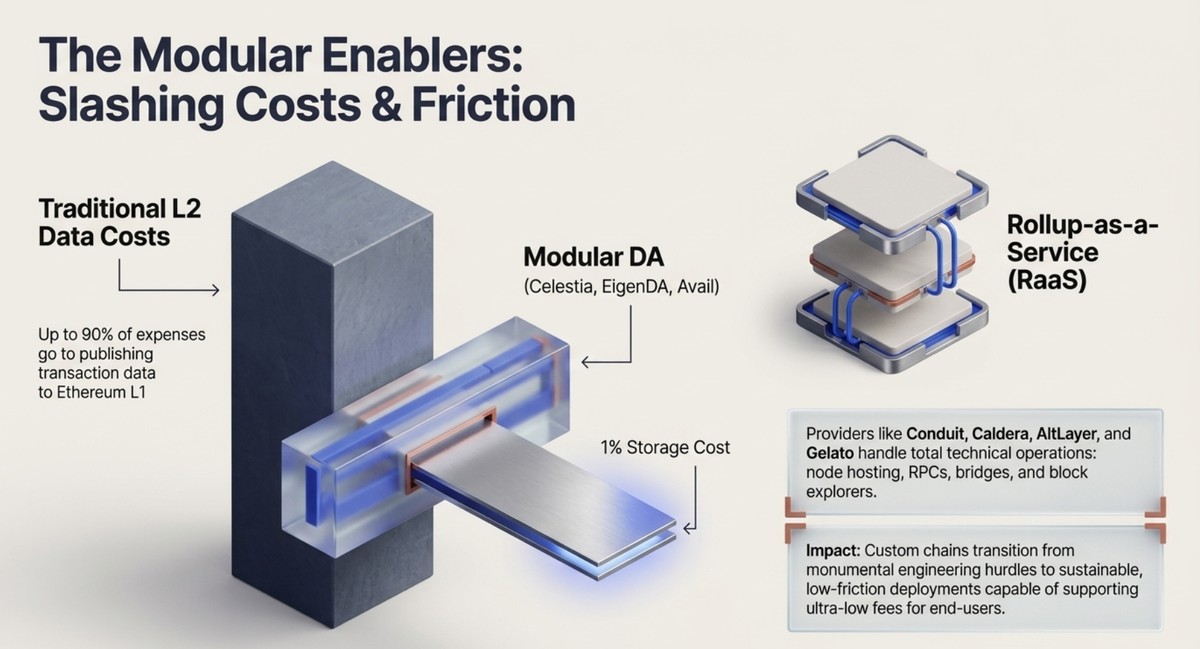
The rapid expansion of L3 networks was made possible by Rollup-as-a-Service (RaaS) infrastructure and modular Data Availability (DA) protocols. RaaS providers such as Conduit, Caldera, AltLayer, and Gelato have turned launching a custom blockchain into a simple procedure. They handle all technical operations, from node hosting and RPC services to providing bridges, block explorers, and monitoring systems.
Concurrently, modular DA layers like Celestia, EigenDA, and Avail have radically changed the cost structure of running a network. Traditional rollups spend up to 90% of their expenses publishing transaction data to Ethereum L1. By using alternative DA solutions, L3 networks can offload data storage, reducing data availability costs by more than 99%.
This makes the L3 economic model sustainable even with ultra-low fees for end-users, creating a foundation for mass-scale blockchain services.
Venture Capital Dynamics and the Economic Impact of L3s
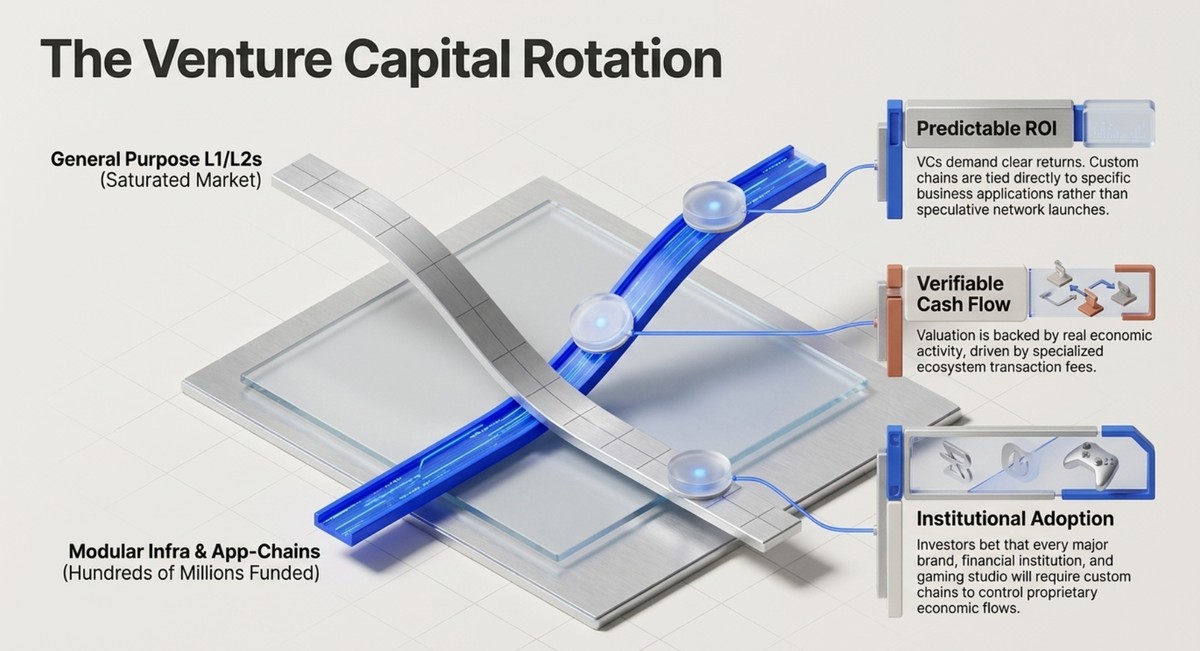
The infrastructure gold rush around L3s has caught the attention of prominent venture capital firms. For a long time, the crypto venture model relied on investing in early-stage L1 and L2 protocols. However, as the market became saturated with general-purpose networks, investor focus shifted toward app-chains and modular infrastructure.
Venture capitalists see L3s as offering a clearer model for return on investment (ROI), as these networks are tied to specific business applications and generate real cash flow from transaction fees. Funding for RaaS platforms and modular infrastructure providers has exceeded hundreds of millions of dollars.
Investors are betting that in the future, every major brand, financial institution, or gaming studio will want to own its custom chain to control user data and economic flows. This creates a new class of infrastructure assets whose valuation is backed by real economic activity and transaction volumes within specialized ecosystems.
Risks of Infrastructure Fragmentation and Liquidity Challenges
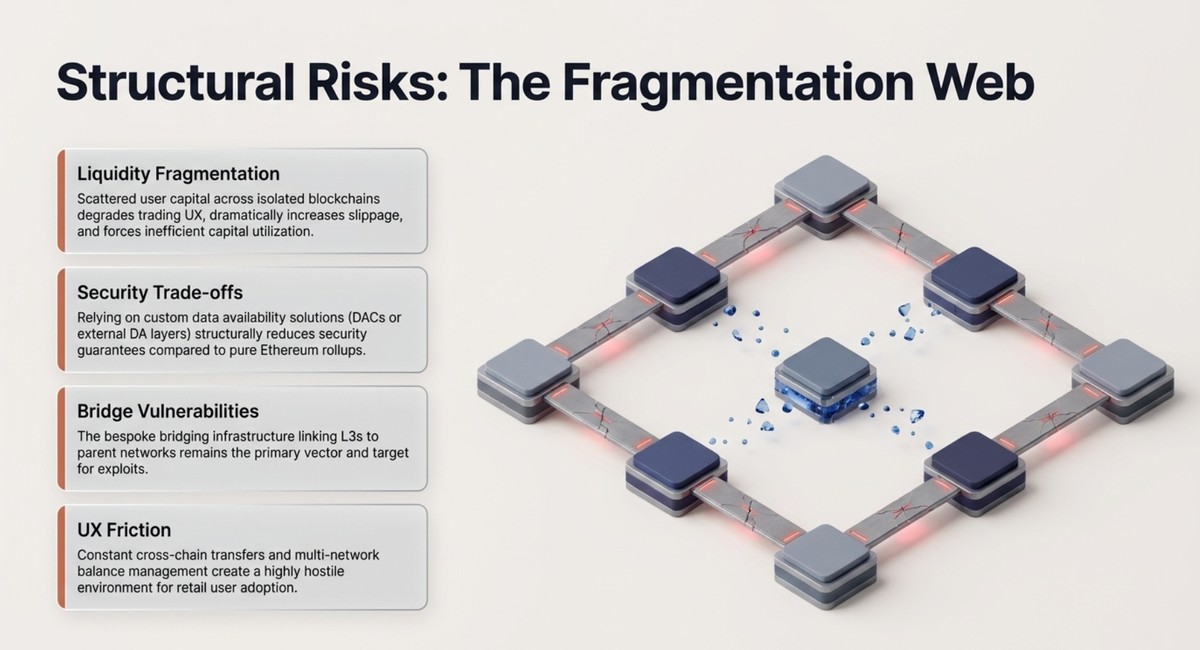
Despite the benefits, the growth of L3 networks poses serious systemic challenges. Foremost is liquidity fragmentation. When every application launches its own isolated blockchain, user capital becomes scattered across different networks. This leads to poorer trading conditions, increased slippage, and inefficient capital utilization. The user experience also becomes complex, as constantly performing cross-chain transfers and managing balances across multiple networks creates friction for users.
Furthermore, security risks arise. While L3 networks rely on parent L2s for settlement, using custom data availability solutions (like DACs or external DA layers) reduces overall security compared to pure Ethereum rollups. Vulnerabilities in bridges linking L3s to their parent networks remain a primary target for hackers.
Developers must balance transaction cost savings against the level of security required to protect user assets.
Conclusion: The Future of Multi-Layered Blockchain Architectures
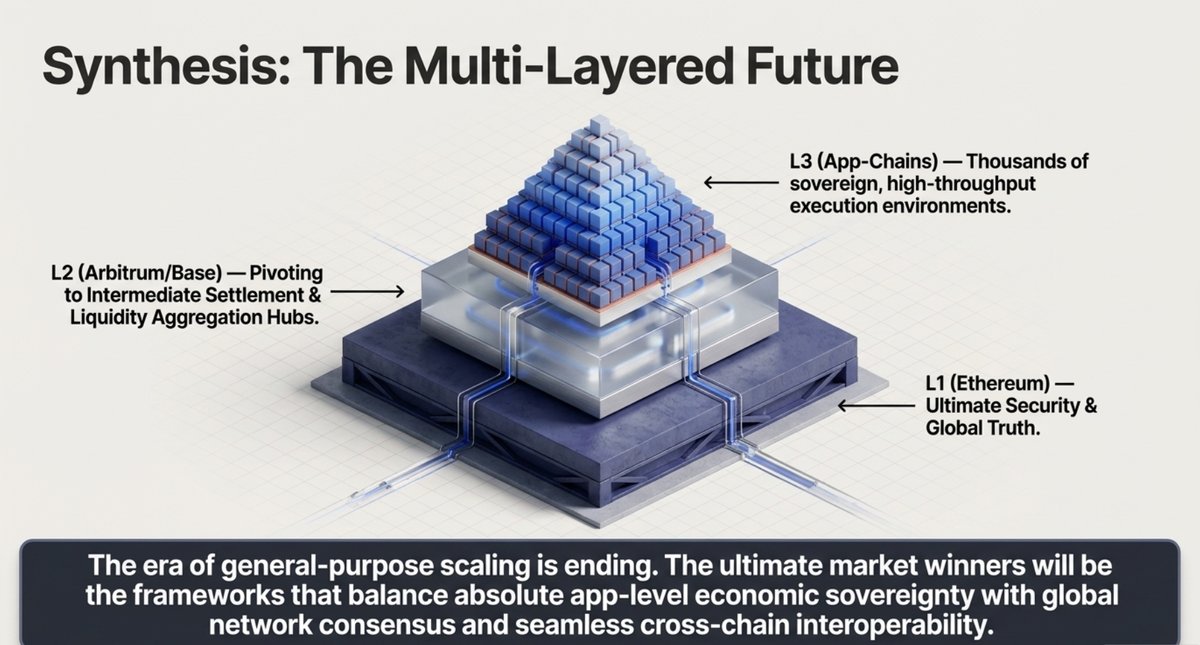
The dominance of Arbitrum Orbit and OP Stack/Base custom chains marks the transition of the crypto industry into a modular scaling era. General-purpose L2 networks are transforming from end-user execution environments into intermediate settlement layers for thousands of specialized L3 networks. This process will inevitably lead to market consolidation around a few dominant technology standards offering the best developer tools and the most seamless user experience.
For venture investors and developers, launching custom chains is becoming the de facto standard when designing scalable digital products. The winners of this technological race will be the frameworks that can offer the fastest transaction speeds while solving the fundamental problems of cross-chain interoperability and liquidity aggregation.
In the long term, the surviving ecosystems will be those that achieve a balance between the economic sovereignty of individual applications and the security of a global network consensus.