
 Base
Base Unichain
 Robinhood
-Over one trillion dollars of Bitcoin capital has historically sat idle, unable to participate natively in Ethereum and Layer-2 DeFi.
-Coinbase Wrapped BTC (cbBTC) brings Bitcoin onto Base backed 1:1 by physical BTC held in Coinbase institutional custody.
-By operating on Base, cbBTC enables sub-cent transaction fees and instant execution for Bitcoin-backed lending, borrowing, and trading.
-Unlike fragmented bridge tokens, cbBTC leverages Coinbase balance-sheet integration to create a secure, deep liquidity foundation for L2 financial markets.
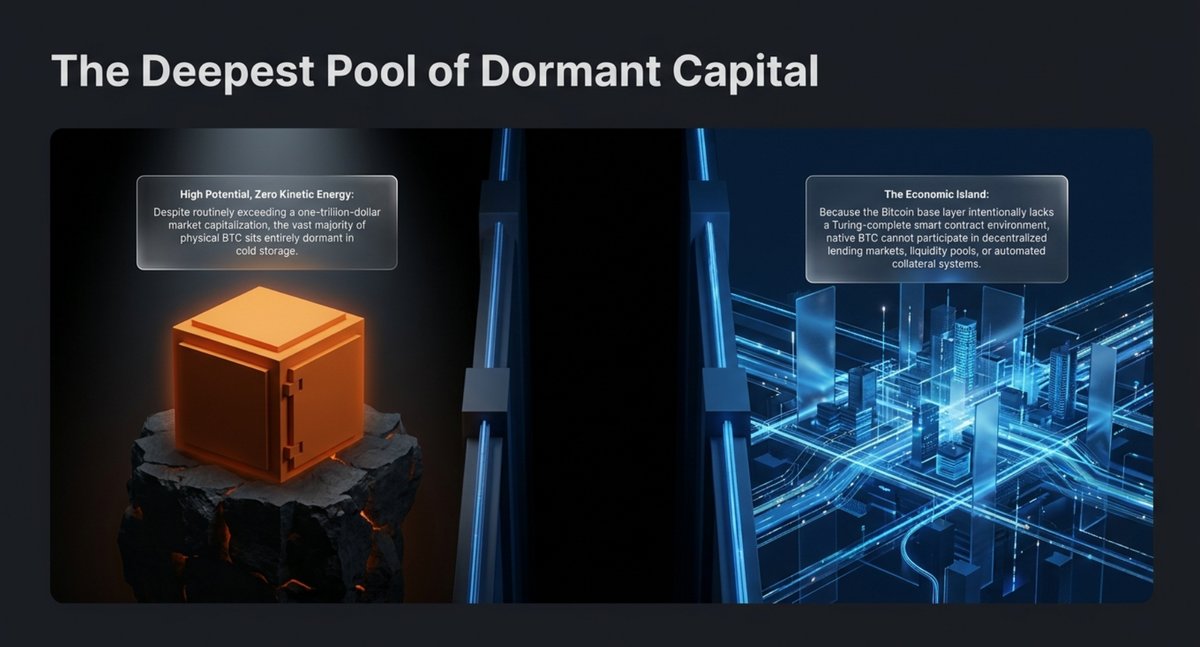
Bitcoin is the undisputed monetary anchor of the digital asset ecosystem. With a market capitalization routinely exceeding one trillion dollars, it represents the deepest pool of liquid capital in Web3. Yet, throughout most of cryptocurrency history, Bitcoin has functioned as an economic island. Because the Bitcoin base layer intentionally lacks a Turing-complete smart contract environment, the vast majority of BTC has sat entirely dormant in cold storage, unable to participate in decentralized lending markets, liquidity pools, or automated collateral systems.
While earlier innovations like Wrapped Bitcoin (wBTC) built the first bridge between Bitcoin and the Ethereum Virtual Machine, recent shifts in custodial arrangements raised concerns across the DeFi community. The launch of Coinbase Wrapped BTC (cbBTC) on Base fundamentally transformed this dynamic. By directly connecting the institutional custody of the largest regulated US cryptocurrency exchange with a high-performance Layer-2 network, cbBTC unlocked a seamless pipeline for Bitcoin-native liquidity to flow into decentralized finance without traditional bridging friction.
The Architectural Challenge of Cross-Chain Bitcoin
To understand the significance of cbBTC, one must first appreciate why getting Bitcoin into DeFi is technically challenging. The Bitcoin network and Ethereum operate on completely incompatible cryptographic foundations, state models, and consensus systems:
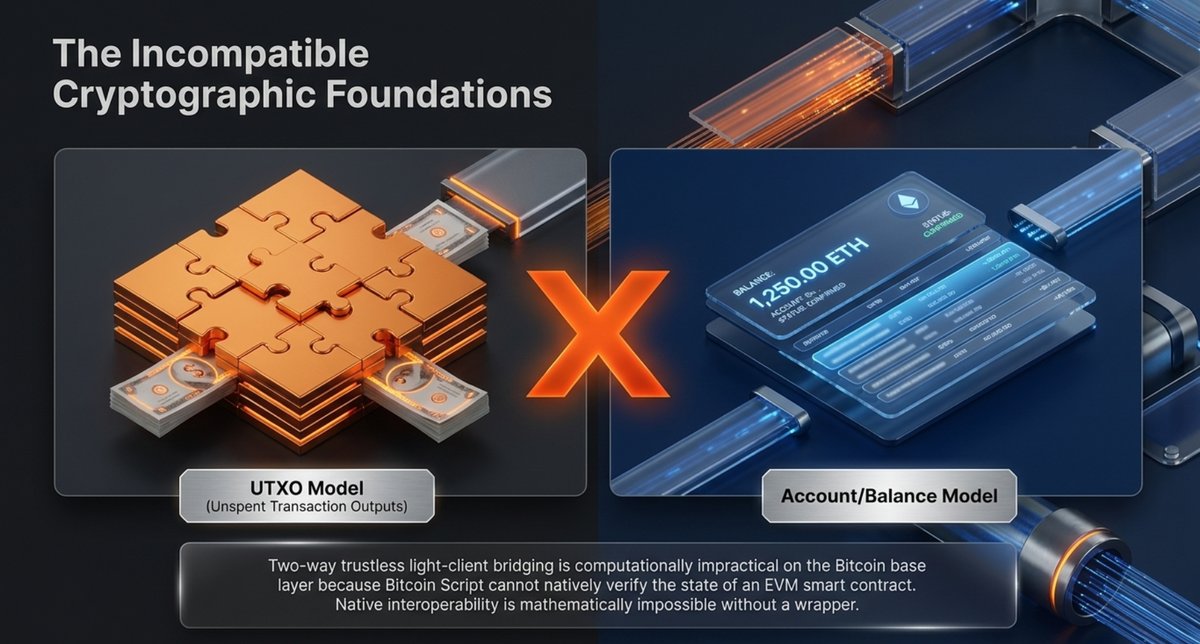
- UTXO vs Account Model: Bitcoin uses Unspent Transaction Outputs (UTXO), which function like physical banknotes being exchanged and combined. Ethereum and Base use an account/balance model, similar to traditional bank ledgers.
- Lack of Native Smart Contracts: Bitcoin Script cannot natively verify the state of an EVM smart contract, making two-way trustless light-client bridging computationally impractical on the Bitcoin base layer.
To use Bitcoin on an EVM chain, the physical asset must be locked in a custodial vault on the Bitcoin network, while a corresponding token representing that locked asset is minted as an ERC-20 token on the destination chain.
[Bitcoin Base Layer]                             [Base Layer-2 Network]
Physical BTC deposited into                      cbBTC minted 1:1 as an ERC-20
Coinbase Qualified Custody   ================>   Available for Lending, Borrowing,
(Audited Institutional Cold Vaults)               and Liquidity Pools on Aerodrome
If the custodial framework backing this representation is opaque or subject to operational vulnerabilities, the entire value stack built on top of that wrapped asset is placed at systemic risk.
How cbBTC Operates: 1:1 Institutional Backing on Base
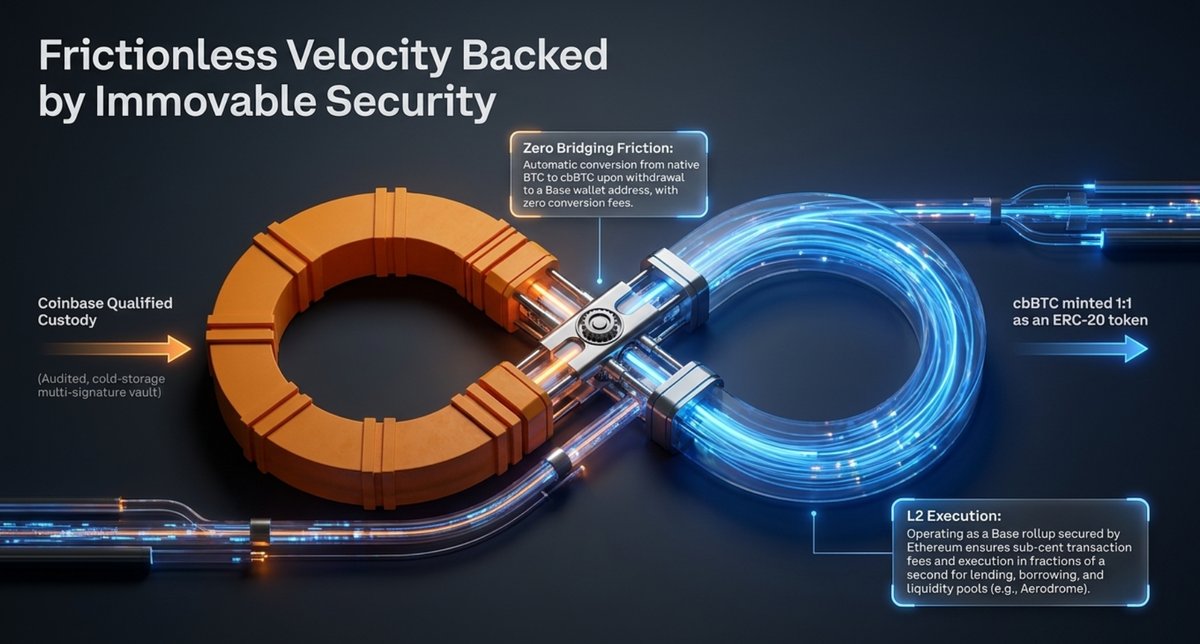
Coinbase Wrapped BTC is an ERC-20 token issued directly on Base and Ethereum, fully backed 1:1 by Bitcoin held in custody by Coinbase. When an institutional or retail customer on Coinbase initiates an on-chain transfer of Bitcoin to a Base wallet address, the platform automatically converts the native BTC into cbBTC at zero conversion fee.
Under the hood, several distinct architectural mechanisms ensure security and operational integrity, as outlined across Coinbase official institutional announcements:
- Direct Mint-and-Burn Mechanism: Only Coinbase holds the administrative authority to mint and burn cbBTC. When native BTC is withdrawn to Base, cbBTC is minted. When cbBTC is sent back to a Coinbase deposit address, the ERC-20 token is burned, and physical BTC is credited back to the customer's account.
- Proof of Reserves: The underlying Bitcoin is segregated within Coinbase's regulated custody infrastructure, utilizing cold-storage multi-signature architecture. Public on-chain balances allow independent analysts and DeFi protocols to verify that the total circulating supply of cbBTC matches the physical reserves held in custody.
- Native Base Integration: Because Base is an L2 rollup secured by Ethereum, transferring and utilizing cbBTC incurs transaction fees of less than one cent, executing in mere fractions of a second.
By removing third-party bridging fees and wrapping intermediaries, cbBTC turns the Coinbase exchange interface into a frictionless on-ramp between native Bitcoin and Layer-2 DeFi.
Comparing Wrapped Bitcoin Models: cbBTC vs wBTC vs tBTC
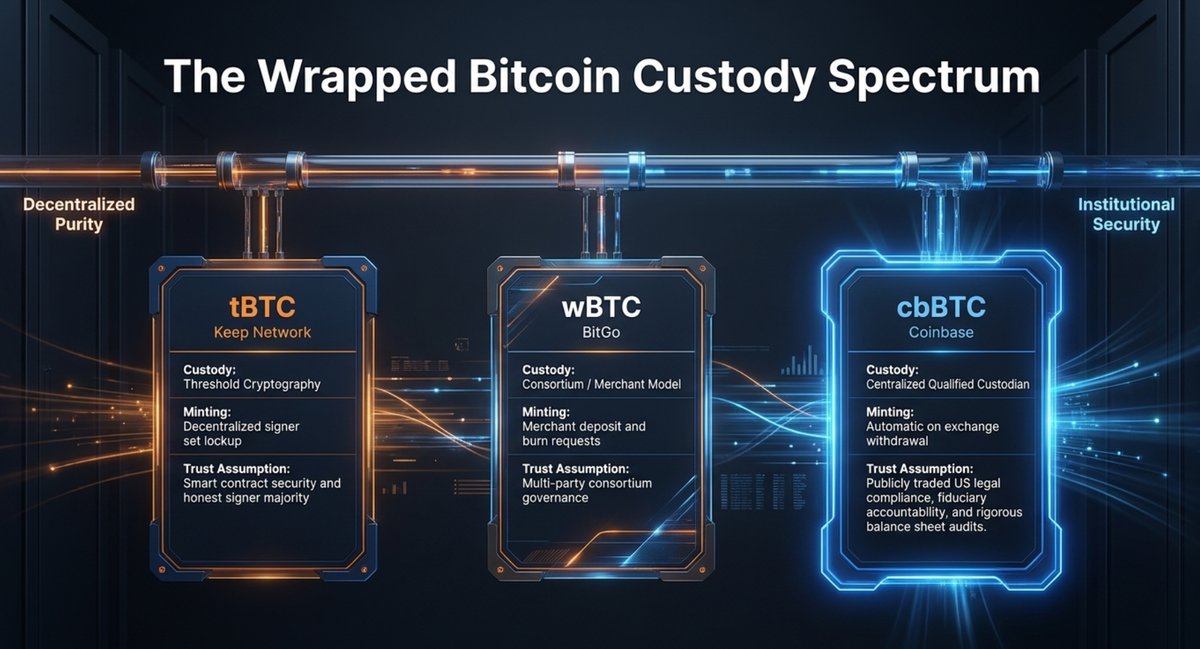
The design space for bringing Bitcoin onto smart contract platforms spans three distinct custody models, each with specific trade-offs:
| Asset | Custody Mechanism | Minting Process | Primary Trust Assumption |
| :-------- | :------------------------------------------------ | :--------------------------------- | :----------------------------------------------------------- |
| cbBTC | Centralized Qualified Custodian (Coinbase) | Automatic on exchange withdrawal | Publicly traded US legal compliance and balance sheet audits |
| wBTC | Consortium / Merchant Model (BitGo joint venture) | Merchant deposit and burn requests | Multi-party consortium governance and centralized storage |
| tBTC | Threshold Cryptography (Keep Network) | Decentralized signer set lockup | Smart contract security and honest signer majority |
While decentralized purists prefer threshold models like tBTC, institutional capital allocators prioritize regulatory standing and balance sheet depth. The legal accountability of a US public company provides risk officers with the necessary fiduciary comfort to deploy large-scale Bitcoin holdings into on-chain protocols.
Transforming the DeFi Lending and Collateral Landscape
The immediate impact of cbBTC was felt most acutely across Layer-2 money markets, such as Aave and Moonwell on Base. Historically, DeFi lending markets relied predominantly on ETH and liquid staking derivatives (LSDs) as primary collateral assets. While effective, this created an incestuous collateral loop where the health of the lending ecosystem was heavily dependent on the price action of Ethereum alone.
Bitcoin introduces macroeconomic diversification. It possesses lower historical volatility than altcoins and represents a conservative asset class preferred by family offices and institutional capital allocators. By supplying cbBTC as collateral on Base, Bitcoin holders can borrow stablecoins (like USDC) to fund business operations, participate in yield strategies, or acquire real-world goods without triggering taxable capital gains events or relinquishing exposure to Bitcoin's long-term upside.
Furthermore, on decentralized exchanges like Aerodrome Finance, cbBTC pairs formed deep liquidity foundations. Arbitrageurs and algorithmic market makers can trade between Bitcoin, Ethereum, and stablecoins with negligible slippage, deepening the overall economic resilience of the Base network.
On-Chain Verification and Auditing Infrastructure
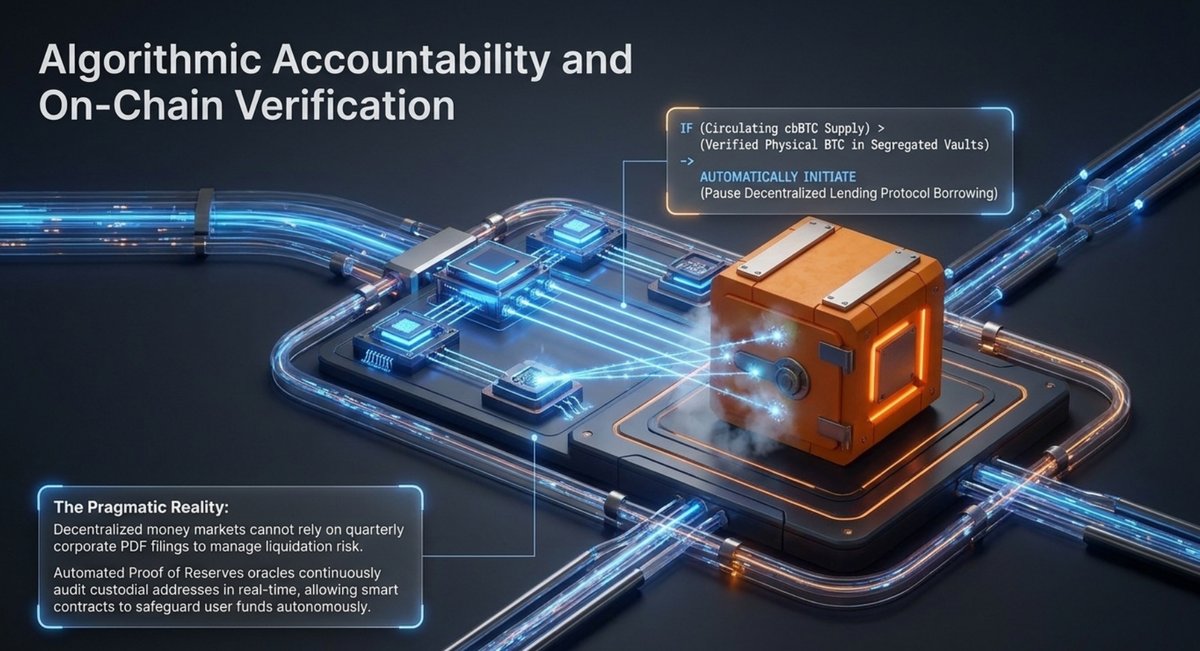
Transparency is vital for wrapped asset solvency. Decentralized money markets that accept cbBTC as collateral cannot rely on quarterly corporate PDF filings to manage liquidation risk. Protocol smart contracts require continuous, programmatic verification of underlying collateral reserves.
To support this requirement, the integration of automated Proof of Reserves oracles allows smart contracts to audit Coinbase custodial addresses in real time. If the circulating supply of cbBTC on Base were ever to deviate from the verified physical Bitcoin held in segregated Coinbase vaults, decentralized lending protocols can programmatically pause borrowing markets or throttle minting functions, safeguarding user funds autonomously.
The Trade-off: Centralized Custody Versus Permissionless Utility
A sober analysis of cbBTC requires addressing its fundamental trade-off: custodial trust. cbBTC is not a decentralized, synthetic asset created by an algorithmic overcollateralized debt position. It relies entirely on the legal standing, operational security, and regulatory compliance of Coinbase as a centralized custodian.
For strict cryptocurrency purists who adhere to the philosophy of "not your keys, not your coins," any centralized wrapped asset represents a compromise. If Coinbase were ever subject to asset freezes or regulatory mandates, custodial backing could theoretically be impacted.
However, for the vast majority of market participants, the counterparty risk of a publicly traded, US-regulated custodian subject to rigorous financial audits is viewed as significantly safer than the smart-contract exploit risks of decentralized multisig bridge protocols. By marrying institutional-grade custody with the open, composable rails of Layer-2 DeFi, cbBTC successfully brings the world's most valuable digital asset out of dormancy and into the active financial economy, establishing a resilient liquidity bridge for the next generation of on-chain capital.
The Long-Term Vision for Bitcoin in Decentralized Finance
The successful deployment of cbBTC demonstrates that Bitcoin does not need to remain a passive reserve asset. As Layer-2 ecosystems continue maturing, the ability to deploy Bitcoin into high-yield, low-cost financial contracts provides investors with the best of both worlds: long-term asset security coupled with continuous on-chain utility and productivity. By providing audited, reliable collateral rails, Base ensures that Bitcoin capital flows seamlessly into the next generation of decentralized finance applications.