 Base
Base Unichain
 Robinhood
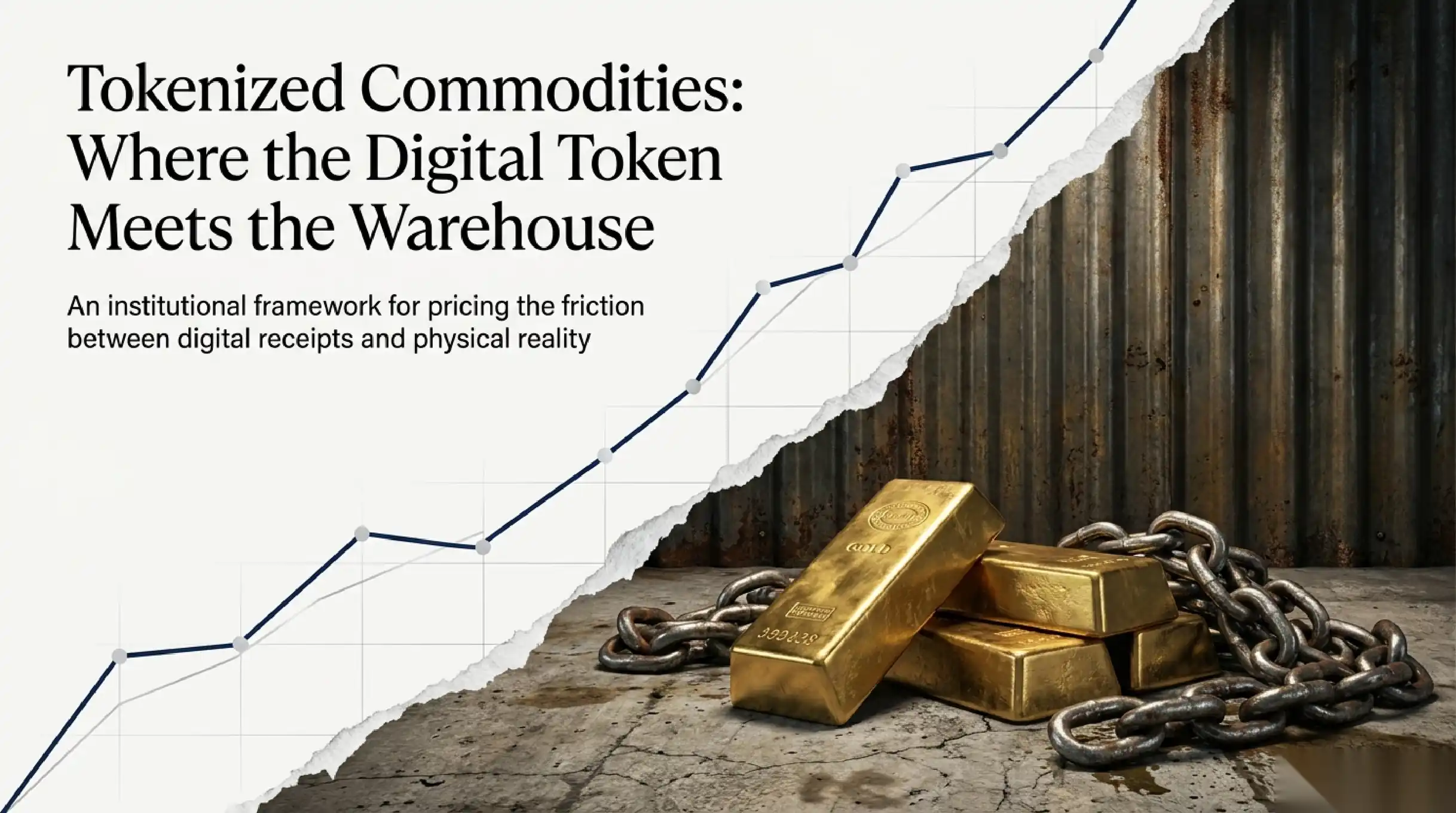
A token for gold or a barrel of oil looks like a purely technological product, but its fate is decided far from the blockchain, in a warehouse. A tokenized commodity is simply a digital receipt for a physical asset, and its entire quality comes down to how reliable the link between the token and the goods really is. When that link breaks, what remains is a pretty token with no commodity behind it.
So the central question for such an asset is simple: what happens when a holder comes to collect the physical goods. If redemption is real, fast and accessible, the token genuinely reflects the commodity. If redemption is theoretical, the token trades as a promise rather than a right of ownership, and under stress those two things are worth very different amounts.
Redemption matters more than the quote
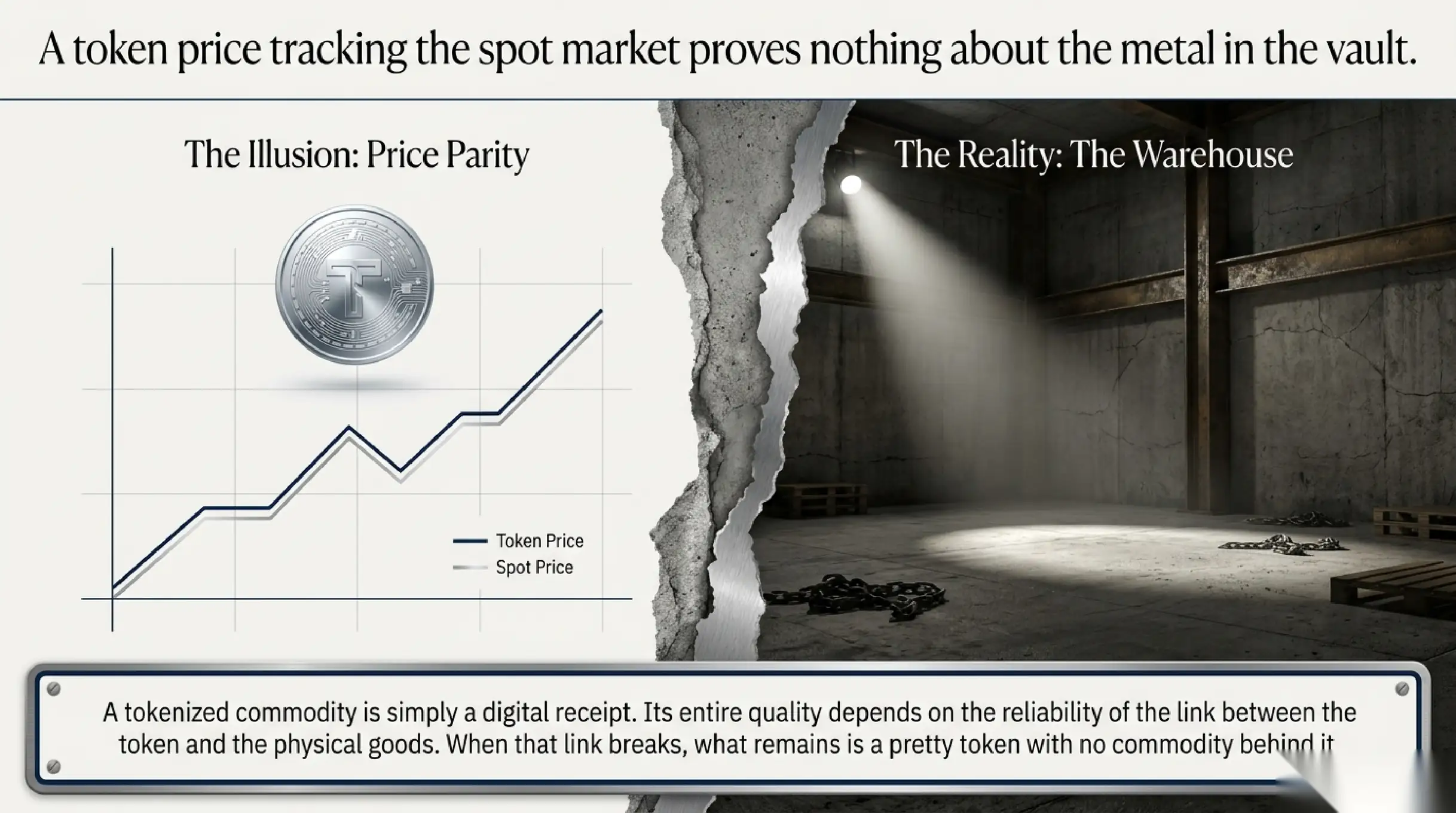
A token price can track the exchange price of gold precisely for months, yet that proves nothing about the presence of the gold itself. The price link rests on arbitrage and on market faith, not on physical metal in a vault. The real test starts where a holder asks to convert the token into a bar or into a delivery of goods.
The details that matter here are rarely printed on a project’s front page. What is the minimum quantity for redemption, who pays for logistics and insurance, what fees appear on withdrawal and how long the process takes. If the minimum lot is enormous and fees eat the benefit, then for an ordinary holder redemption exists only on paper, however loudly the marketing insists otherwise.
Commodity tokens are therefore worth splitting into two groups. The first gives a real claim on the goods and a working redemption channel. The second gives only price exposure, closer to a derivative. Both can be useful, but confusing them is dangerous, because the second carries issuer risk even when it looks like clean ownership of metal.
Warehouse, custody and reserve audits
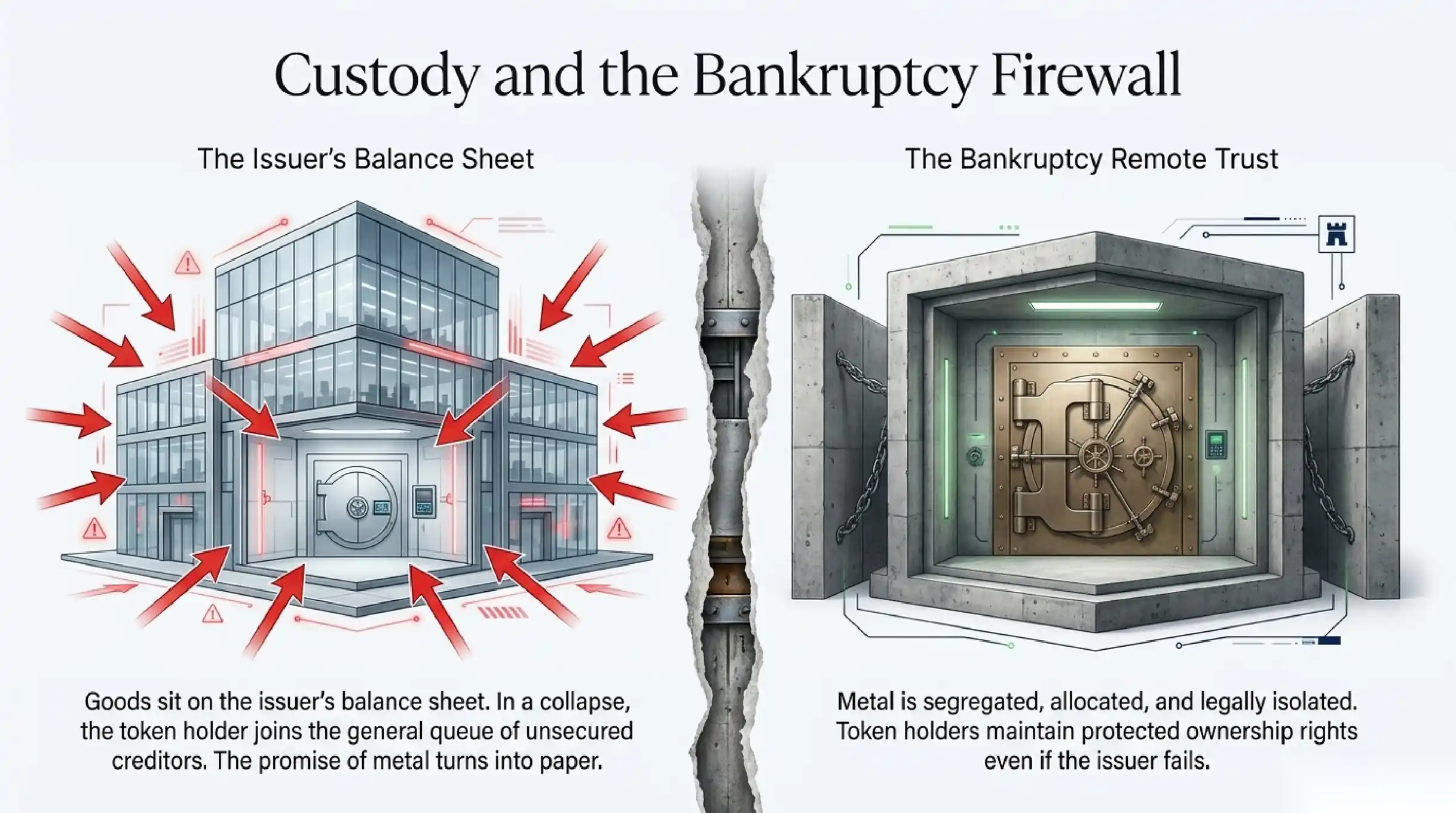
The physical commodity is stored somewhere, and the warehouse decides whether real backing sits behind the token. It matters who the custodian is, in which jurisdiction the goods sit and who legally owns them. It is one thing when the metal is segregated and allocated to token holders. It is quite another when it sits on the issuer’s balance sheet and could fall into the bankruptcy estate if the issuer fails.
A reserve audit sounds convincing, but it too has to be read carefully. Some reports confirm only that the goods existed on one date. Others verify ownership, the absence of liens and the match between the amount stored and the number of tokens in circulation. The difference is enormous: the first type does not guarantee that the same goods are not simultaneously pledged to someone else.
The frequency of audits matters as well. An annual check leaves a long window in which the reserve can change. Frequent reports verified by an independent auditor cost more but protect better. For a holder this is a direct trade-off between the cost of ownership and the depth of trust they are willing to extend to the issuer without proof.
Liquidity and the gap with the underlying market
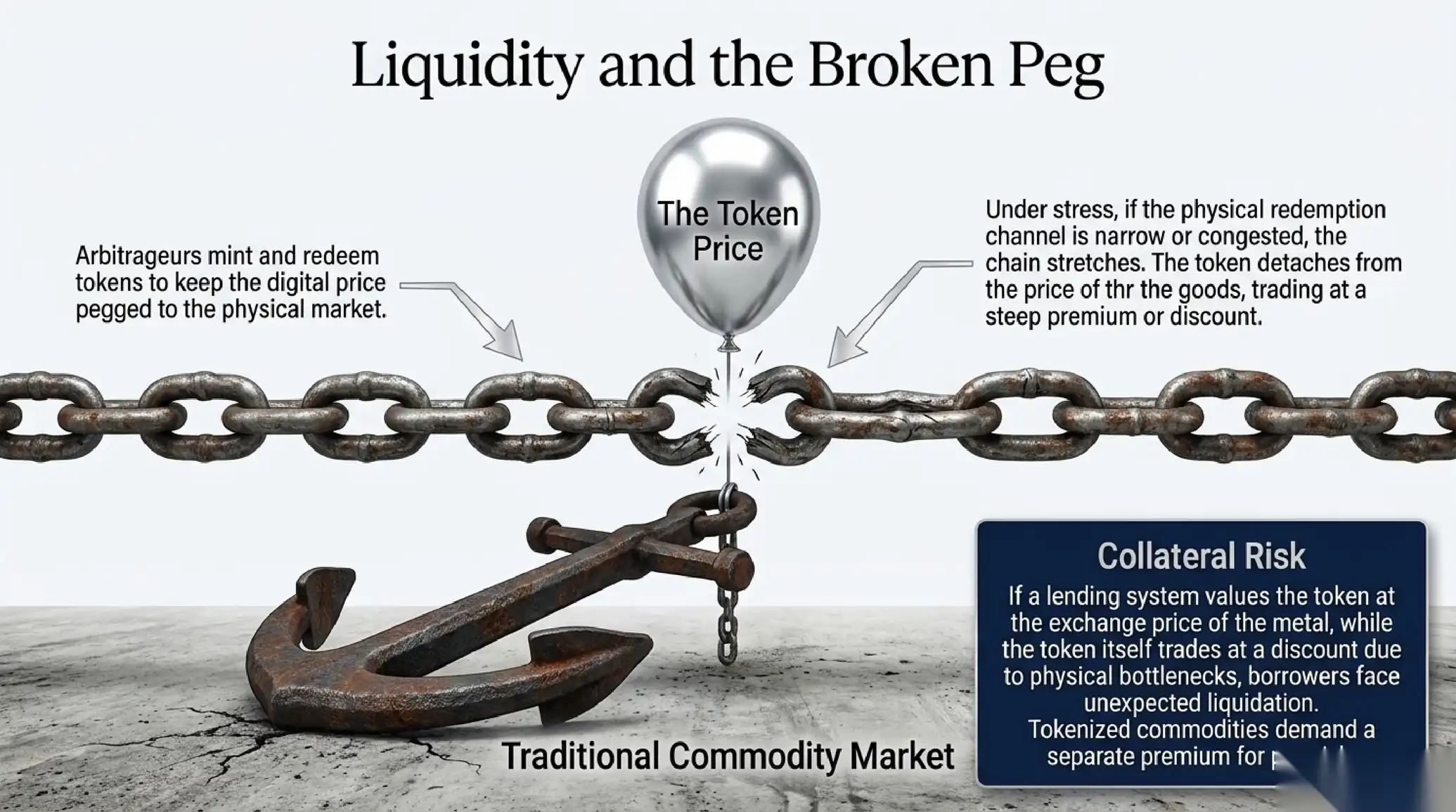
A commodity token lives on two markets at once: a crypto exchange and the traditional commodity market. Usually the prices align, but under stress a gap can open between them. If arbitrageurs cannot quickly redeem a token or mint a new one, the peg weakens and the token price detaches from the price of the goods.
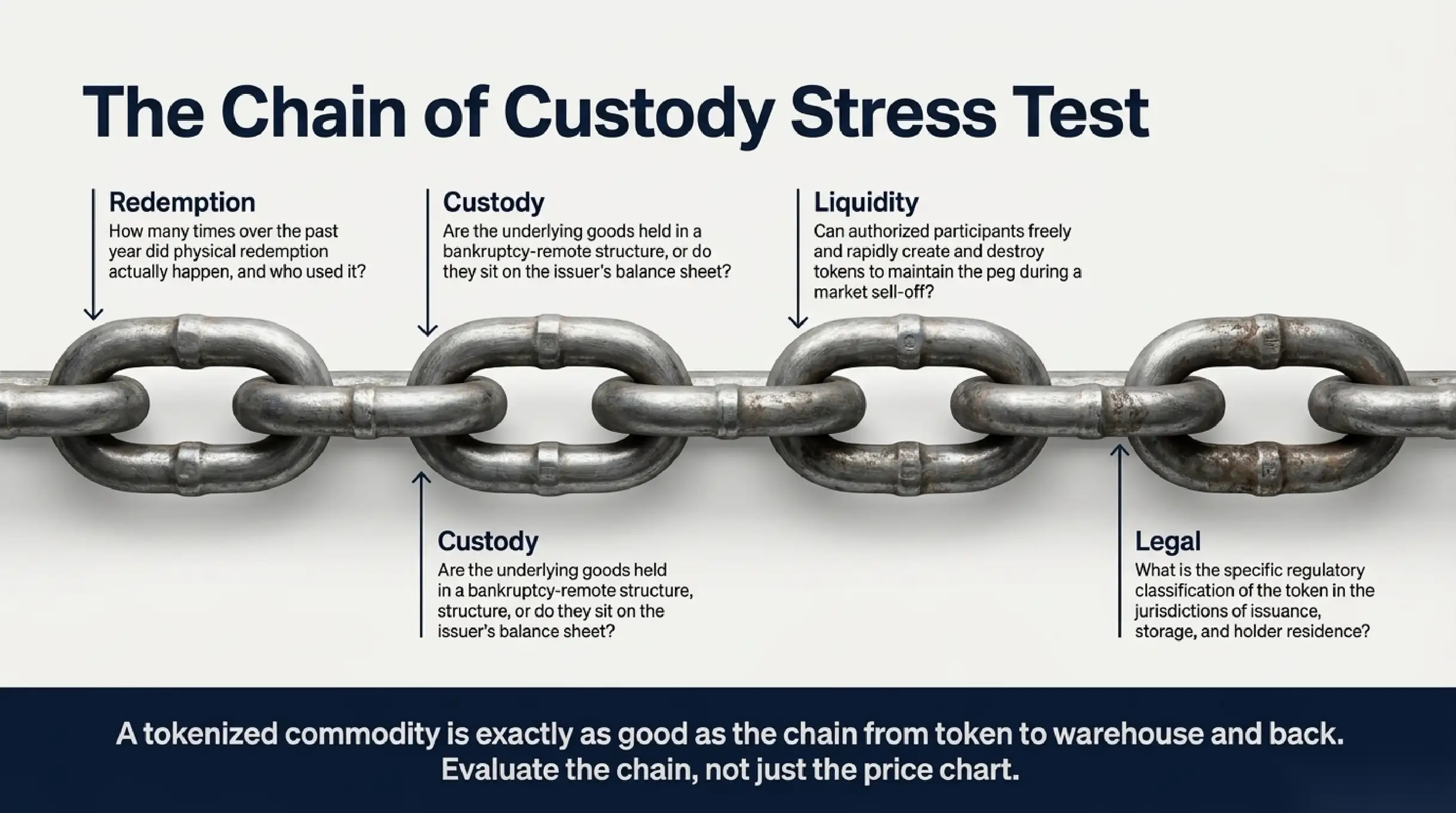
The minting and redemption mechanism therefore matters more than the depth of any single exchange pool. When authorized participants can freely create and destroy tokens, the peg recovers fast. When that channel is narrow or congested, the token can trade at a premium or a discount to the metal, and a holder needs to see that risk in advance rather than discover it during a sell-off.
The gap is especially dangerous for anyone using the token as collateral. If a lending system values the token at the exchange price of the commodity while the token itself trades at a discount at that moment, a borrower can face an unexpected liquidation. Tokenized commodities used as collateral therefore deserve a separate premium for peg risk rather than a valuation as if they were pure metal.
Taxes, law and the limits of jurisdictions
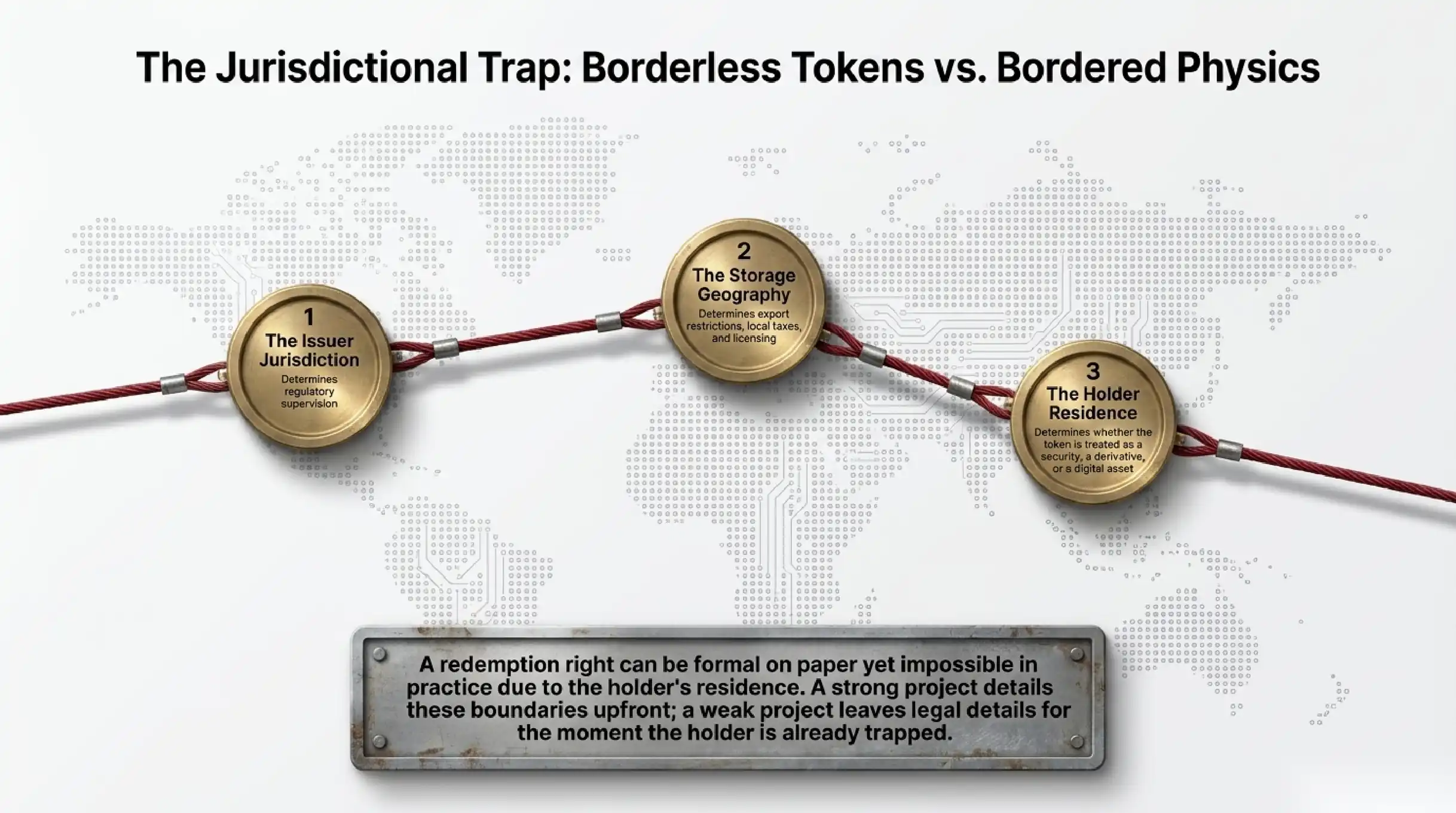
A physical commodity is always tied to a specific country where it sits, while the token is global. That creates tension. Delivery can be taxed, require a license or fall under export restrictions the token holder never considered. So a redemption right can be formal on paper yet limited in practice by the holder’s place of residence.
A strong project describes these boundaries honestly and in advance. It states who can redeem the token, from which jurisdictions it is impossible and which documents will be required. A weak project limits itself to a nice phrase about full backing, leaving the legal details for the moment when the holder is already caught in a trap they cannot easily escape.
The conclusion is simple: a tokenized commodity is exactly as good as the chain from token to warehouse and back is strong. You have to check redemption, custody, audits and legal rights, not just the price chart. Only then does the token become a convenient instrument for owning goods rather than a pretty wrapper over a promise that is hard to enforce when it finally matters.
The redemption right and what it is worth in practice
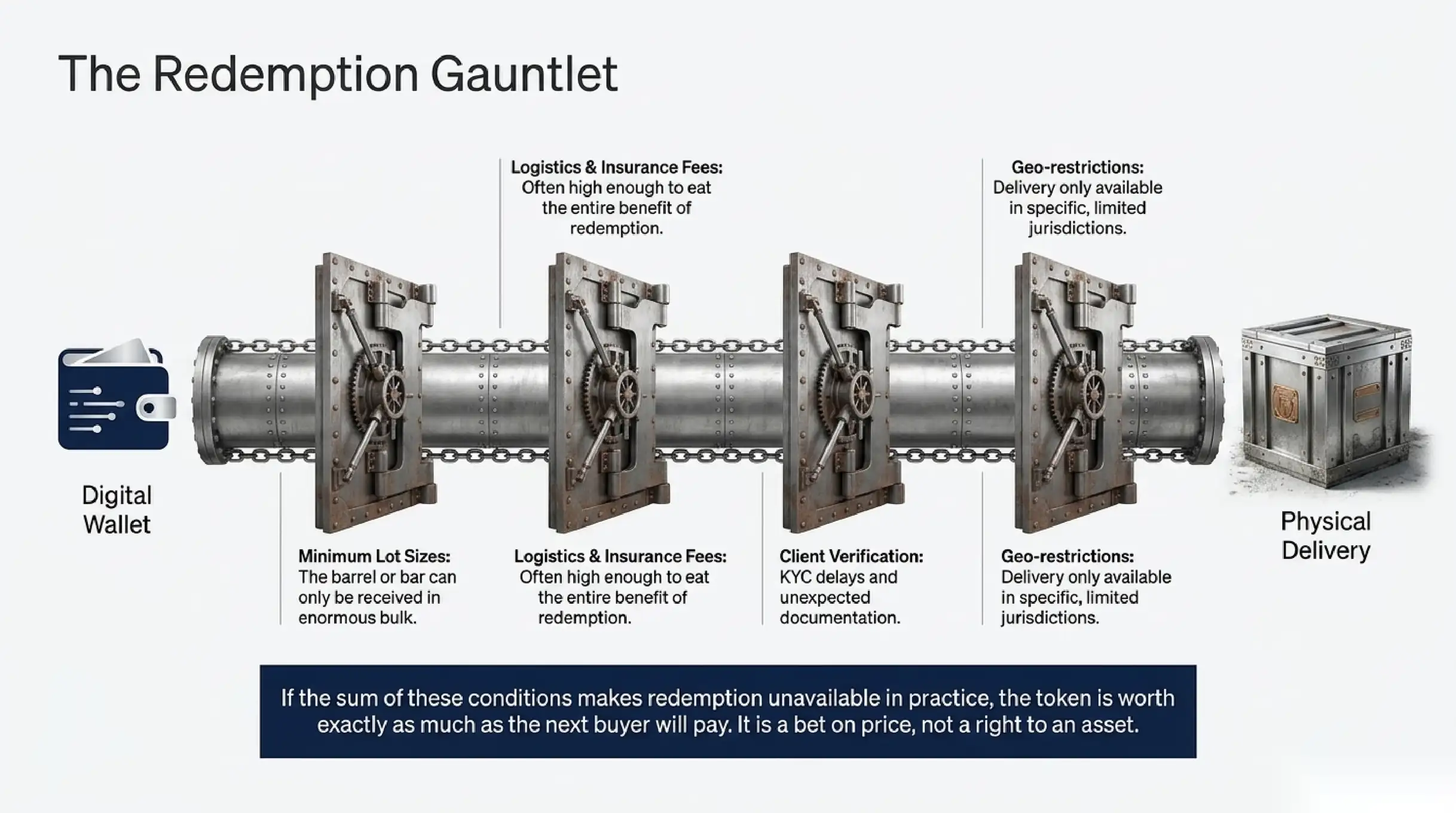
The main question about any tokenized commodity is not what is written on the website but whether a token holder can actually receive the underlying asset. The redemption right looks simple on paper, but in practice it is wrapped in conditions: a minimum volume, the geography of the warehouse, redemption fees, client verification. The sum of these conditions often means a retail holder cannot use redemption at all, which means their token is worth exactly as much as the next buyer will pay.
So it helps to separate the legal right from the practical possibility. A token may formally grant a right to an ounce of metal or a barrel of oil, but if that barrel can only be received in bulk and only in one country, then for most holders the right is theoretical. Sound analysis begins with the question of how many times over the past year redemption actually happened and who used it.
If redemption is unavailable in practice, the token becomes a bet on price without a right to the asset. This is not necessarily bad, but it is a very different product from the one promised in marketing. An investor should understand that without working redemption the link between the token and the real commodity rests only on the issuer’s reputation and can break in any crisis.
Custodian, audit and the real warehouse
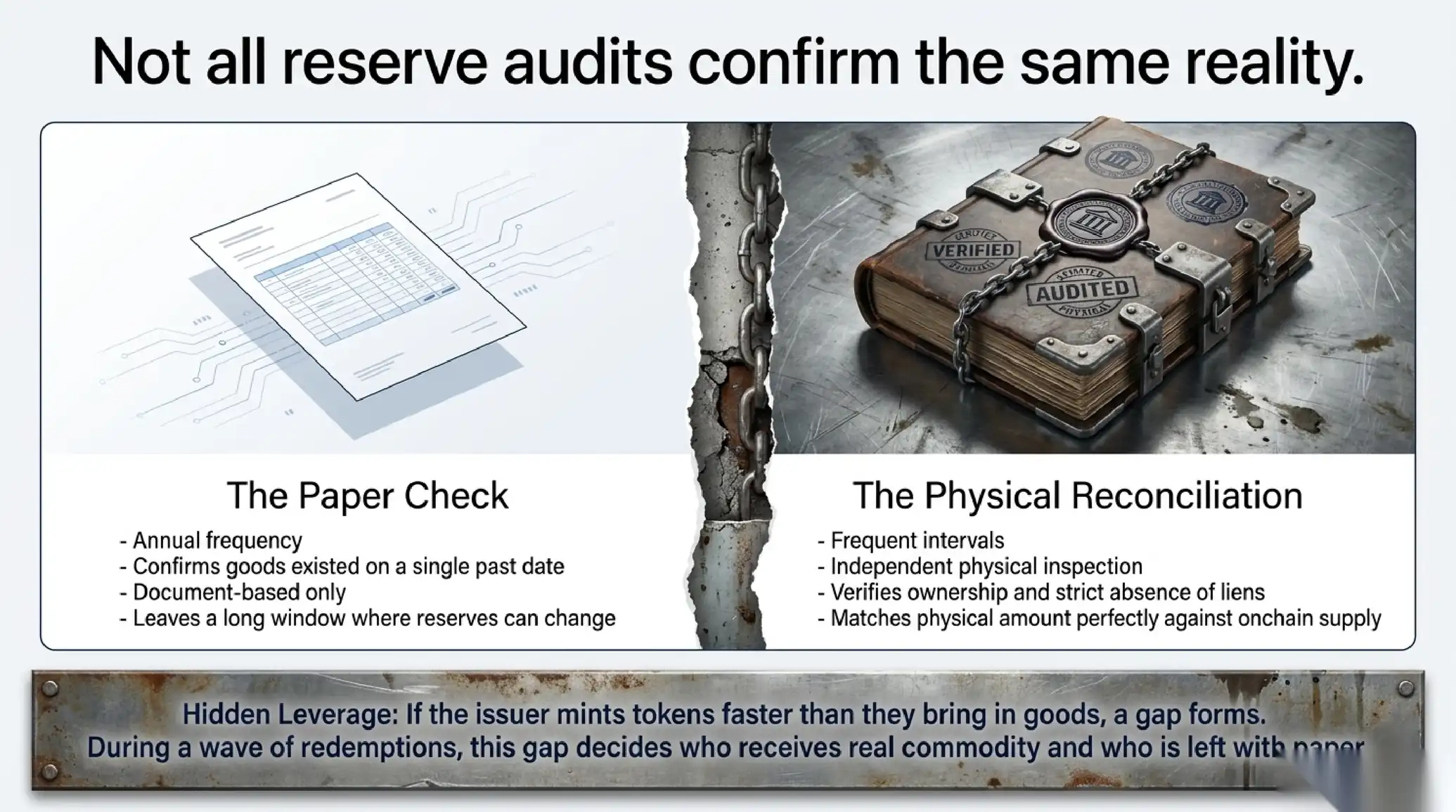
A tokenized commodity rests on a physical warehouse, and the quality of that warehouse matters more than any smart contract. One needs to understand who stores the goods, whether they are insured, and who checks their presence and quality and how often. An audit done once a year and only on documents gives far less confidence than a regular independent check with a physical inspection and reconciliation against the onchain supply.
It matters separately whether the number of issued tokens matches the real stock in the warehouse. If the issuer can mint tokens faster than it brings in goods, a gap appears that works like hidden leverage. In calm times nobody notices it, but during a wave of redemptions that gap decides who receives the real commodity and who is left with paper.
Finally, it is worth watching where the goods sit legally and who owns them if the issuer goes bankrupt. If the goods are separated into a bankruptcy remote structure, the token holder is better protected. If the goods sit on the issuer’s balance sheet, then in a collapse the holder joins the general queue of creditors, and a token that promised real metal turns into an ordinary unsecured claim.
Regulatory status and cross border risk
A commodity token lives in several legal worlds at once: where the token is issued, where the goods are stored, and where the holder resides. These three jurisdictions can treat the same token differently: somewhere as a security, somewhere as a commodity derivative, somewhere as a plain digital asset. That classification decides what supervision applies and what rights the holder has.
For an investor this means one cannot read only the product description; one must understand its legal wrapper. The legal form determines who protects the holder in a dispute, whether a claim can be brought at all, and in which court. A token without a clear regulatory status can trade for years and then suddenly fall under restrictions when a regulator finally settles on a classification.
So cross border risk should be assessed in advance, not after the token is bought. A sensible holder knows ahead of time in which country the issuer is registered, which regulator supervises it, and what happens to the token if the rules change in the holder’s own jurisdiction. This is boring work, but it is exactly what separates an investment from a lottery.
Examples and sources
Among tokenized gold, the names cited most often are Pax Gold and Tether Gold: both publish redemption terms and reserve reports that are worth reading before buying. It is the right to claim the physical metal and a regular audit of the warehouse that separate such a token from a plain bet on the price.