 Base
Base Unichain
 Robinhood
The intersection of artificial intelligence and blockchain technology has long been clouded by speculative hype. However, underneath the marketing narratives lies an undeniable computer science reality: AI agents need money, and traditional banking rails were not built for machines.
An autonomous AI agent-an algorithm capable of perceiving its environment, setting goals, and executing actions across the web-cannot walk into a traditional retail bank branch, present government identity documents, or pass a credit check. If a software agent attempts to open a traditional checking account or sign up for a commercial credit card, automated fraud-prevention systems immediately flag and terminate the account. For decades, autonomous software was financially paralyzed, restricted to running queries inside read-only sandbox environments.
Blockchains completely eliminate this barrier. Cryptographic networks do not care whether a private key is held by a human thumb pressing a biometric scanner or an autonomous Python script running inside a cloud server. On-chain, identity is defined purely by cryptographic mathematics, and transactions are settled purely by code. Recognizing this fundamental synergy, Coinbase launched AgentKit on the Base network. AgentKit is a developer framework designed to give artificial intelligence models autonomous on-chain agency, transforming AI agents from passive conversational chatbots into fully functional economic actors.
What Is Coinbase AgentKit?
Coinbase AgentKit is an open-source framework that bridges large language models (such as Claude, GPT, or Llama) with on-chain execution primitives. Developed as part of the Coinbase Developer Platform (CDP), AgentKit provides pre-packaged toolkits that plug directly into industry-standard AI agent orchestrators like LangChain, CrewAI, and LlamaIndex.
The AgentKit integration pipeline orchestrates actions through a synchronized three-layer architecture. When a user or system prompts an autonomous agent to execute an on-chain action-such as exchanging stablecoins and staking Ethereum-the agent's core LLM orchestrator (powered by LangChain or LlamaIndex) analyzes the intent and invokes the corresponding Web3 tool primitive. AgentKit serializes the parameters, signs the transaction through a secure Coinbase Developer Platform MPC wallet, and dispatches the signed payload directly to the Base Layer-2 network for instant execution.
Instead of requiring AI developers to write complex, low-level Web3 code-such as encoding smart contract ABI calls, calculating gas limits, managing nonce queues, and serializing raw cryptographic transactions-AgentKit provides clean, high-level action primitives that an LLM can invoke naturally through function calling:
deploy_token: Deploy an ERC-20 token or NFT collection with custom supply parameters.transfer: Transfer native ETH or ERC-20 tokens like USDC to any destination address or Basename.swap: Execute decentralized asset exchanges across on-chain liquidity pools (such as Uniswap V3).register_basename: Claim and configure a human-readable on-chain identity on Base.mint_nft: Create unique cryptographic digital assets or credentials.
By turning on-chain actions into modular tools, AgentKit allows developers to equip any conversational AI model with a self-custodial on-chain wallet in less than twenty lines of code.
Why Base Is the Natural Habitat for Autonomous AI
While AgentKit is technically chain-agnostic, the Base network has rapidly established itself as the undisputed center of gravity for autonomous AI agents. This synergy is driven by four structural characteristics:
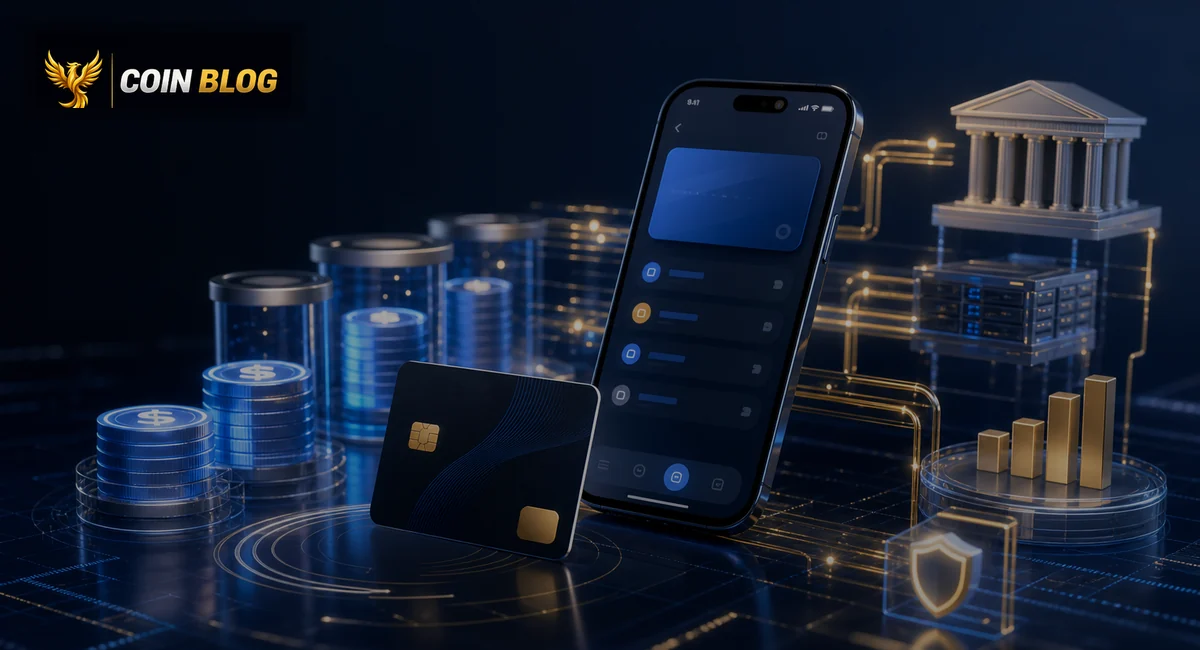
The rapid emergence of Base as the primary hub for autonomous software agents is fueled by four structural economic advantages: sub-cent transaction fees that make high-frequency algorithmic actions affordable, deep native USDC liquidity that protects agents from cryptocurrency volatility, enterprise-grade multi-party computation wallets that eliminate private key theft, and native Basenames that provide recognizable, human-readable handles for automated systems.
- Micro-Cost Economics: AI agents do not transact like human beings. A human might make three or four financial transactions a day, comfortably paying fifty cents or a dollar in network fees. An algorithmic agent, however, may execute hundreds of automated micro-tasks per minute-paying for web scraping APIs, rebalancing algorithmic portfolios, or distributing micro-tips. On Ethereum Layer-1, paying ten dollars per action would bankrupt an AI agent in minutes. On Base, where transaction fees consistently hover below a single cent, high-frequency algorithmic actions are economically sustainable.
- Deep Native USDC Liquidity: Autonomous software algorithms require stable, predictable units of account. An AI agent purchasing compute power from a decentralized GPU cluster cannot afford to hold volatile speculative tokens that fluctuate 20 percent intraday. Base possesses the deepest native USDC liquidity of any Layer-2 ecosystem, allowing agents to conduct commerce using a federally regulated digital dollar.
- Enterprise-Grade MPC Wallets: Through the Coinbase Developer Platform, agents utilize Multi-Party Computation (MPC) wallets. In an MPC wallet, the private key is mathematically divided into separate secret shares stored across secure server hardware. An agent can sign transactions autonomously without exposing raw private keys in plaintext environment variables where malicious hackers could extract them.
- Intuitive On-Chain Identity: Through native Basenames integration, AI agents can register clean digital handles (e.g.,
researcher.base.eth). This allows human users and other software agents to recognize, interact with, and verify the agent without dealing with obscure hexadecimal addresses.
Practical Use Cases for On-Chain AI Agents
Giving artificial intelligence models access to on-chain capital unlocks practical economic workflows that were previously impossible:
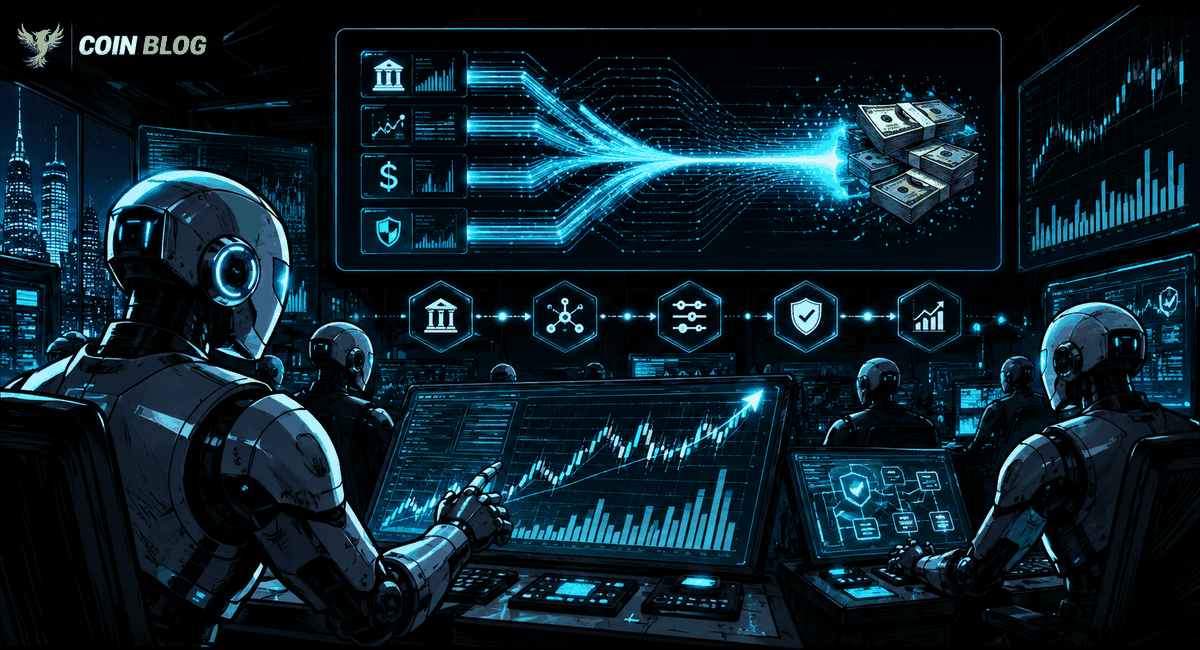
The end-to-end economic lifecycle of an autonomous agent illustrates how machine-to-machine commerce functions in practice. An independent research agent can browse the web for paywalled scientific articles, settle micro-payments in USDC per article read, synthesize a comprehensive analytical report, sell access to clients through on-chain subscriptions, and autonomously pay for its own cloud computing servers directly from its self-custodial wallet.
- Autonomous Research and Data Procurement: An AI agent conducting market research can autonomously pay paywalled news publications or academic journals micro-cents in USDC per article read, assembling high-quality research reports and selling them to subscribers on-chain.
- Self-Sustaining Infrastructure Agents: Software applications can deploy autonomous maintenance agents that monitor cloud server loads. When server traffic spikes, the agent automatically rents additional compute power from decentralized physical infrastructure networks (DePIN) like Akash or Render, paying for GPU hours directly from its on-chain wallet.
- Algorithmic Treasury Management: Decentralized autonomous organizations (DAOs) can assign treasury management tasks to AI agents programmed with strict risk boundaries. The agent monitors yield curves across verified Base lending markets (such as Aave or Compound) and dynamically rebalances funds to optimize return without human intervention.
- Creator Economy and Dynamic NFTs: Creative AI agents can generate original artwork, deploy NFT collections on Base, monitor secondary market sales, and automatically distribute royalty shares to open-source contributors who provided the underlying training data.
Security Boundaries and Scoped Permissions
Granting financial autonomy to probabilistic AI models introduces significant security risks. If an LLM experiences a hallucination or falls victim to a malicious prompt injection attack (where a malicious actor tricks the model into executing unintended instructions), an unconstrained agent could easily transfer all its treasury assets to an attacker.
To prevent financial catastrophes, AgentKit workflows implement multi-layered safety guardrails:
| Security Measure | Implementation Mechanism | Defensive Purpose |
| :--- | :--- | :--- |
| Transaction Spend Limits | Smart contract allowance ceilings | Prevents an agent from draining more than a pre-approved dollar limit per day |
| Contract Whitelisting | Scoped permission policies | Restricts the agent to interacting exclusively with verified protocols (e.g., Uniswap, Aave) |
| Multi-Signature Escalation | Threshold security rules | Requires human supervisor co-signatures for transactions exceeding high financial thresholds |
| Simulation Engines | Pre-execution state diff checks | Simulates transaction outcomes before broadcasting to detect malicious smart contract traps |
By combining artificial intelligence with cryptographic boundaries, developers ensure that autonomous agents operate with maximum economic efficiency while remaining securely constrained by immutable code.
The Dawn of Machine-to-Machine Commerce
Coinbase AgentKit on Base represents the opening chapter of a profound economic transformation: the rise of machine-to-machine commerce. As artificial intelligence models evolve from conversational novelties into autonomous digital workers, they require a financial system that operates at the speed of software.
Public blockchains provide the universal, borderless, and permissionless financial substrate that machines require. By pairing the accessibility of Base with the plug-and-play simplicity of AgentKit, developers are building the rails for a future where humans and autonomous AI agents collaborate, trade, and build together in an open digital economy.