 Base
Base Unichain
 Robinhood
- Every major Layer-2 rollup currently operates its own isolated sequencer, creating fragmented mempools and breaking atomic composability.
- If a user wants to execute a trade on Rollup A and take a loan on Rollup B, they face timing risks and cannot bundle the actions atomically.
- Shared Sequencers introduce a decentralized, neutral ordering layer that batches transactions across multiple independent rollups simultaneously.
- Pioneered by networks like Espresso Systems and Astria, shared sequencing eliminates single points of failure and reunites fragmented Ethereum liquidity.
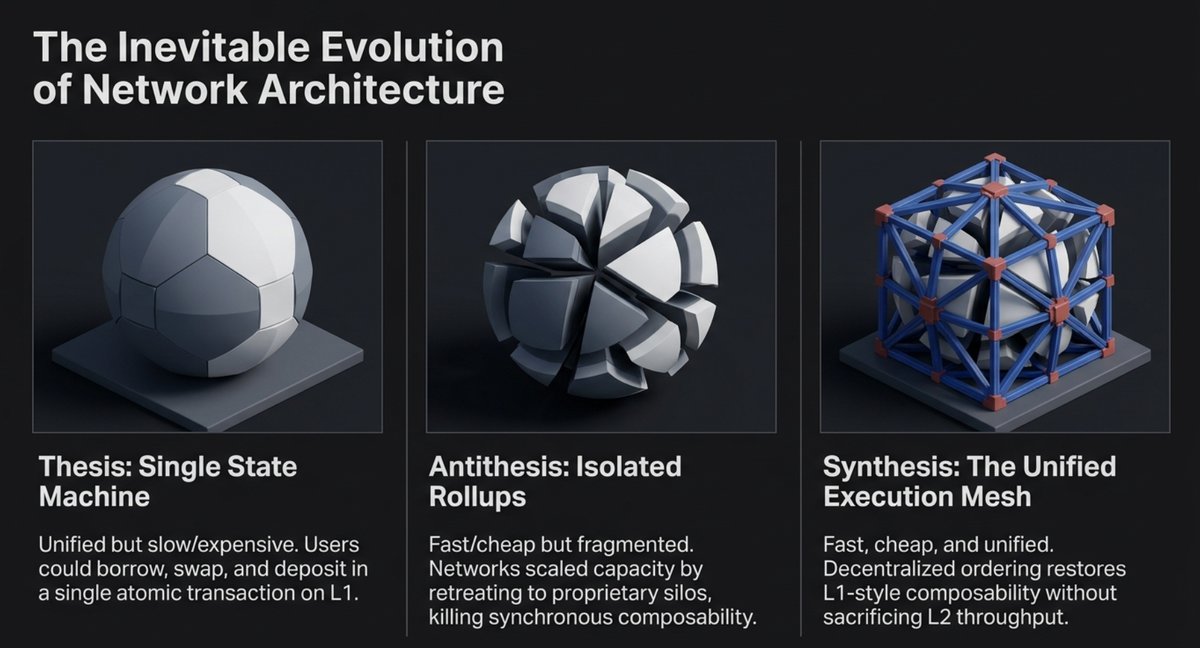
The expansion of the Ethereum Layer-2 ecosystem has successfully scaled transaction capacity, but it has extracted a steep architectural cost: the death of synchronous composability. In the early days of decentralized finance on Ethereum Layer-1, the entire financial ecosystem lived on a single shared state machine. A trader could borrow funds on MakerDAO, swap them on Uniswap, and deposit the proceeds into Compound, all within a single atomic transaction. If any single step failed, the entire transaction reverted harmlessly, protecting the user from financial loss.
Today, that seamless composability is shattered across dozens of isolated Layer-2 rollups. Arbitrum, Base, Optimism, and Scroll each maintain their own independent sequencers. These isolated sequencers operate as digital islands: they cannot see each other's pending transactions, they cannot guarantee cross-chain execution timing, and they force users to navigate slow, asynchronous bridging. Shared Sequencers represent the critical infrastructure required to re-stitch these isolated islands back into a cohesive, interconnected financial continent.
The Problem With Isolated Rollup Sequencers
To understand the necessity of shared sequencers, one must examine the role of the sequencer in modern rollup design. The sequencer is the component responsible for accepting transactions from users, ordering them chronologically, and constructing L2 blocks before committing them to Ethereum.
In virtually all major rollups today, this sequencer is a single, centralized entity operated by the rollup development team. While efficient, isolated centralized sequencers introduce three severe vulnerabilities:
- Mempool Fragmentation: Each rollup has its own private queue of pending transactions. Liquidity is locked inside individual ecosystems, forcing market makers to divide their capital across multiple networks, which results in shallower order books and higher slippage for retail traders.
- Single Point of Failure: If an L2 sequencer experiences a software crash or hardware failure, the entire network grinds to a halt. While users can theoretically withdraw funds via Ethereum L1, doing so requires navigating complex escape hatches with high gas costs and seven-day delays.
- Loss of Atomic Cross-Chain Actions: A user cannot execute an atomic arbitrage or cross-chain liquidation. If an arbitrage opportunity exists between a decentralized exchange on Base and a lending market on Arbitrum, a trader must submit two separate, disconnected transactions. If one transaction executes while the other is delayed, the trader is left with half-executed positions and severe financial exposure.
Isolated Sequencers (Fragmented & Fragile):
[Base Sequencer] ---> Orders Base Transactions Only (Island 1)
[Arbitrum Sequencer] ---> Orders Arbitrum Transactions Only (Island 2)
[Optimism Sequencer] ---> Orders Optimism Transactions Only (Island 3)
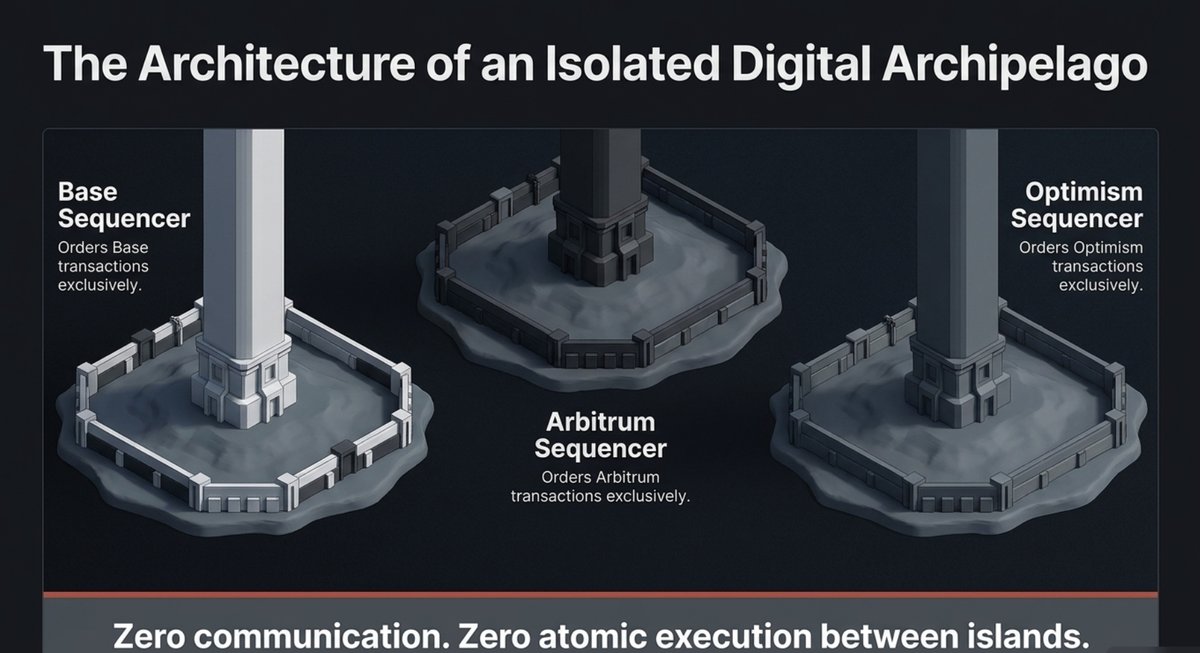
* No communication, zero atomic execution between islands *
Shared Sequencer Architecture (Espresso / Astria):
[Universal Shared Sequencer Network]
|
+---> Simultaneously orders transactions for Base, Arbitrum, and Optimism
+---> Enables Atomic Cross-Rollup Bundles (Tx on A executes IF AND ONLY IF Tx on B executes)How Shared Sequencing Works: Separation of Ordering and Execution
A shared sequencer network decouples the ordering of transactions from the execution of transactions. Rollups are inherently modular; their core computational value lies in executing smart contract state changes, not in maintaining a proprietary order queue.
Under a shared sequencing model, as architected by protocols like Espresso Systems and Astria:
- Decentralized Ordering Consensus: Instead of relying on a single company to sequence transactions, a decentralized network of proof-of-stake validators maintains consensus over the global ordering of incoming transactions across all participating rollups.
- Unified Multi-Rollup Blocks: The shared sequencer constructs unified sequence blocks containing transactions destined for Rollup A, Rollup B, and Rollup C within a single, cryptographically locked sequence.
- Independent Node Execution: Participating rollups download this canonical ordered sequence. Rollup A processes only its designated transactions, Rollup B processes its transactions, and both arrive at deterministic state roots based on an identical, mutually agreed ordering.
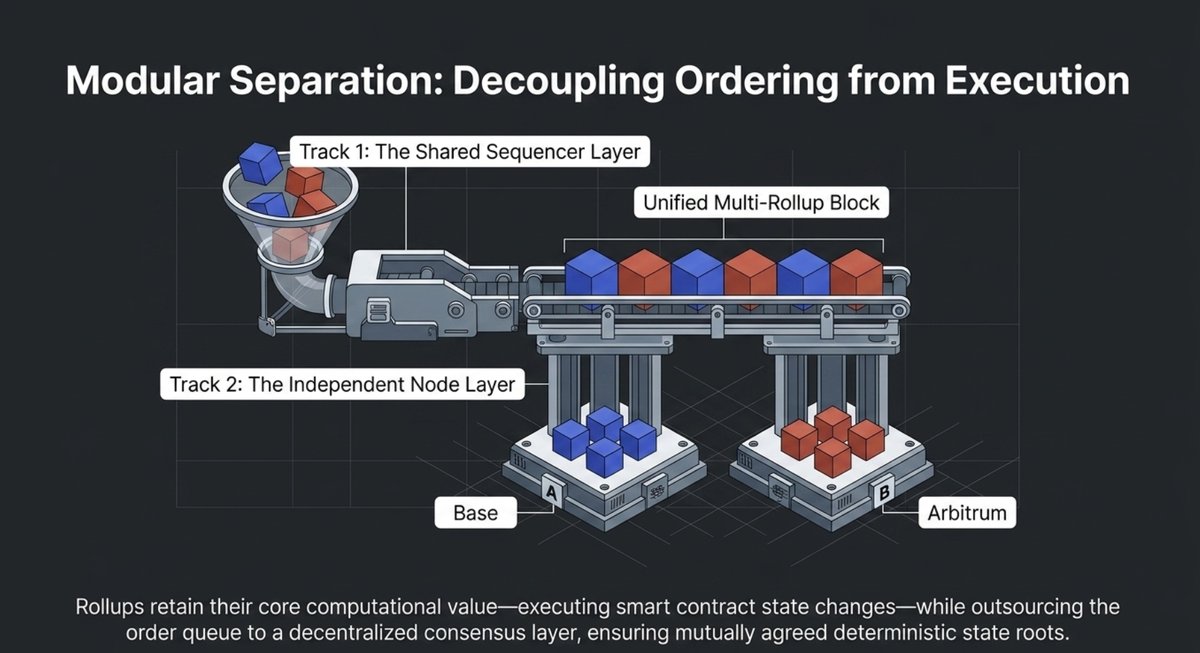
By outsourcing transaction sequencing to a neutral, decentralized consensus layer, rollups eliminate the centralization risk of their own sequencers while gaining universal ordering guarantees.
Unlocking Atomic Cross-Rollup Composability
The most profound breakthrough enabled by shared sequencing is the return of atomic multi-chain transactions, often referred to as cross-rollup bundles.
Because the shared sequencer network constructs the execution timeline for multiple rollups simultaneously, it can accept conditional transaction bundles:
"Execute Transaction 1 on Base IF AND ONLY IF Transaction 2 executes on Arbitrum within the exact same shared block."
If either transaction fails due to slippage or insufficient collateral, the shared sequencer reverts both operations simultaneously. This restores the golden standard of DeFi composability: market makers can bridge liquidity instantly, collateral can be liquidated seamlessly across rollups without bridge delays, and retail users can interact with multi-chain applications without fear of partial execution failures.
The Path Forward: Scaling Without Fragmentation
The long-term vision of Ethereum was never to create a fractured landscape of disconnected digital nations competing for liquidity. The goal was to build a globally accessible, massively scalable financial substrate.
Shared sequencers represent the architectural bridge between rollup scalability and Layer-1 composability. By replacing centralized, proprietary sequencers with open, decentralized ordering networks, shared sequencing reunites fragmented capital, eliminates censorship risks, and lays the foundation for an Ethereum ecosystem that is fast, resilient, and unified.