 Base
Base Unichain
 Robinhood
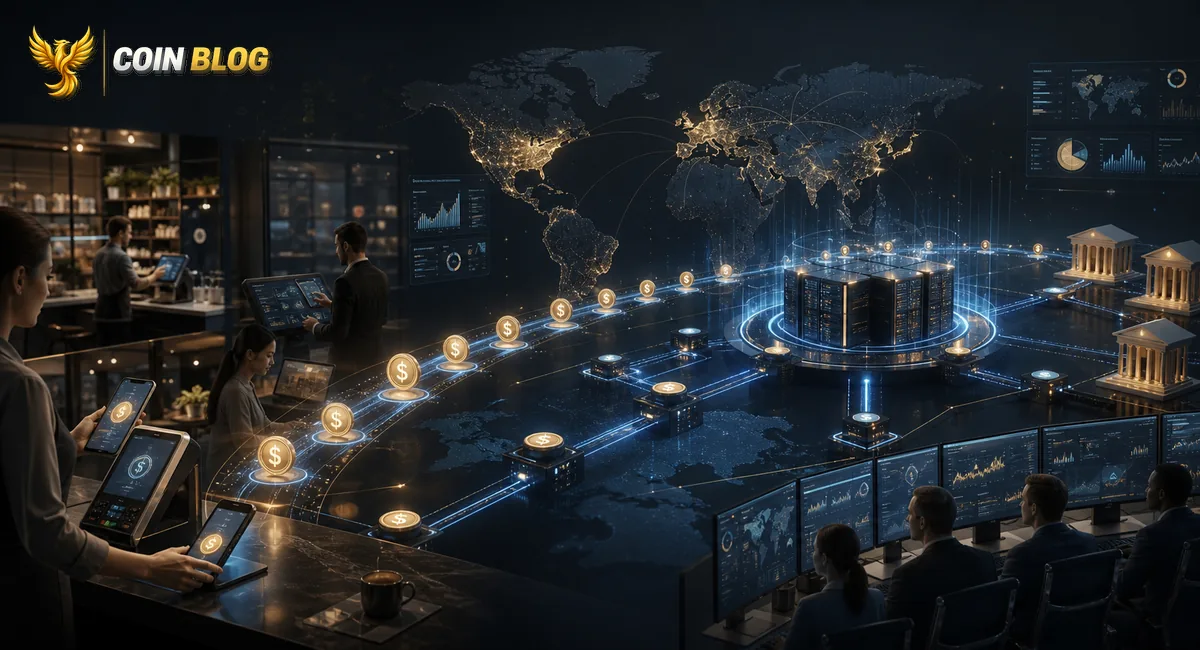
Bitcoin's initial promise as a peer-to-peer electronic cash system stumbled against structural barriers: extreme price volatility, unpredictable network fees, and settlement latency that made buying everyday goods impractical. Yet the underlying vision of sovereign digital cash did not die; it evolved into stablecoins. Today, fiat-backed stablecoins settle trillions of dollars in annualized volume, systematically outgrowing traditional electronic payment networks.
A decisive war for the retail payment rails is now underway. The primary contenders are no longer volatile Layer-1 base assets, but two high-performance blockchain architectures optimized for near-instant throughput and sub-cent fees: Solana with its native Solana Pay protocol, and Base, the flagship Layer-2 network developed by Coinbase.
This contest is not about vanity throughput benchmarks. The ecosystem that delivers frictionless merchant checkout and consumer-grade UX will command the underlying settlement layer for global commerce.
The Decay of Legacy Rails: Why Traditional Acquiring is Obsolete
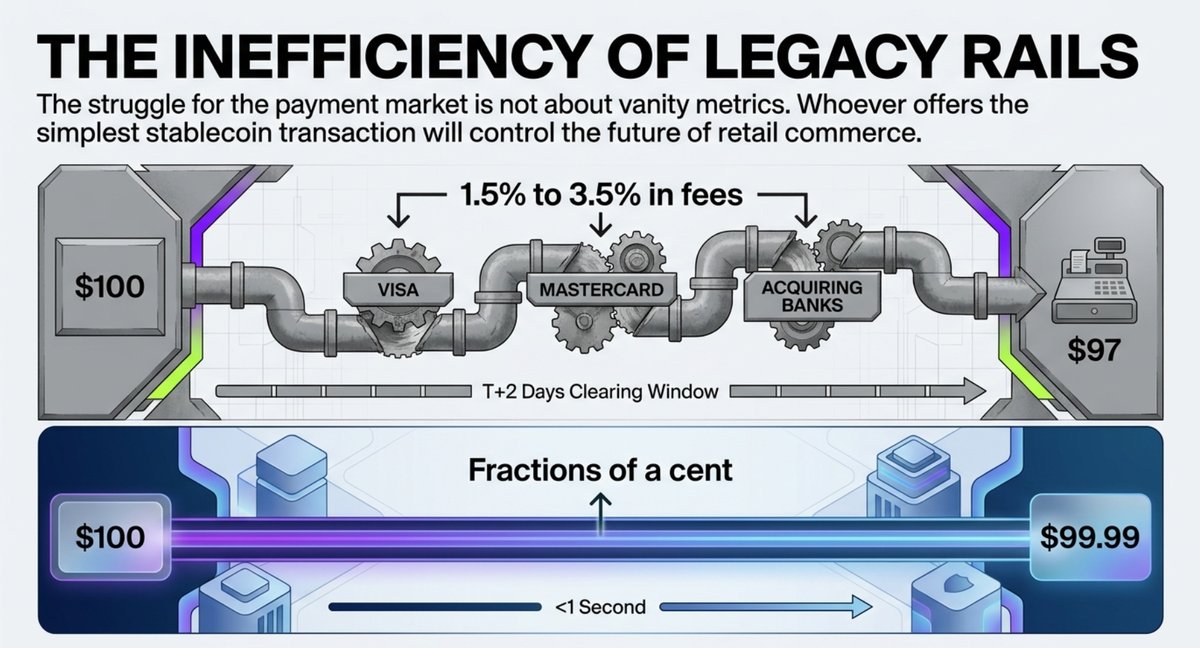
Modern credit card processing infrastructure rests on foundational architecture engineered in the 1970s. For merchants, accepting credit cards imposes significant friction: payment processors, issuing banks, and card networks siphon between 1.5% and 3.5% in interchange and processing fees on every ticket. For high-volume retail sectors operating on 3% to 8% net margins, these fees consume a substantial portion of operating profit.
Furthermore, traditional rails suffer from prolonged settlement latency. While the point-of-sale terminal shows instant approval, capital remains locked within the interbank clearing pipeline for 2 to 5 business days (T+2 / T+5 settlement cycles). This delay strains cash flows and forces businesses into short-term liquidity financing.
Compounding this friction are chargeback fraud and dispute overhead, where transactions can be reversed weeks after physical delivery. Stablecoin settlement eliminates these intermediaries entirely, delivering instant balance finality at fractional-cent costs.
The Solana Approach: Native Speed and Pure P2P Architecture
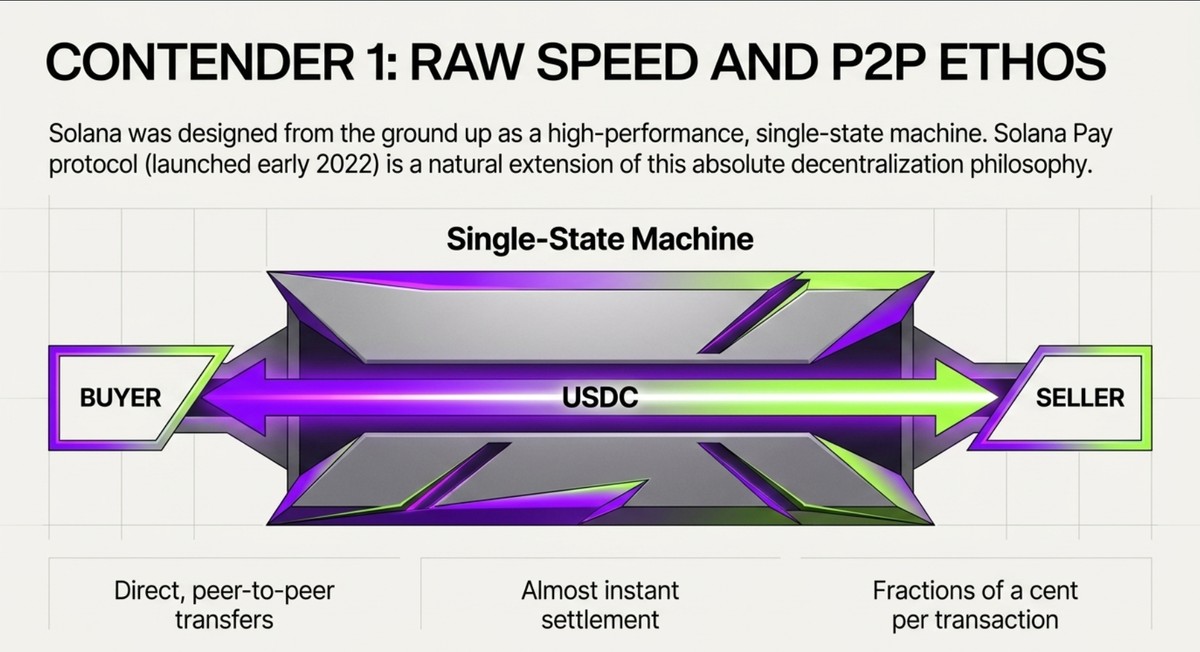
Solana was engineered from the ground up as a single-state global execution engine. Launched in early 2022 by the Solana Foundation, Solana Pay serves as an open-standard communication protocol enabling direct, peer-to-peer transfers of digital dollars (predominantly USDC and EURC) from buyer to seller via interactive QR codes or deep links.
Solana's primary competitive moat is its Sealevel parallel runtime and rapid 400-millisecond block generation times. When a consumer scans a Solana Pay point-of-sale terminal with Phantom or Solflare, state verification and fund settlement execute in real time. Because the base protocol eliminates intermediary smart contracts for standard transfers, transactions incur network costs of less than $0.0005, making micro-transactions and small retail purchases economically viable.
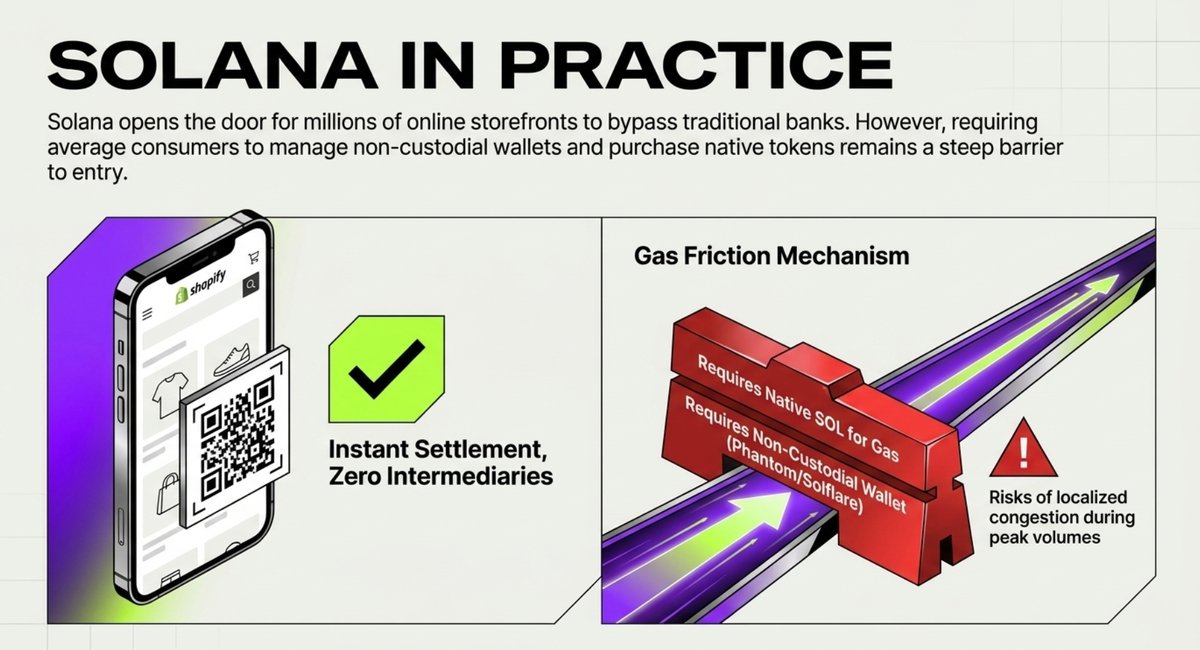
The native integration of Solana Pay into Shopify brought decentralized stablecoin payments to millions of digital storefronts. Merchants can accept direct USDC payments without traditional acquiring contracts. Moreover, Solana Pay enables composable loyalty systems: merchants can automatically issue token-gated discounts or commemorative loyalty NFTs directly to customer wallets at checkout, creating programmatic marketing channels without third-party data tracking.
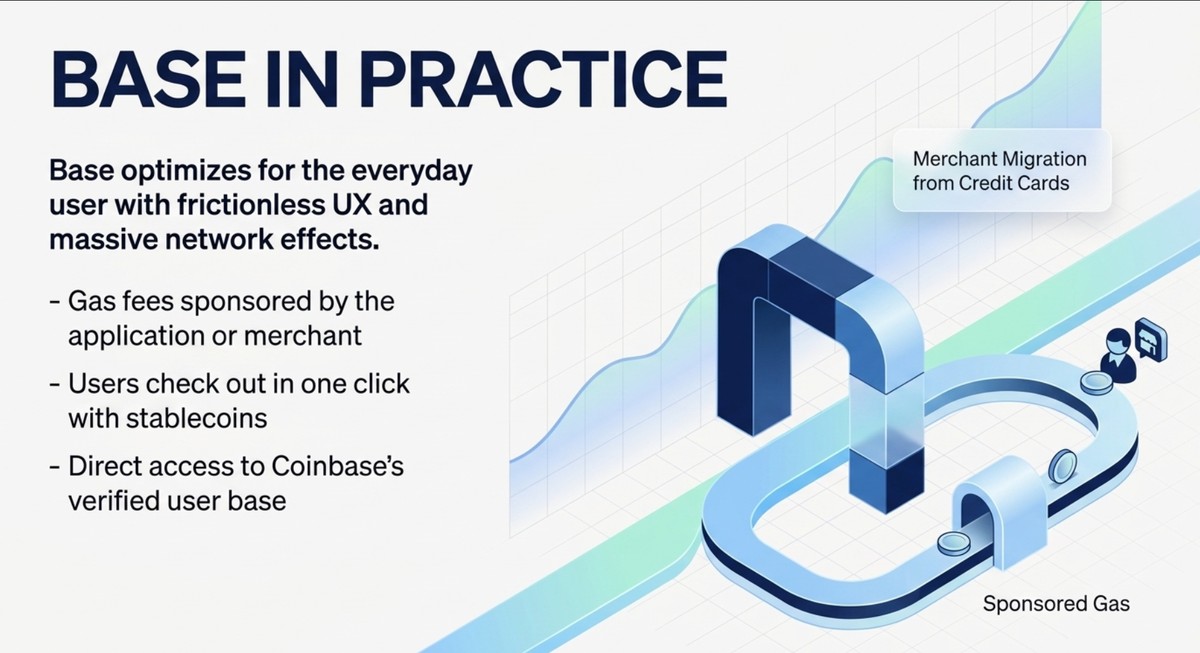
However, Solana faces persistent user-onboarding friction. Historically, the network encountered stability bottlenecks during periods of extreme spam transaction volume. While QUIC integration and localized fee markets have resolved core congestion concerns, consumer friction remains high: mainstream shoppers must manage private keys, securely back up recovery phrases, and purchase native SOL tokens to fund network gas fees before completing a transaction.
The Base Strategy: Institutional Distribution and UX Abstraction
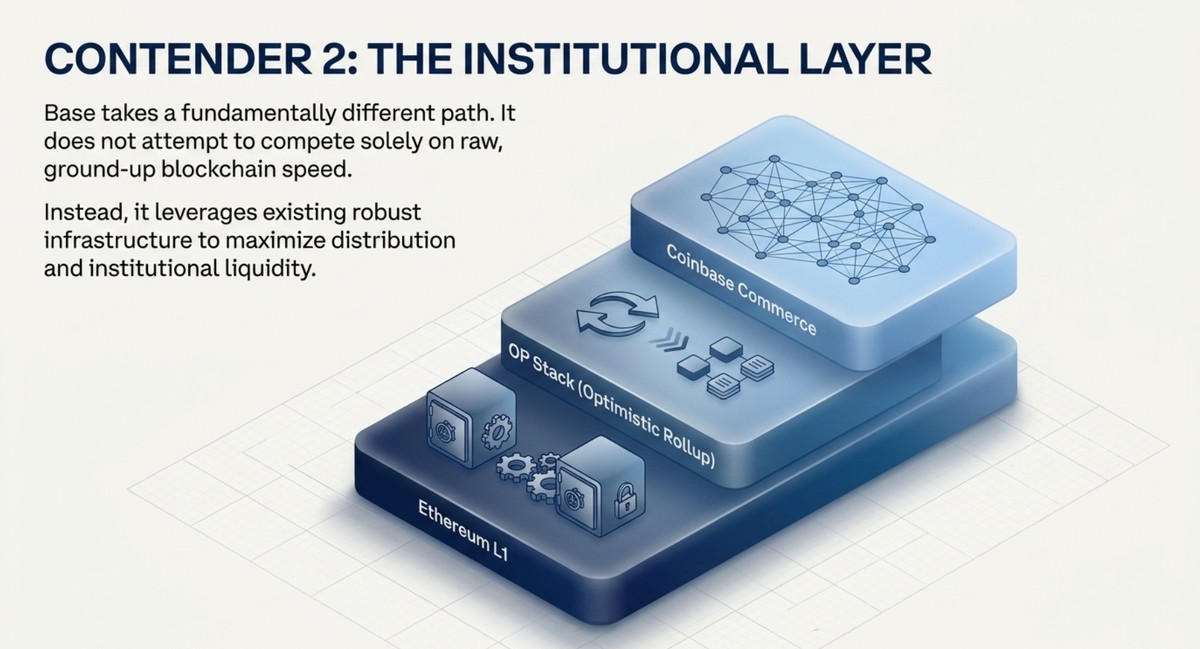
Base, built on the modular OP Stack within the Ethereum ecosystem, approaches the retail payment challenge through a fundamentally different strategy. Rather than competing solely on isolated Layer-1 speed, Base anchors its security to Ethereum while leveraging the commercial distribution, banking integrations, and liquidity reserves of Coinbase.
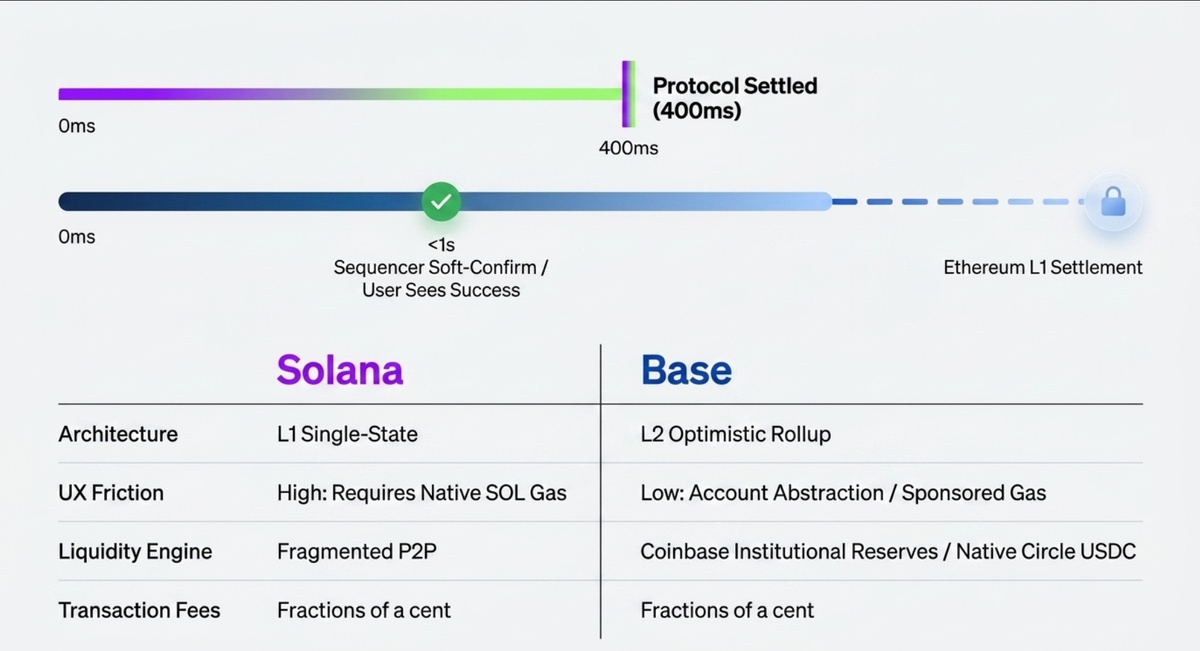
The core philosophy of Base is the complete abstraction of blockchain mechanics for end consumers (Invisible Web3). Leveraging the ERC-4337 Account Abstraction standard and Coinbase Smart Wallets, users can initialize non-custodial accounts and authorize transactions in seconds using biometric authentication (Face ID / Passkeys), bypassing seed phrases and browser extensions entirely.
The most transformative component of Base payment infrastructure is sponsored gas (Paymaster smart contracts). Merchants or decentralized applications can subsidize transaction fees on behalf of customers. For the end user, checkout mirrors the frictionless simplicity of Apple Pay: they see a clear dollar amount in USDC and authenticate with biometric confirmation.
There is no requirement to acquire or understand native ETH gas tokens. Additionally, Coinbase Commerce delivers an enterprise-grade payment gateway that allows merchants to auto-convert received stablecoins into fiat currency directly deposited to corporate bank accounts on a same-day basis. This institutional framework is accelerating a rapid merchant migration from legacy acquiring processors to decentralized Layer-2 payment rails.
The A/B Checkout Journey: Evaluating User Experience
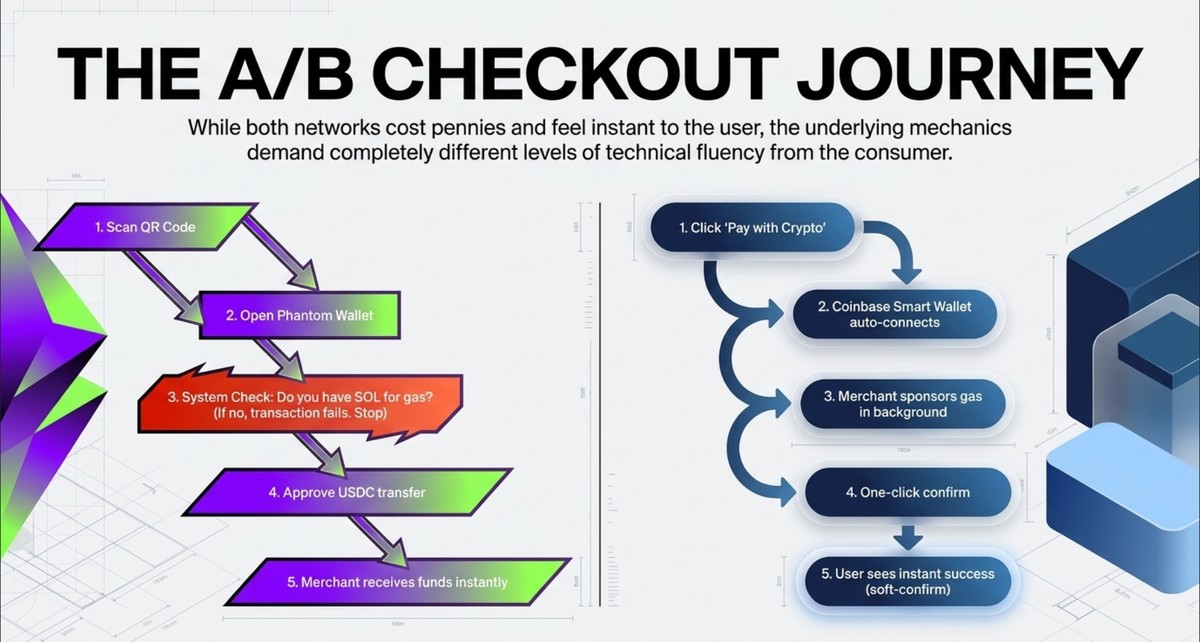
Analyzing the customer journey reveals the contrasting operational focuses of both networks: On Solana Pay, a crypto-native customer experiences a flawless flow: scan the QR code, approve the transaction in a dedicated wallet, and finalize payment in under half a second. However, for a mainstream consumer without a pre-funded Web3 wallet, the flow breaks immediately: they are forced to install external applications, record mnemonic phrases, pass exchange KYC, and transfer SOL for gas, resulting in severe checkout drop-off rates exceeding 80%.
On Base, the checkout pipeline is built for mainstream conversion: the buyer enters their email or phone number, a passkey-secured smart wallet is provisioned invisibly in the background, USDC is debited from their balance or linked debit card, and gas is subsidized by the merchant. The transaction settles in under 3 seconds without exposing the shopper to cryptographic jargon.
Technical Metrics and Security Architecture: L1 vs L2
From an architectural standpoint, Solana and Base represent two divergent scaling methodologies: Solana achieves absolute single-slot finality directly on its Layer-1 consensus layer. Once verified by the validator set, the state update is immutable, eliminating reorganization risks for physical storefronts. However, running a validator requires enterprise-grade hardware, concentrating block production among professional infrastructure providers.
Base operates as an Optimistic Rollup, batching and compressing state transitions before publishing proofs to Ethereum Layer-1. For retail payment flows, Base relies on sequencer-level soft confirmations, providing instant execution at the register. While cryptographic finality settles on Ethereum L1 after the dispute window, the soft confirmation model provides sufficient economic certainty for everyday commercial transactions.
The Verdict: Market Bifurcation and the Future of Payments
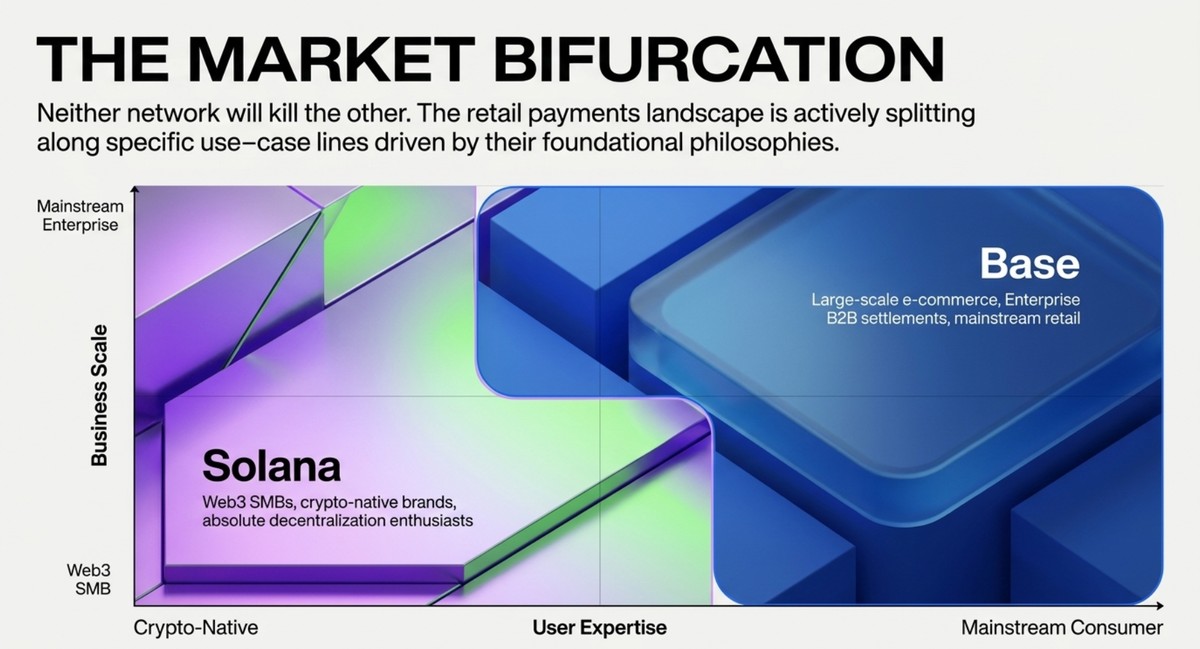
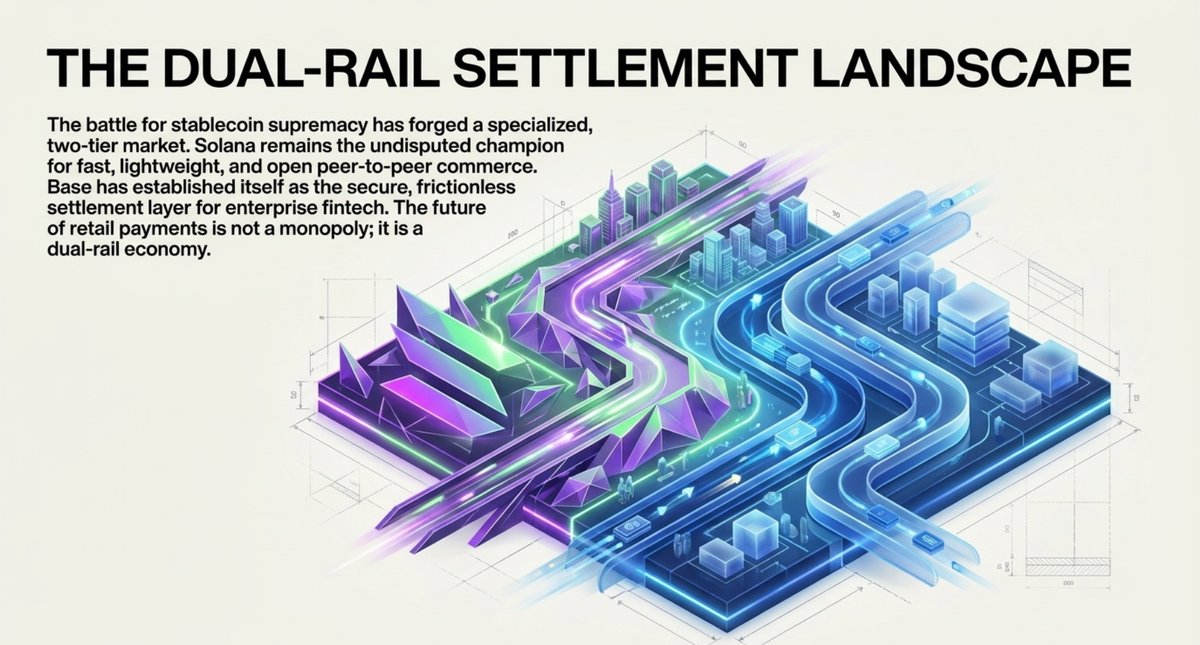
The competition between Solana Pay and Base Payments will not yield a winner-take-all outcome. Instead, the global retail settlement landscape is bifurcating along functional demand lines: Solana will dominate crypto-native commerce, cross-border remittances, decentralized digital gaming, and creator economies where non-custodial independence and raw settlement speed are non-negotiable.
Base will capture enterprise fintech, corporate e-commerce, and mainstream point-of-sale adoption. Coinbase's regulatory footprint, developer toolkits, and biometric account abstraction position Base as the standard settlement layer for commercial retail commerce.